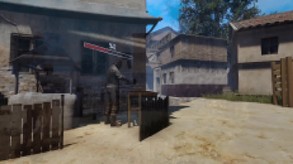
Ludus is a single-player management and simulation game developed and published by Cheesecake Dev that places players in charge of running a gladiator school in ancient Rome. Rather than focusing on cinematic battles or narrative spectacle, the game is built around systems, numbers, and long-term decision-making, offering a slow-burn experience where success is earned through careful planning and risk assessment. From the outset, Ludus makes it clear that survival and profitability are just as important as glory in the arena, framing gladiatorial combat as a business as much as a form of entertainment.
At the core of the experience is the management of your ludus and its roster of gladiators. Players recruit slaves and train them into specialized fighters, choosing from a variety of historical gladiator classes, each with distinct equipment preferences, strengths, and weaknesses. Decisions about training intensity, equipment investment, and fight selection all have lasting consequences. Pushing a gladiator too hard can lead to injuries or death, while playing too cautiously can stall progress and drain resources. This constant tension between ambition and preservation gives the game its strategic weight, as there are rarely obvious “correct” choices.
Combat itself is not directly controlled but instead simulated based on statistics, equipment, and preparation. While this means players do not experience the visceral thrill of real-time fighting, it reinforces the game’s identity as a managerial simulation. Victories and defeats feel like the result of planning rather than reflexes, and losses can be particularly painful when a well-trained gladiator falls due to a risky decision. Over time, individual fighters develop stories of their own through repeated bouts, injuries, and triumphs, creating emergent narratives that can feel surprisingly personal despite the game’s abstract presentation.
Beyond the arena, Ludus places heavy emphasis on economic management. Money is always tight, especially in the early stages, and players must carefully balance spending on facilities, equipment, staff, and new recruits. Expanding training grounds or improving living conditions can boost gladiator performance and morale, but these upgrades require upfront investment that may leave the ludus vulnerable if income slows. Trading equipment, negotiating contracts, and choosing which events to participate in all contribute to a broader economic simulation that rewards patience and long-term thinking.
The game’s pacing is deliberately open-ended, offering little in the way of scripted progression or hand-holding. There are goals to strive toward, but much of the experience is defined by player-driven objectives, whether that means building a legendary stable of fighters, maximizing profit, or simply surviving as long as possible. This lack of rigid structure can be empowering for experienced simulation fans, but it may feel overwhelming or directionless for newcomers, especially given the limited tutorials and sparse explanations of some systems.
Visually and technically, Ludus is functional rather than immersive. Character models, environments, and animations are minimal, serving primarily as representations of underlying systems rather than as storytelling tools. The interface is dense with information and menus, reflecting the game’s focus on management, but it can also feel clunky or unintuitive at times. Audio design is similarly understated, offering little atmosphere beyond basic feedback. These aspects make it clear that Ludus prioritizes mechanics over presentation, which may deter players expecting a more polished or cinematic take on the gladiator theme.
The game’s rough edges are further highlighted by technical issues that some players encounter, including bugs and quality-of-life shortcomings. While many of these issues do not fundamentally break the experience, they can interrupt immersion and add friction to an already demanding game. Community feedback suggests that enjoyment of Ludus often depends on a player’s tolerance for imperfection and their willingness to work around limitations in exchange for depth and freedom.
Ultimately, Ludus is a niche but compelling simulation that caters to players who enjoy complex management systems, historical themes, and emergent storytelling driven by mechanics rather than scripted narrative. It does not attempt to romanticize gladiatorial combat, instead presenting it as a harsh, transactional reality where lives are resources and reputation is currency. For players willing to engage with its systems-heavy design and accept its lack of polish, Ludus offers a rewarding and often tense experience that captures the grim pragmatism of running a gladiator school in ancient Rome.
Rating: 6/10