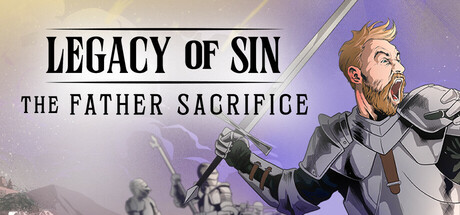
Legacy of Sin: The Father Sacrifice, developed and published by Absolute Power Game Studio, is an indie tactical defense game that combines classic lane-based strategy with hand-drawn fantasy storytelling. Set in a world under siege by an encroaching orcish army, the game casts the player as a battle-worn commander charged with defending the kingdom’s final bastion. From its opening moments, it establishes a tone of grim duty and sacrifice, promising a story where the weight of command is both literal and emotional. While the narrative itself is lightly sketched and primarily serves as context for the combat, it carries the echoes of a bygone era of fantasy storytelling—grand in theme, simple in structure, and steeped in tragedy. The game’s title is no accident; at its heart lies a story about loyalty, loss, and the costs of leadership, even if the storytelling is more atmospheric than deeply developed.
The gameplay forms the core of Legacy of Sin’s experience. It is built around the principles of tactical lane defense: you deploy units along a series of paths to intercept waves of enemies before they can overrun your position. Each mission presents several lanes where orcish forces advance, and players must balance limited resources to deploy the right mix of troops. The available unit types—pikemen, musketeers, and knights—each serve distinct strategic purposes. Pikemen provide range and crowd control, musketeers deal powerful but slow ranged attacks, and knights anchor the front lines as durable defenders. The challenge lies in how you balance the cost of each unit against their growing expense; the more you rely on one type, the cost to deploy additional units of that class rises. This system forces diversification and risk management, rewarding flexible thinking rather than repetitive strategies.
At its best, the game can feel tense and methodical, demanding careful timing and positioning rather than overwhelming speed. There’s a rhythm to the combat: place your units, watch their patterns, adapt as enemies shift their tactics. When the systems work smoothly, it captures the satisfying ebb and flow of a desperate defense, where every decision—every soldier placed—can mean the difference between victory and ruin. However, the experience is not without its rough edges. The controls and unit placement mechanics can occasionally feel unrefined, with small interface quirks that make precision difficult. Some players have reported the ability to stack units on the same tile or experience inconsistent feedback when deploying troops, which can disrupt the strategic clarity that the genre relies on. These moments don’t break the game entirely but can chip away at the sense of immersion that its hand-drawn world works so hard to create.
The visual presentation is perhaps the most striking part of Legacy of Sin. The art style embraces a distinctly hand-drawn, almost storybook aesthetic, with exaggerated proportions and fluid, sketch-like animations. The battles themselves are surprisingly evocative, with units clashing in bursts of movement and color that give the game an energy beyond what its budget might suggest. The developer’s passion is clear in the way each class animates differently—musketeers reloading with quick precision, knights swinging their blades with heavy intent, pikemen lunging forward in coordinated rhythm. The attention to detail in these small flourishes lends the game a tactile sense of life, even when the environments themselves are static and somewhat sparse. The backgrounds are functional, providing a clear view of lanes and enemy movement, but they lack the richness or variety of the character designs. The overall effect, though modest, evokes the feel of an illustrated fantasy chronicle, as if each battle were a page torn from a forgotten legend.
In terms of balance and pacing, the game’s learning curve can be erratic. Early missions introduce mechanics at a manageable pace, allowing players to grasp the basics of deployment and resource management. However, later levels can spike in difficulty sharply, throwing overwhelming waves of enemies at the player without sufficient time to adapt. Because the progression system doesn’t include substantial upgrades or new unit types beyond the initial core set, the mid-to-late game can feel repetitive. The sense of escalation depends largely on enemy volume rather than variety, and this reliance on raw numbers can make some encounters feel punishing rather than tactically rewarding. It’s clear that the developers intended to create a challenging experience, but the line between challenge and frustration is sometimes crossed when mechanical inconsistencies amplify the difficulty.
The narrative framework, though secondary to the gameplay, lends the experience a touch of personality. Cutscenes and dialogue sequences between missions hint at deeper themes—duty, sacrifice, and the moral ambiguity of leadership—but these ideas remain mostly in the background. The writing doesn’t dwell on character depth, instead functioning as a mythic backdrop for the player’s tactical decisions. There’s a certain charm in its straightforwardness: it feels like a tribute to old-fashioned fantasy storytelling, where archetypes stand in for psychology and sacrifice is portrayed as both noble and inevitable. The emotional resonance of the story, however, depends largely on the player’s imagination. The game doesn’t linger long enough on its narrative moments to develop them fully, leaving a sense that its world is full of potential that remains only partially explored.
Technically, Legacy of Sin runs smoothly enough to convey its vision but occasionally reveals its indie limitations. The interface, though functional, can feel dated, with small buttons and limited visual feedback. The sound design supports the action well, with steel clashes and musket shots punctuating the rhythm of combat, though the music loops can become repetitive over longer sessions. Performance is stable, even on modest hardware, which is a testament to its efficient design. The game’s minimalist approach to presentation allows it to remain accessible, but it also highlights where additional polish could have elevated the experience.
Ultimately, Legacy of Sin: The Father Sacrifice is a game defined by ambition and sincerity more than technical mastery. It strives to deliver a heartfelt mix of strategy, fantasy, and artistry within the limits of a small production, and it largely succeeds in conveying a sense of purpose and tension. Its hand-drawn visuals and earnest tone make it stand out, even when its mechanics occasionally falter. It’s the kind of project that feels crafted with care—a rough gem that may not shine as brightly as its inspirations but still captures a glimmer of their spirit. For players who appreciate indie strategy games that value atmosphere and heart over perfection, Legacy of Sin offers an imperfect yet passionate experience—a tale of courage, sacrifice, and the stubborn will to endure against overwhelming odds.
Rating: 6/10