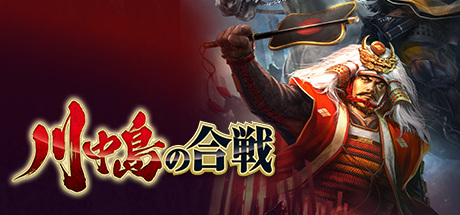
"Kanakawajima no Kassen" was sold (10/26/1981) as the first game developed by Kou Shibusawa. It is a Strategy simulation game. Players become Shingen Takeda and clash with Kenshin Uesugi at Kawanakajima in an attempt to wipe out his rival.
Modeled estimate, not a reported figure. How we estimate →
Media

About
Genres
Stats
All-time low is the lowest price we've recorded for this game since we started tracking it.
Languages: Japanese
Reviews
这款只有32k的小游戏《川中岛合战》发售于1981年,由光荣创始人襟川阳一老师一个人开发完成,是光荣公司的第一款游戏作品。当年襟川阳一老师推着小车装着《川中岛合战》的拷贝沿街叫卖,竟然意外的大获成功。这才有了如今在游戏行业中举足轻重的光荣公司。 这款游戏的纪念意义是所有光荣游戏作品中最高的。我花了15分钟通关,算是对襟川阳一老师的致敬吧。
価格一桁間違ってない? いや、一応ゲームモードも二つあるし、机上演習用として考えれば多少は…とは言っても高低差とか川の概念があるわけでは無いから展開のパターン数も高が知れているしなぁ。やっぱり価格一桁間違ってない? KOEIにはKOEIの都合があるのでしょうが、それにしたってゲーム内容と元がゲームの特典であったことを考えれば、KOEIの歴史シミュレーションゲーム系DLCの標準価格で売るべきだったのではないかと思います。
根本不值这个价钱,虽然资格老,但是不好玩。内容也太少了。
考虑到这是基于一款老游戏的改版,这还是款不错的冷饭作品。对比原版比起来操作更人性化,游戏的关键在于运用骑兵侦查、骚扰敌方,围攻上杉谦信。缺点也很明显,只有一关,且只能用武田方,命中、伤害判定很迷容易给人挫败感。 单说性价比的话43元的价格可能远不如信野,不过可以感受那个时代的程序员如何做出属于那个时代风格的战场,让我想起读司马辽太郎所写的《德川家康》中三方原合战时纸面上的字句浮现在脑海里犹如千军万马、气势磅礴。 这款游戏需要的更多的是玩家对游戏的热情和对历史的喜爱,就像以前在B站评论区跟人聊到真田家传字时我用了6个小时去思考真田幸隆、真田信纲、真田昌幸、真田信之(幸)三代人究竟往下传的是哪个字一样,不论是历史还是游戏终究会不完美,重要的是在爱好者心中浮现出的是什么。
除了情怀 就剩下音乐了
日本乃至亚洲的第一款SLG游戏,由光荣社长襟川阳一亲自制作,原版发售于1981年。 如今在游戏行业举足轻重的光荣特库摩,居然来自这款仅仅32KB的游戏,简直是[b]游戏界最具划时代意义的作品[/b],也是最有收藏意义的作品。 [h3]关于《川中岛合战》和光荣特库摩[/h3] 40多年前,襟川阳一的妻子送给他一台电脑,他很快就沉迷编程,并以武田信玄与上杉谦信的第四次川中岛之战为蓝本,做出了《川中岛合战》。 这部由一人之力完成的作品拯救了当时濒临倒闭的染料公司光荣,可以说,襟川阳一用爱好改变了光荣特库摩,创造了光荣游戏。 每当想到他推着满载软盘的小车沿街叫卖《川中岛合战》时,就会想到,或许没人预见这款游戏会改写日本游戏史,会为游戏行业带来巨大变化。 [h3]我与《川中岛合战》[/h3] 作为《信长之野望》和《三国志》玩家,《川中岛合战》对我来说早已超越了游戏本身。 就像我喜欢的历史SLG,用代码编织人类对历史的想象,让所有复杂归于纯粹,这件事本身就已经足够浪漫。 我在2025年重温这款古董游戏,用30分钟通关原版和重制版,如同见证这段浓缩的历史又承载着光荣公司从染坊作坊到游戏巨头的变迁。 方寸屏幕间跃动的,不仅是电子游戏,更是[b]一个时代的传奇[/b]。 [h3]在这纯粹而浪漫的战场,五百年的遗憾借我之手一判高下[/h3] [code]策略/模拟/RPG/视觉小说·畅游游戏世界;工具软件·重塑数字生活! 欢迎查看[url=store.steampowered.com/curator/45339980/]我的个人鉴赏家“岚之野望”[/url],邀您共探虚实世界![/code]
A pretty fun little turn-based tactics game that remakes (and includes) a game from the very 80's. I didn't opt to try "Original Mode" yet since I imagine keeping track of it would involve a bit of pen and paper, but the remake version is a fun little time killer that isn't the deepest and maybe doesn't have a ton of replay value, but it does scratch the itch of wanting to feel like a general and move little dudes around without getting in the weeds on things like stats and resources. You have 20 soldiers of different types in your army. The general and his guard don't move, but can defend themselves, then from there you've got horsemen, spearmen, bowmen, gun dudes and foot soldiers who take their turns in that order. Your four commands are move, attack, rest, and pass and really it's the first two you'll generally be using. The goal is to find the other army's general and kill him within 20 turns and the usual rock-paper-scissors of strategy games (spearmen beat horse etc) applies. If you attack someone, there's kind of a counter-attack phase but that's the only real twist in teh turn order. It's simple, but it's fun and would probably translate well to a tabletop game. I played on what I guess is the first standard difficulty level and I won, but there was a bit of pressure with the 20 turn limit and I did find myself switching up my strategy as I saw how things were going. There was a good choice to be made of "do I stay here and fight these two units, or keep moving forward and let my guards deal with it when they get ther?" and realizing that my army was getting close to the other general did give me this good sense of tension that "hey, I haven't seen many of your dudes and they're probably getting close". It's a fun, short kind of game that I think makes for a good lunch break type game. The game [i]is[/i] completely in Japanese and my Japanese is good enough that I was able to read the manual (yeah that's right, I read manuals before playing games, madlad I know), but I think the gameplay loop is self-evident enough that even not knowing the language you could trial and error your way into understanding the game pretty easily. All the important stuff is in graphic design and numbers and the only real text is sort of the "What's your command my liege? type flavor text a lot of strategy games have when you click a dude. There's no overarching story to follow, you just play the same map at different difficulties so I think it's accessible. I trial-and-error'd my way through most of [i]Bomberman Wars[/i] when I couldn't read anything at all and that game's a fair bit more complex than this, so I think even the casual fan can get into this and have fun. My only real complaint is there doesn't seem to be a way of fullscreening the game but it kind of is the sort of game you'd play windowed while watching a podcast so maybe that's fine.
Kawanakajima no Kassen is a fascinating strategy title that feels more like a preserved historical artifact than a modern game release. Originally created in 1981 by Kou Shibusawa, the founder of Koei and one of the most influential figures in Japanese strategy gaming, this Steam version allows players to experience one of the earliest tactical war simulations ever commercially released in Japan. Rather than heavily redesigning the original concept for modern audiences, the game stays remarkably faithful to its roots, offering both the original version and an updated remake mode that improves accessibility while maintaining the old-school structure. The result is a strategy experience that feels incredibly dated in some ways but also surprisingly impressive considering how early it was created. The game centers around the famous Battle of Kawanakajima during Japan’s Sengoku era, focusing on the conflict between Takeda Shingen and Uesugi Kenshin. Unlike large-scale modern strategy games filled with diplomacy systems, economic management, and sprawling campaigns, Kawanakajima no Kassen keeps its attention entirely on battlefield tactics. Players command military units across a compact war map while attempting to locate and defeat the enemy commander before running out of turns. This focused design gives the game a surprisingly tense atmosphere because every movement decision carries weight, and mistakes can quickly lead to failure. What makes the game particularly interesting is how much strategic tension it creates despite its extremely simple mechanics. The battlefield uses terrain, fog of war, and limited information to force careful planning. Players must move cavalry, infantry, archers, and other units strategically while trying to anticipate enemy positions. The limited turn structure adds constant pressure because wasting time on defensive movement or inefficient positioning can ruin an otherwise successful strategy. Even though the mechanics are primitive by modern standards, there is genuine depth in understanding how to maneuver forces effectively and how to pressure the enemy without exposing vulnerable units. The inclusion of the original 1981 version is one of the Steam release’s greatest strengths. Playing the untouched original feels like stepping directly into gaming history. The interface, visuals, and pacing all reflect the technological limitations of early computer strategy games, but there is still something remarkable about seeing the foundation of ideas that would later define Koei’s legendary historical strategy franchises. Fans of Nobunaga’s Ambition or Romance of the Three Kingdoms will immediately recognize certain design philosophies beginning to take shape here, even in their earliest and most basic form. The remake mode does a respectable job modernizing the presentation without removing the game’s retro identity. Updated visuals make the battlefield easier to read, menus feel cleaner, and unit management becomes less frustrating overall. The art style remains intentionally simple, preserving the atmosphere of the original release while making the experience more approachable for newer players. However, even with these improvements, the game still feels unmistakably old-fashioned. There are very few modern conveniences, tutorials are minimal, and much of the experience relies on player patience and experimentation. This dedication to authenticity creates both strengths and weaknesses. Players interested in the history of strategy games will likely find the experience extremely rewarding because it demonstrates how advanced certain tactical ideas already were during the early 1980s. The game captures battlefield uncertainty surprisingly well, especially through hidden information and the constant threat of enemy ambushes. At the same time, players expecting modern strategy depth may struggle with how limited the overall systems feel compared to contemporary war games. The scale is small, unit variety is limited, and the campaign structure lacks the complexity seen in newer tactical titles. The game’s age also affects accessibility. Even the remake mode cannot completely hide the fact that this is fundamentally a forty-year-old design. Menus can feel awkward, pacing is slow, and the interface demands more patience than most modern players are accustomed to. There are moments where the game feels more educational than entertaining, especially during longer sessions where repetitive movement and careful positioning dominate gameplay. This is clearly a title aimed more at strategy enthusiasts and gaming historians than casual players looking for fast-paced action. Replay value is another area where limitations become noticeable. Since the game focuses on a single historical battle and relatively narrow tactical mechanics, there is only so much variation possible between playthroughs. Once players learn the battlefield layout and effective strategies, much of the challenge comes from execution rather than discovering new content or mechanics. Unlike modern strategy games with dynamic campaigns or procedural systems, Kawanakajima no Kassen remains tightly focused on recreating a specific historical conflict. Still, the game deserves tremendous respect for what it represents. It is rare to see such an early strategy title preserved and made available in a playable form for modern audiences. More importantly, the gameplay itself still contains enough tactical depth to remain genuinely engaging despite its age. There is something impressive about how much tension and strategic thinking the game creates using such limited technology and minimal systems. It serves as both an enjoyable tactical challenge and an important reminder of how influential early Japanese strategy design truly was. Kawanakajima no Kassen will not appeal to everyone, especially players who expect modern production values or large-scale strategic complexity. However, for fans of retro strategy games, Sengoku-era history, and the origins of tactical simulation design, it offers a unique and rewarding experience that feels historically significant as well as mechanically interesting. While the dated interface and limited scope prevent it from feeling timeless in the same way as some modern classics, the game still succeeds as an important and surprisingly playable piece of strategy gaming history. Rating: 6/10
Related
Related
Trends
Modeled estimate over time, reconstructed from Steam's monthly review histogram.
Momentum
Pace estimated from the game's recent review growth (our daily snapshots) at its own sales-per-review ratio — a momentum signal, not booked sales.
Related
| The Pillage | $3.5K | 58 | 86% | $2.99 |
| Lonely in the Winter | $3.5K | 59 | 92% | $2.99 |
| Extreme Roads USA | $3.5K | 69 | 12% | $4.99 |
| The Wolf's Bite | $3.5K | 58 | 88% | $2.99 |
| Kenshō | $3.5K | 58 | 90% | $3.99 |
| Polylylyrhythm | $3.5K | 81 | 99% | $2.99 |
Related
| 2 3 4 Player Mini Games | $687.3M | 1.4M | 87% | Free |
| No Man's Sky | $636.2M | 412.8K | 85% | $59.99 |
| Pizza Ready! | $576.7M | 2.7M | 88% | Free |
| DayZ | $532.6M | 466.5K | 78% | $49.99 |
| Phone Case DIY | $493M | 913.9K | 87% | Free |
| Hearts of Iron IV | $478.6M | 373.3K | 90% | $49.99 |