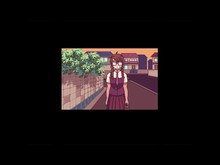
A dark, story-heavy puzzle game. Enter the mind of Mayu, as her soul is invaded and dug through by a seemingly evil witch. Can you stop her? What if you were able to get the upper hand, and invade her back? Would you show mercy, or destroy her? Jishogi will test you in more ways than one.
Modeled estimate, not a reported figure. How we estimate →
Media
About
Stats
All-time low is the lowest price we've recorded for this game since we started tracking it.
Languages: English**languages with full audio support
Engagement
Hours played at review time, across 40 reviews with recorded playtime.
Reviews
Themes across 40 recent reviews and how positive each mention is. A keyword signal, not full sentiment analysis.
positive critical· bar length = how often the theme comes up
Reviews
You can mind control an Ojou-Sama with a haughty laugh. This is important.
This review has a MARKED SPOILER SECTION Jishogi is, in short, a hidden gem. As a shorter story based game, Jishogi is as close to perfect as you're likely to find. Inside the purview of what Jishogi seeks to do, it succeeds with flying colors. Most similar in function rather than form to a visual novel, Jishogi is smaller part puzzle game and larger part story. The puzzles become quite overwhelming but are still (eventually) tackleable by a puzzle novice such as myself. I find the advertised time of 3-10 hours to be a fair bit less than it took me for the first playthrough but I struggled with puzzles (my total playtime is bloated from AFK time and 100%ing.) I never would have found this game without being shown some of it, and its very difficult to discuss at all without spoiling, so while there IS a spoiler section below I'll try my best to cover it without ruining the experience. Without going into specific detail, the writing in this game is simply phenomenal. The story of Jishogi covers a lot of unsettling topics, but it does so masterfully. A lesser execution of this game's concepts would have various characters fall into pitfalls of simple depictions of moral right and wrong, good and evil, black and white. Jishogi approaches all of its subjects with a delicate, upfront, and above all grounded perspective that is at its core entirely raw and human. Even the most wild actions and ideas have some logical basis and are compelling. Neither is anything ever shoved down your throat or nudging you in a certain direction. Thoughts, wishes, desires, and perspectives have REASONS, and Jishogi asks you to examine the bigger picture rather than simply belittle and judge the results. The ball is entirely in your court. In more technical aspects, puzzles are simple enough to be approachable by most anyone but become quite challenging as the game progresses. A handful in particular are quite ruthless and depending on your skill level can eat up quite a bit of time. I was able to complete them all myself as someone who never plays puzzle games, but the hardest of them were very time consuming. There IS a last ditch option to bypass puzzles, which you can search for if you just want story which I also appreciate. [strike]My only real complaint is that I wish walking could be sped up[/strike] There has now been an update adding a sprint key, and with it goes my single complaint. The soundtrack is only a couple tracks but they're all amazingly fitting and convey emotion well. Its simple, but captures the vibe perfectly and ties everything together. From curiosity and depression to the wonder of childhood and the overbearing weight of the hardest puzzles, its all here. Its even more amazing that mostly everything but the art was made by one person. I only wish the OST was released separately. !!! SPOILERS BELOW !!! Besides the delicate and level approach to the topics of importance, Jishogi excels at presentation. The game largely uses the means common to visual novels to present itself, and has 7 (or 8 counting a derivation) endings that come about through the choices you make. The endings- in addition to the order some aspects are approached- provide you with different information and dialogue throughout. Characters will comment on your actions (or lack thereof,) decisions you make, your leanings regarding morals, etc. In particular EVERY SINGLE ENDING has at minimum tidbits of information the others lack, further fleshing out the OTHER endings and the overall story. The small touches are always present, and the story has clearly been carefully polished. More specifically, Mayu and Fifield have "figments," something similar to a conscience, voice in your head, or angel/demon on your shoulder, but so much more. I struggle to even find a fitting word to describe these figments, as both their role and perspectives aren't so simple. These figments are more of an aspect of the person, be it the hardened, logical, and calculating outlook or the soft and emotional caring part that pushes one to consider kinder and gentler outcomes. They put a voice to the characters' inner thoughts and feelings, and are much more than a voice of right and wrong. Both girls have a "harder" and "softer" aspect but the differences between them, their treatment BY the "main" person, and their rationales drive major decisions while the figments themselves present ideas and perspectives to their host. They betray the truest, deepest feelings of their owner for better or worse, and lay bare the inner turmoil of decision making. Even when [i]promoting[/i] or [i]forgiving[/i] the most extreme of moral and ethical decisions, the reasoning is always compelling. Someone can have a terrible thought, [i]know[/i] deep down that its wrong, but still have perfectly logical reasons to wish for it. Similarly, one can make decisions simply out of guilt, obligation, or simply for the sake of others at the cost of themselves even if in their heart they don't really want to. Genuine love and kindness, begrudging admissions, guilty desires, and raw anger can exist in a person [i]at the same time,[/i] and there will be compelling reasons for them all. Jishogi shows this aspect of humanity uniquely well. In a ludo narrative sense, the difficulty of the puzzles is directly asking you to fight for your desires. Whatever your chosen path, for Mayu (and you) taking action directly requires fighting tooth and claw for your convictions. The most extreme trials literally guard the most extreme results, and are often NOT required for (some) endings. Whether you do them is up to you. The trials are a very literal test of resolve. Regarding presentation, Jishogi's primary tool for conveying much of its finer detail is hiding relevant information inside different routes, endings, and options. Beyond the basic story itself, Jishogi will not hold your hand, nor offer any kind of conclusions or input towards what you see and do. I believe this absence of both guidance and judgment- paired with the exceptional writing- is the backbone and biggest strength of the game. Endings will include information relevant to morally opposite endings, tiny details and insights can be gleaned from choosing (or skipping) various options, etc. In short, Jishogi trusts you. It trusts you to recognize the "whys" and "hows" and come to your own conclusion, unassisted. Once you've made your decision, it won't judge you for it. The onus is on you to weigh options see where it leaves you in the end.
Liked the game so much that I bought a copy for myself after watching Manlys video and gifted 4 copies to friends so they could experience this game. I don’t write reviews since I’m terrible at transcribing my thoughts onto paper but Jishogi is absolutely worth it. Jishogi takes a page out of Yoko Taro's book for game design which is to make the player feel something. The experiences you have with the characters take you on an emotional roller-coaster. As other reviews have said this game stays in your head after you are done playing it. Hell the lore pieces are so well detailed that I was coming up with my own fan-fiction based on them alone. Puzzles are actually fun and well designed but as others have said the amount of time spent vs what you receive gets a little unbalanced in the third act. I did all the puzzles of the rooms I visited without skipping. I haven’t done the two hardest rooms yet, since I want to give them a try and know they will be a time-sink. (Don’t need those two rooms for Best end). My advice to people getting frustrated at the puzzles is to set aside a time limit for each room and if you don’t solve it or are just mad at it then skip to the next room. The game is a steal at the price and absolutely worth your time. I’d buy the soundtrack if it was put up.
First things first, there's no [i]actual[/i] shogi in this game, the puzzles are [i]thematically[/i] using shogi and chess pieces to indicate their movement patterns, but it's basically laser beam courses with obstacles to hit specific targets. The gameplay is split I'd say 70/30 timewise on puzzles and story dialogs. I wish there was a run button and that you got the strategy fan from the beginning, but it's all minor issues. The story is centered between two messed up girls with somewhat usual premise of mutual misunderstandings leading up to some spectacularly bad decisions. Some heavy topics are brought up, and some surprisingly dark choices are given to make. The spectrum of endings is somewhat biased to the extremes, but you get some neat variations depending on your choices. The characterization is great, and the story is really engaging, and in my opinion worth suffering the minor issues. My one real complaint is the puzzle difficulty scaling. Larger puzzles are difficult not necessarily due to mechanics mix and the intricacy of the board, but mostly due to the number of targets you have to hit. That shifts the difficulty from analyzing and planning you moves to making the lists of what target could be hit with what piece, sorting them out in order of legal possibilities, and then executing them in that order, which is not fun compared to actual puzzle board deconstruction, and feels like a cheap padding. And yes, you can skip any puzzle if you want, but that's like you [i]know[/i] it's not that fun anymore, but you [i]have to[/i] have it for marketing or whatever if you sell this a primarily a puzzle game. Anyway, what I'm saying is that don't expect much on the brain teasing side, get it for the story if you can handle not-very-pleasant themes and situations. It's really good, and quite short, so it doesn't outstay its welcome.
[b] This is a phenomenal game. [/b] [i] Spoiler-free section [/i] There are some games, books, movies - that linger in both heart and mind for a long time. A constant pondering, reflecting, accompanied by a wide palette of emotions - from compassion to admiration. Something that, through someone else's story, reveals you to yourself, allows you to open up and reflect on your actions and mind, to get out of the shell of callousness. This game is exactly from that story. So much did it affect my senses that I couldn't fall asleep the first night after playing it - I was only napping while the plot, events, characters and motivation circulated through my brain. It's a strange feeling - that you finally got something in your soul, and it's quite heavy, but this weight is pleasant and satisfying, having a therapeutic effect on yourself. Now I am writing in a state of affect, for I will not have enough time for such a soulful, inspired writing at any other time. Jishog has amazing writing. Making a short story about inner world and emotions sounds pretty familiar, everyone has heard of these tropes. But to make it so that the entire world presented looks natural, the emotions are not ostentatious or cringe-worthy, the reactions are ones you can and even want to believe in, and the memories are down-to-earth but emotional and familiar to many is a very hard task. The way the developers give you, and only you, the right to decide how to perceive the situation, and to act based on your own interpretation of the situation - but at the same time everyone's each choice has a logical motivation in the context of the story - this is truly worthy of respect. It is easy to spoil a novel about "feelings" by overemphasizing certain aspects of the story - one emotion, one "fateful" event, and at the same time suppressing other aspects in the background. That doesn't happen here - everything is presented in a fairly measured way, from the very beginning to the very end. You don't miss the synopsis and exposition of the story, the conflict is quite explicit and not contrived, the climax isn't born out of just one event - every word, every emotion experienced by the characters has weight in it. It's amazing how I only found out about such a masterpiece from Manly's video, and yes, big kudos to him for the highlighting. I can't help but note the excellent atmosphere overall - everything feels as you might assume, walking through your own and others' shards of history and emotions - mystery, sympathy, empathy, and even joy for the achievements. This is matched by both the artwork and the soundtrack. Also, I can't help but notice how the game manages to accommodate a very large amount of information, including emotional one, in a fairly short chorometrage, and does it smoothly, without letting your soul or head burst from overload. Commentators talk about a bit of stretched pacing due to puzzles late in the game - I can see that, it's just that in my case the story was so addictive that I was going through them instantly. Overall, gameplay-wise and in the context of writing - puzzles are a good thing, you don't just get the information you want at will and whim, but you overcome challenges in acquiring them, and in solving them you get even more satisfaction - in getting through and in mining a piece of the story. Overall, puzzles are a variable, they can always be changed and adapted, but this kind of writing talent is not. [i] The spoiler section [/i] [spoiler] It was the complexity and authenticity of emotion that bought me to this story. There is no unnecessary drama or endless compassion here - you feel empathy and understanding while sharing grief, sadness, and especially - joy, for it is presented at exactly the right moments. The emphasis here is far from the fact that Mayu is a lesbian (woke!), or that Fili is such a tsundere that you have to fight for her fellings and compasion in achieving your perverted love (but in some endings it is possible to do so). On the contrary - what's shown here is the story of how the actual person is created, how every opinion and emotion has a right to exist, and how it all works in conjunction with each other to organically create a character picture you can and want to believe in. You gradually come to realize that every opinion, every hobby and interest - has a foundation, and despite having the direct opportunity to change them, you feel a natural shame and embarrassment to do so. For there is no good or bad - this false dichotomy, which is played out even among the Figments. You, on the contrary, want to understand this picture of the whole world, discuss it, take the initiative to resolve the conflict and with your whole body wanting a good ending, which feels rightfully so, given all the possibilities to achieve a different, easier and faster ones. I wish the developer would stay true to himself and continue to resist the incentives to write "drama for drama's sake," "evil and good," and continue to take the time to write down-to-earth, reasonable, and interesting stories, their characters, motivations, and conflicts. This story got deep into my head and soul, made me look at myself and others from different angles, and reminded me of the very impartiality and compassion I hadn't shown in a long time. And I am truly grateful to the developer for that. [/spoiler]
20/10 storytelling featuring a 10/10 puzzle game. Like seriously this is amazing more people need to play it. Other reviews give it more credit then I ever could without spoiling things, so just give them a read instead of this, but if I were to just say like three things: puzzles are fun as hell cannot praise the story enough it is incredibly well executed Prism gives themselves too little credit in the dev room and that is saddening because this has been by a landslide one of the most enjoyable things I've experienced in recent memory. Hidden gem that deserves people's attention and money.
Manly brought me here. Love the game, you made something that turned two people who might've been seen as evil and turned them into human beings, you made the parents and their reasons feel complex and real and even the villain uncle feels like a 3 dimensional person. Great story, great puzzles, great characters, great game.
No triple-A game will ever have the balls to tell the story Jishogi tells. This game has like 4 '♥♥♥♥♥♥♥♥♥' moments in it. There's also some puzzles, but I didn't really vibe with them. If you just play on easy, you'll get through them pretty quick so you can get back to the real star of the show--the story. [spoiler] If you liked Inception, but wished they dove into the altering a person's mind from the inside aspect, you'll love this game. It's also queer AF. [/spoiler]
Lovely game that really grows on you. It's clear a lot of love was put into it, and it shines in how you get drawn into this story of a bizarre relationship between two young girls going through some heavy turmoil. I'm split on the puzzling. On the one hand I like it, but on the other hand it does get hard enough that my impatience with wanting to find out more gets the better of me. Fortunately, you can very easily skip all the puzzles, so don't feel like you're getting gated by anything. All in all, it's a game you should definitely check out if it has piqued your curiosity at all.
Game was really cool! I've never seen puzzles like that and a narrative to go along with it so that you actually want to get through those puzzles to see what happens. On my first play through I got the BEST ending cause I'm not a psychopath. I beat it on hard, but I think I can take on 9th dan, we'll see.
Related
Related
Trends
Modeled estimate over time, reconstructed from Steam's monthly review histogram.
Momentum
Pace estimated from the game's recent review growth (our daily snapshots) at its own sales-per-review ratio — a momentum signal, not booked sales.
Audience
Estimated from the language of this game's reviews — a proxy for where players are, not official Steam demographics.
Related
| Brink of Consciousness: Dorian Gray Syndrome Collector's Edition | $5.2K | 330 | 86% | $0.99 |
| 见诡录:色孽 Haunting Record: Sins of Lust | $5.2K | 75 | 79% | $2.39 |
| Voodoo Whisperer Curse of a Legend | $5.2K | 77 | 56% | $3.99 |
| Truffle Saga | $5.2K | 123 | 43% | $1.99 |
| PEGGO! | $5.2K | 104 | 66% | $3.99 |
| Survival Is Not Enough | $5.2K | 52 | 35% | $4.99 |