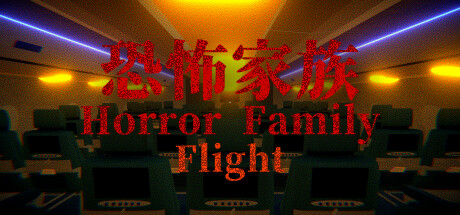
Horror Family - Flight is a time-loop horror game set on an airplane.
Revenue comes from in-game items and microtransactions, which our price-based model doesn't estimate. The player count below is how many people own it, not what they spent.
About
Genres
Stats
Languages: English, Japanese
Engagement
Reviews
Themes across 47 recent reviews and how positive each mention is. A keyword signal, not full sentiment analysis.
Reviews
Я не знаю почему у этой игры 70% положительных обзоров, конечно это не самое дно Стима, но реализация проекта очень сильно хромает. Во первых продолжительность игра проходится при определенной сноровке буквально за 10 минут и не более. Во вторых дизайн, кривые шрифты которые налезают друг на друга, так еще и выглядят стандартно отвратительно. Также атмосфера, слабые попытки как-то напугать непонятными скримерами. В общем так себе, не могу рекомендовать.
Horror Family|恐怖家族 - Flight — это хоррор-игра с элементами шутера и логических задач, где игрок попадает в временную петлю на борту самолёта. Плюсы: Атмосферный хоррор — психологический саспенс и реалистичная графика усиливают чувство страха. Уникальная механика — погружение в временные петли для решения головоломок. Иммерсивный геймплей — эффект присутствия благодаря кинематографичному стилю и звуковому сопровождению. Минусы: Ограниченная продолжительность — игра может быть пройдена за короткое время. Однопользовательский режим — отсутствие мультиплеера ограничивает взаимодействие. Возможное однообразие — повторение одних и тех же событий в петлях может снизить интерес. Итог: Horror Family — Flight предлагает уникальный и пугающий опыт для любителей хорроров и логических головоломок, несмотря на возможные ограничения в продолжительности и однопользовательский режим.
Media

Related
Related
Price dynamics, follower growth, revenue and sales trajectories with interactive tooltips
This and every other Pro feature is free until October 20, 2026. A free account is all it takes.
Hours played at review time, across 47 reviews with recorded playtime.
positive critical· bar length = how often the theme comes up
I had to stop myself from the last 2 reviews I was going to put because they were mean but at the same time if no one tells this guy what he did wrong he's going to think this is a masterpiece and he'll never make better games. I understand the want to support game devs ESPECIALLY small ones, but at the same time why are we ENCOURAGING slop on steam. This SHOULD HAVE BEEN A DEMO FIRST, so then the dev could've gotten feedback and made a decent game. So here we go I gave this game a chance and I beat it. With that said... I won't be recommending it. Immediately loading in the text that tells you what each button does is more than half off the screen. The text in the options screen are half-assed, the dev couldn't even be bothered to center them OR line them up with the sliders they represent (play the game you'll see when you hit escape). Then while walking a TV turns on and it's the news. The subtitles that appear for the news anchorman that's speaking have overlapping letters. It feels like no care was put into this either just a big ol' ♥♥♥♥ IT, IT WORKS. In the 12 minutes it took to beat this I got 2 (counted them) 2 attempts at getting jumpscared. Story was ♥♥♥♥. Cool concept but, let your imagination run man. It's super lacking in my opinion. Needs more everything. More variety, more jumpscares, more to the story it was lacking. Fix the text so it appears on the screen. If you're going to use the same assets over and over again in the game you need to change how the player interacts with the environment. FORCE THEM to take a different path. Mix it up a bit. It got stale as ♥♥♥♥ the 3rd time I went through the cockpit. I honestly just kept running because I was more annoyed than anything. This was not fun or scary. Add more options. Screen resolution, editable safe zone for the HUD and for text, make sure the text doesn't overlap other text. If you aren't going to fix the text then add an option to turn off subtitles. At least this way it can be immersive. 4/10 because this feels like a homework assignment that you waited until the night before it was due to start, BUT it was free otherwise it would be 3/10.
Игра 'Horror Family|恐怖家族 - Flight' оставляет после себя смешанные чувства. С одной стороны, атмосфера ужаса нагнетается просто превосходно. Визуальный стиль, сочетающий в себе элементы аниме и хоррора, выглядит очень своеобразно и запоминается. Звуковое сопровождение держит в напряжении на протяжении всего прохождения, заставляя с опаской прислушиваться к каждому шороху. Однако, геймплей кажется несколько сыроватым. Управление временами не отзывчивое, а головоломки, хоть и не лишены оригинальности, порой кажутся слишком запутанными и решаются методом "тыка". Сюжет, заявленный как глубокий и интригующий, подается обрывочно и не всегда понятно, оставляя больше вопросов, чем ответов. В целом, игра может понравиться любителям хорроров с интересным визуальным стилем, готовым закрыть глаза на некоторые шероховатости геймплея. Но если вы ищете отполированный и логичный хоррор, возможно, стоит присмотреться к другим вариантам. Оценка: 6/10.
Krótki i bardzo prosty indie horrorek z kilkoma jumpscareami. Horror Family to tytuł, który ukończycie w kilka minut. Cała historia toczy się na pokładzie samolotu i nagle podczas naszej podróży dzieją się dziwne rzeczy i musimy się zmierzyć z nieznanym. To tyle jeśli chodzi o fabułę, która jest szczątkowa, ale na indyczka ciężko wymagać więcej. Audio w tytule jest znikome i można było postarać się bardziej w tej kwestii. Mechanicznie gra nie jest rozbudowana i jedynie co możemy robić w tym tytule to iść przed siebie i dostać kilka jumpscarów na twarz. Kolejny indie horror zrobiony na szybko, ale plus jest taki, że nic nie tracicie, by sami go sprawdzić, bo jest to darmowy tytuł. Polecam przetestować samemu. Ocena ogólna: 6/10 Gameplay: https://www.youtube.com/watch?v=iTZKUNjQCNQ
Horror Family - Flight is a brief first-person psychological horror game that takes an ordinary airplane journey and transforms it into an unsettling cycle of repetition and uncertainty. Developed and published by RAYBIS GAMES, the game is the opening installment of the Horror Family series and was created as a solo project by a developer who was only 15 years old during development. That background makes its focused design particularly interesting, although the game is best approached as a compact horror experiment rather than a substantial survival-horror adventure. The story centers on Mitsuo Nakamura, a businessman returning from a work trip. He falls asleep aboard his flight, only to awaken under circumstances that quickly suggest something is seriously wrong. The premise is intentionally minimal, allowing the game to move almost immediately into its supernatural mystery. An airplane proves to be a strong location for this concept because there is an inherent sense of confinement. There are no streets to run toward or alternate buildings to explore. The narrow cabin and limited surroundings create the impression that Mitsuo is physically and psychologically trapped. Gameplay is structured around a time loop. Players repeatedly move through the aircraft while observing their surroundings and attempting to understand what has changed. This makes attention more important than mechanical skill. It shares qualities with walking simulators, hidden-object games, interactive fiction, and anomaly-focused horror, with exploration taking priority over combat. Players looking for weapons, complex inventory management, elaborate puzzles, or extensive character progression will not find those elements here. Instead, the experience relies on making familiar spaces increasingly suspicious. The repetition works particularly well because an airplane cabin is naturally uniform. Rows of seats, overhead compartments, windows, narrow passages, and enclosed areas quickly become recognizable. Once the player develops a mental picture of how everything should appear, abnormalities become much more noticeable. This allows relatively small environmental changes to generate tension without requiring a huge collection of locations. The game essentially encourages players to become comfortable with the cabin and then uses that familiarity against them. Its visual presentation reinforces this approach through screen noise and flickering effects designed to heighten discomfort. These effects contribute to the impression that reality itself is unstable. Combined with the first-person viewpoint, they give the experience a deliberately uneasy character. The atmosphere is more important than graphical spectacle, and the game frequently depends on anticipation rather than complicated systems. Its psychological-horror, atmospheric, retro, realistic, and cinematic influences complement a design that wants the player to wonder what might happen during the next repetition. The largest limitation is also one of its defining characteristics: the entire game can be completed in approximately 20 minutes. This is exceptionally short even by indie horror standards. There is consequently little opportunity for extensive character development, sophisticated storytelling, numerous mechanics, or significant environmental variety. Players expecting a conventional multi-hour campaign may come away feeling that the experience ends just as its ideas begin developing. On the positive side, the short duration prevents the repeating airplane environment from overstaying its welcome. Its free-to-play status makes the limited runtime considerably easier to accept. Rather than asking players to commit money and several evenings to a lengthy campaign, it offers a self-contained horror scenario that can be completed during a short break. This makes it especially suitable for players who enjoy discovering experimental indie horror projects or collecting short atmospheric experiences. The game also works reasonably well as something to play in a single uninterrupted sitting, where its repetitions and environmental details remain fresh in the player's memory. The production has some unusual characteristics worth mentioning. Artificial intelligence was used for portions of the translation and programming work, something openly disclosed by the creator. English and Japanese interfaces and subtitles are supported, although neither language is listed with full audio support. The developer also provides guidelines permitting individuals and companies to broadcast and monetize gameplay footage, subject to specified credit requirements related to voice-reading material. These details underline the small-scale and independent nature of the project. Steam Deck compatibility is more encouraging than might be expected from such a small release. While the Steam store page does not prominently provide a conventional official Deck verification badge in the available listing information, third-party Steam compatibility tracking currently categorizes the game as Steam Deck Playable. This should therefore be treated as playable rather than fully Steam Deck Verified. Players using Valve's handheld may still encounter circumstances where configuration, controls, text presentation, or compatibility is less seamless than in a formally Verified title. The game is ultimately most successful when judged according to what it is trying to accomplish. It is not attempting to provide dozens of environments, extensive lore, complicated combat, or a lengthy campaign. Instead, it takes one enclosed location, one disturbing premise, and a repeating structure and tries to generate tension from subtle changes and uncertainty. The concept is simple, but the airplane setting gives it a recognizable identity compared with the many indie horror games built around houses, hospitals, schools, and abandoned facilities. Horror Family - Flight is therefore an appealing curiosity for fans of short psychological horror and loop-based exploration. Its atmosphere, claustrophobic setting, first-person perspective, and observational gameplay provide enough personality to justify the brief journey, particularly because it is free. Its greatest weaknesses are the lack of depth and extremely short duration, while its greatest strength is how efficiently it communicates its central horror concept. Rating: 7/10
Yet another reason flying ISN'T the safest way to travel...Skinless Ghouls! All you do is try to find the cockpit thru a long loop of airplane parts, while a red guy pops up to creep you out every now and then...He's not a threat till the end. As for the story, you're apparently the lead suspect in a murder case involving a skinned family, but it's unclear if you actually did it, tho if you try to leave the news about the killings on you're unable to progress...seems a bit guilty...then again based on the ending, maybe both that family and yours are being haunted? IDK. The game is very quick, even my cautious 1st attempt took less than 10min, so played thru twice more to see if I missed something, or could get a different ending, but no luck. I guess there's just 1 end. The game has spots in the main menu for other campaigns, so maybe dlc was planned? this came out in 2024 tho, so I dunno if that's happening at this point. The game admits to using AI for some programming and translations, but I'm fine with those uses. (tho I do suspect the news screens used generated art, it was only 3 images, so I'll let it slide this time) This was straightforward (quite literally), claustrophobic and creepy. A decent quick run.
w game
♥♥♥♥♥.
Horror games have long been a cornerstone of the video game industry, providing players with thrilling experiences that blend tension, fear, and excitement. Few games manage to balance these elements as well as Resident Evil Village, the eighth installment in the iconic Resident Evil series. Capcom, the game's developer, masterfully combines survival horror with action, delivering a terrifying and atmospheric experience. This review will explore the many strengths of Resident Evil Village, from its engaging narrative to its innovative gameplay mechanics and immersive environment. The story of Resident Evil Village picks up where its predecessor, Resident Evil 7: Biohazard, left off. Players once again take control of Ethan Winters, a man who has endured unimaginable horrors to rescue his wife, Mia. However, his life is far from peaceful. When Ethan's daughter, Rose, is kidnapped, he finds himself in a mysterious European village filled with grotesque creatures and dark secrets. The plot’s twist-filled nature keeps players on the edge of their seats, with compelling character arcs and a sense of dread that permeates every moment. From the moment players step into the shoes of Ethan, the game establishes an oppressive atmosphere. The village itself is a hauntingly beautiful locale, offering a rich tapestry of environments that vary from eerie castles to dilapidated houses and ominous forests. The level design is not just visually captivating but also contributes to the game's tense atmosphere. The setting feels alive, with every creaking floorboard, howling wind, and distant scream adding to the immersion. Whether exploring a dense forest or navigating the intricate corridors of Lady Dimitrescu's mansion, the world-building is top-notch, creating a sense of isolation and impending doom. The game's visual fidelity is nothing short of impressive. Powered by Capcom's RE Engine, Resident Evil Village delivers stunning graphics that help immerse players in its nightmarish world. The lighting is especially noteworthy, with dynamic shadows and eerie light sources heightening the feeling of tension. The designs of the various monsters, each more grotesque and disturbing than the last, are a testament to the team's dedication to creating a genuinely horrifying experience. The attention to detail in both the environments and character models makes each encounter feel real and unnervingly intense. In terms of gameplay, Resident Evil Village strikes a delicate balance between survival horror and action. While it retains the series' signature tension and resource management, the game introduces more action-oriented mechanics. The combat feels satisfying, with a variety of weapons, from handguns to shotguns, offering players plenty of options to fend off the terrifying creatures that roam the village. However, the game also makes sure to keep the player on edge by limiting ammunition and forcing them to make difficult decisions about how best to allocate resources. This delicate tension between action and survival is one of the game's greatest achievements. The variety of enemies in Resident Evil Village keeps the gameplay fresh. From the towering Lady Dimitrescu and her daughters to the twisted Lycans that roam the village, each enemy type presents unique challenges. The game does a great job of keeping players on their toes, ensuring that no two encounters feel the same. Boss fights, in particular, are standouts, offering pulse-pounding moments of intense action that require quick reflexes and strategy to overcome. The sense of powerlessness, which is a staple of the survival horror genre, is never lost, even during the most action-packed sequences. One of the standout features of Resident Evil Village is its diverse and memorable cast of characters. Lady Dimitrescu, the towering vampire-like antagonist, quickly became a fan favorite, embodying the perfect blend of elegance and malevolence. Other notable characters, such as the eccentric Duke, the mysterious Heisenberg, and the enigmatic Miranda, add depth and intrigue to the story. Each character is meticulously crafted, with distinct personalities and motivations that help drive the plot forward. The performances of the voice actors, coupled with strong character designs, bring these figures to life in a way that makes them unforgettable. The pacing of the game is another area where Resident Evil Village excels. Unlike many horror games that rely on cheap jump scares or repetitive gameplay loops, Resident Evil Village constantly evolves, offering new challenges and experiences at every turn. The game skillfully blends moments of high-octane action with periods of slow-burn horror, giving players the opportunity to explore, solve puzzles, and discover hidden secrets. This balance ensures that players never grow complacent and that the tension remains high throughout the entire experience. One of the most impressive aspects of Resident Evil Village is its sound design. The ambient sounds, from the howling wind to the distant growls of monsters, help build an atmosphere of constant dread. The sound design also plays a significant role in the gameplay, with players able to rely on auditory cues to detect nearby enemies or determine the presence of hidden dangers. The haunting musical score complements the sound design perfectly, heightening the emotional impact of key story moments and boss encounters. While the single-player experience is undoubtedly the core of Resident Evil Village, the game also offers a compelling multiplayer mode in the form of Resident Evil Re:Verse. This mode allows players to engage in online deathmatches, playing as various characters from the Resident Evil universe. Although Re:Verse is a fun diversion, it doesn't hold a candle to the single-player campaign, which remains the game's main attraction. Nonetheless, it's a nice bonus for fans who enjoy multiplayer action. Another area where Resident Evil Village shines is its replayability. After completing the main campaign, players are encouraged to dive into New Game Plus mode, where they can carry over their weapons and upgrades into a fresh playthrough. This not only adds value but also opens the door for different playstyles. For example, some players may choose to go for a speedrun, while others may focus on fully exploring every corner of the village to uncover all of its secrets. Additionally, the game offers a variety of collectibles and challenges that incentivize players to revisit the game multiple times. In terms of accessibility, Resident Evil Village provides several options for players with different needs. Subtitles can be adjusted for size, and the difficulty can be customized to suit various skill levels. This ensures that the game is accessible to a wide audience, allowing both casual players and hardcore fans of the series to enjoy the experience. The inclusion of accessibility options is a thoughtful touch that makes the game more inclusive and enjoyable for everyone. On the technical side, Resident Evil Village runs smoothly across a variety of platforms, including PlayStation, Xbox, and PC. The game performs exceptionally well, with fast loading times and minimal technical issues. This is especially impressive considering the game's large, open environments and intricate details. The RE Engine continues to prove itself as one of the best engines in the industry, capable of delivering high-quality graphics and performance without sacrificing gameplay. Ultimately, Resident Evil Village is a remarkable achievement in the horror genre. It strikes a perfect balance between horror and action, delivering a thrilling experience that will keep players engaged from start to finish. The game's immersive world, gripping narrative, memorable characters, and terrifying enemies create an experience that is not only frightening but also highly entertaining. For fans of survival horror, Resident Evil Village is a must-p
Players by region
Where this game's players are, estimated from review languages.
Related
| Game | Estimated lifetime revenue | Reviews | Review score | Price |
|---|---|---|---|---|
| $2.7K | 26 | 92% | $2.99 | |
| $4.3K | 44 | 70% | $4.99 | |
| $2.7K | 42 | 83% | $3.99 | |
| $934 | 28 | 75% | $1.99 | |
| $376.3K | 686 | 84% | $14.99 | |
| $19.8K | 118 | 63% | $3.14 |