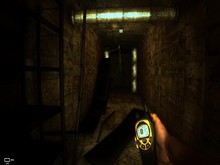
Help is an indie psychological horror experience developed and published by Volens Nolens Games that centers on isolation, resource management, and environmental tension rather than overt action. Set within the cold, decaying corridors of an abandoned research bunker, the game places players in the role of a desperate parent searching for a missing daughter. Its premise is emotionally direct and intimate, grounding the horror not in grand supernatural spectacle but in the fear of loss and the dread of navigating an unfamiliar, hostile environment alone.
From the moment the game begins, atmosphere becomes its primary tool. The bunker is dimly lit, industrial, and oppressive, with tight hallways and sparse visual cues guiding the player forward. A handheld lamp serves as both lifeline and burden; its battery drains steadily, forcing constant vigilance in scavenging for replacements. Darkness is not merely aesthetic—it represents vulnerability. Venturing too far without adequate light amplifies the tension, as threats may be lurking just outside the player’s field of vision. The limited illumination creates a sense of claustrophobia that permeates every step of exploration.
Gameplay emphasizes evasion and cautious movement rather than combat. The protagonist is not equipped to confront dangers directly, reinforcing a survival mindset built on avoidance and careful planning. Environmental puzzles are woven into the structure, often requiring players to locate specific items, unlock sealed sections of the bunker, or interpret subtle clues scattered through notes and radio transmissions. These challenges are generally straightforward, designed to maintain pacing rather than halt progress with overly complex logic. While the puzzle design may not push cognitive limits, it supports the game’s deliberate and suspense-driven rhythm.
The radio mechanic introduces an additional layer of tension. Occasional static bursts and fragmented signals hint at nearby dangers or provide indirect guidance. This audio-based system adds psychological weight, encouraging players to interpret sounds carefully and heightening paranoia in moments of silence. Sound design overall plays a crucial role in sustaining immersion. Echoing footsteps, distant metallic clangs, and ambient hums reinforce the feeling that the bunker is alive in its decay. Though repetition can occur during extended sessions, the auditory atmosphere consistently reinforces unease.
Visually, Help adopts a gritty and utilitarian aesthetic. The environments are intentionally bleak, favoring industrial textures and muted tones that reflect abandonment and neglect. The minimalistic approach enhances clarity, ensuring players can navigate effectively even under limited lighting. While it does not deliver cutting-edge graphical fidelity, the art direction successfully communicates mood and isolation. The bunker feels oppressive rather than elaborate, aligning with the game’s focus on tension over spectacle.
Narratively, the story unfolds through environmental storytelling rather than cinematic exposition. Scattered documents and subtle contextual details hint at the bunker’s past and the circumstances surrounding the daughter’s disappearance. The plot remains intentionally sparse, leaving room for interpretation and reinforcing the feeling of being lost within a larger, unseen crisis. This restraint can be effective for players who appreciate ambiguity, though others may find the limited narrative depth less satisfying.
Help’s pacing is deliberate and slow-burning. It does not rely on frequent jump scares or fast-paced sequences to generate fear. Instead, it builds tension gradually through vulnerability and uncertainty. The constant need to monitor resources, the oppressive silence of long corridors, and the absence of clear answers create an atmosphere of sustained unease. For players who favor psychological horror that emphasizes mood over spectacle, this approach can be compelling.
Ultimately, Help stands as a modest but focused horror-adventure that commits to its atmospheric design. Its reliance on resource management, environmental tension, and minimalist storytelling defines its identity. While it may not offer intricate gameplay systems or deeply layered narrative arcs, it delivers a cohesive experience centered on isolation and emotional urgency. For players drawn to claustrophobic exploration and restrained psychological horror, it provides a tense journey through darkness in search of hope.
Rating: 5/10