
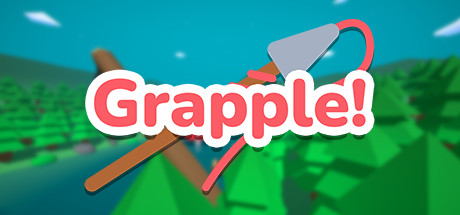
Grapple is a parkour game built for speedrunning. You're tasked to reach the end of the level only with the aid of a grappling hook & glider.
Revenue comes from in-game items and microtransactions, which our price-based model doesn't estimate. Copies below reflect the player base, not paid sales.
Stats
Languages: English**languages with full audio support
Engagement
Reviews
Themes across 40 recent reviews and how positive each mention is. A keyword signal, not full sentiment analysis.
Reviews
This game gave me Aspergillosis Brucellosis Candidiasis Cholera Chorioamnionitis Diphtheria Gastroenteritis Giardiasis Hepatitis Hepatitis B (HBV) Hepatitis C (HCV) Malaria Pneumocystis Pneumonia Poliomyelitis Smallpox Tuberculosis Adult T-Cell Leukemia Benign Mesothelioma Breast cancer Brooke-Spiegler syndrome Cancer Colorectal Cancer Cowden syndrome Endometrial Cancer Familial adenomatous polyposis Gastrointestinal stromal tumor Gestational trophoblastic neoplasm Leukemia Li-Fraumeni syndrome Lung cancer Lymphoma Lynch syndrome Melanoma Neurilemmoma Neuroblastoma Neurofibromatosis Paraganglioma Parathyroid adenoma Peripheral primitive neuroectodermal tumor (Ewing sarcoma) Peutz-Jeghers syndrome Pilomatricoma Pituitary adenoma Prostate Cancer Tuberous sclerosis Urinary bladder cancer Von Hippel-Lindau Disease Anemia Antiphospholipid syndrome Aortic Aneurysm Argininosuccinic aciduria Arrhythmogenic Right Ventricular Dysplasia Atherosclerosis Atrial heart septal defect Behcet's Syndrome Bernard-Soulier syndrome Brugada syndrome Cerebrovascular accident (Stroke) Citrullinemia Congenital afibrinogenemia Congenital Heart Block Coronary Artery Disease (CAD) Coronary heart disease Diamond-Blackfan anemia Disseminated intravascular coagulation Erythropoietic Protoporphyria Esophageal varix Factor VII deficiency Factor XII (Hageman factor) deficiency Familial Atrial Fibrillation Fanconi anemia Glanzmann thrombasthenia Glucose-6-phosphate dehydrogenase deficiency Heart disease Hemophilia B Hemorrhagic disease of the newborn Hepatoerythropoietic porphyria Hereditary Coproporphyria Hereditary elliptocytosis Hereditary spherocytosis Hypertension Intermediate Coronary Syndrome Kawasaki Disease Leukopenia Long QT Syndrome Methemoglobinemia Myocardial infarction (Heart Attack) Pernicious anemia Polycythemia vera Pre-eclampsia (High Blood Pressure in Pregnancy) Protein S deficiency Pulmonary Embolism Sick sinus syndrome Sickle Cell Anemia Thalassemia Thrombocytopenia (Dyserythropoietic anemia) Thrombophilia Thrombotic thrombocytopenic purpura Vascular Diseases Vasculitis Von Willebrand disease X-linked sideroblastic anemia Arthritis Atopic dermatitis Cataract Congenital ichthyosiform erythroderma Cutis laxa Distal arthrogryposis Ehlers-Danlos syndrome Fibrodysplasia ossificans progressiva Loeys-Dietz syndrome Marfan syndrome Mixed connective tissue disease Neutropenia Osteoarthritis Osteochondrodysplasias Osteogenesis imperfecta Periodontitis Psoriatic Arthritis Rheumatoid arthritis Systemic lupus erythematosus Weill-Marchesani syndrome 3-methylcrotonyl-CoA carboxylase deficiency (3-MCC deficiency) Acatalasemia Acute Intermittent Porphyria Alagille syndrome Amyloidosis Berardinelli-Seip congenital lipodystrophy Beta-ketothiolase deficiency Celiac disease Cholesteryl ester storage disease Constipation Diarrhea Dyspepsia Esophageal atresia Exocrine pancreatic insufficiency (EPI) Familial combined hyperlipidemia Familial lipoprotein lipase deficiency Galactosemia Gangliosidoses Gastritis Gastroesophageal reflux disease (GERD) Gaucher's disease Glycogen storage disease Hereditary fructose intolerance Hiatus Hernia Hirschsprung's disease Histidinemia Homocarnosinosis Homocystinuria Intrahepatic cholestasis Irritable Bowel Syndrome Isovaleric acidemia Lesch-Nyhan syndrome Liver Disease Maple syrup urine disease Methylmalonic acidemia Mevalonic aciduria Ornithine transcarbamylase deficiency Pancreatitis Peptic Ulcer Peroxisomal Disorders Phenylketonuria Polycystic liver disease Propionic acidemia Pyruvate carboxylase deficiency Tyrosinemia Wolman disease Acromegaly Addison's disease Androgen insensitivity syndrome Autoimmune Thyroiditis Congenital hyperinsulinism Congenital hypothyroidism Conn's Syndrome Cushing's Syndrome Diabetes Donohue syndrome Hyperaldosteronism Hyperandrogenism (Mullerian aplasia) Hyperargininemia Hypercalcemia Hyperglycemia Hypermethioninemia Hyperparathyroidism Hyperphosphatemia Hyperprolactinemia Hyperthyroidism Hypoglycemia Hypoparathyroidism Hypophosphatemia Hypopituitarism Hypothyroidism Inappropriate Antidiuretic Hormone Syndrome Pseudohypoaldosteronism Pseudohypoparathyroidism Alkaptonuria Denys-Drash syndrome Frasier syndrome Gout Graves' disease Interstitial nephritis Kidney Disease Kidney Failure LCAT deficiency Nephrogenic diabetes insipidus Nephronophthisis (Medullary cystic kidney disease) Neurohypophyseal diabetes insipidus Polycystic kidney disease Primary hyperoxaluria Proteinuria Renal Osteodystrophy Renal Tubular Acidosis Wilson Disease Immune System Diseases Agammaglobulinemia Autoimmune lymphoproliferative syndrome Chronic granulomatous disease Common variable immune deficiency DiGeorge Syndrome Eosinophilia Eosinophilic Esophagitis (EOE) Hemophagocytic lymphohistiocytosis Hereditary angioedema Hypersensitivity reaction type I disease Hypersensitivity reaction type II disease Immunoglobulin Alpha Deficiency Langerhans cell histiocytosis Leukocyte adhesion deficiency Lymphedema Severe combined immunodeficiency (SCID) Wiskott-Aldrich syndrome Bethlem myopathy Brody myopathy Cardiomyopathy Congenital Myasthenic syndrome Cystic Fibrosis Dilated cardiomyopathy Emery-Dreifuss muscular dystrophy Familial hypertrophic cardiomyopathy Guillain-Barre syndrome LAMA2-related muscular dystrophy Limb-girdle muscular dystrophy Myopathy Myotonic dystrophy Nemaline myopathy Progressive external ophthalmoplegia Ullrich congenital muscular dystrophy 2-hydroxyglutaric aciduria Achromatopsia AGAT deficiency Age-related macular degeneration Aicardi-Goutieres syndrome Alzheimer's disease Amyotrophic Lateral Sclerosis (ALS) Angelman syndrome Aniridia Aphasia Apraxia Aspartylglucosaminuria Ataxia Telangiectasia Axenfeld-Rieger syndrome Axonal neuropathy Bardet-Biedl syndrome Benign Rolandic Epilepsy Bipolar Disorder Blepharophimosis (BPES) Brain edema Carpal Tunnel Syndrome Cerebellar ataxia Charcot-Marie-Tooth Disease Choroideremia Coloboma Corneal Disease Corneal Dystrophy Creutzfeldt-Jakob Disease Degenerative Nerve Diseases Dentatorubral-pallidoluysian atrophy (DRPLA) Dyslexia Dystonia Encephalopathy Epilepsy Essential tremor Exophthalmos Exudative vitreoretinopathy Eye Diseases Fragile X Syndrome Friedreich's Ataxia Frontotemporal Dementia Gerstmann-Straussler-Scheinker Disease Gilles de la Tourette syndrome (Tourette's Syndrome) Glaucoma Glycine encephalopathy Gyrate atrophy Hallervorden-Spatz disease Hereditary Spastic Paraplegia Holoprosencephaly Huntington's disease Intellectual disability Isolated Duane retraction syndrome Krabbe disease Kuru encephalopathy Leber congenital amaurosis Leigh's Disease Leukodystrophy Lissencephaly Metachromatic leukodystrophy Microcephaly Microphthalmia Migraine Motor Neuron Disease Multiple Sclerosis (MS) Muscular Atrophy Myasthenia Gravis Narcolepsy Neuritis Neuromyelitis optica Neuronal Ceroid-Lipofuscinoses Neuropathy Night blindness Nonsyndromic deafness Pain agnosia (Congenital insensitivity to pain) Paraplegia (Paralysis) Parkinson's Disease Prion Diseases Refsum disease Restless Leg Syndrome Retinitis pigmentosa Rett Syndrome Sandhoff disease Schizophrenia Sensorineural hearing loss Sleep Disorders Sneddon syndrome Spinocerebellar ataxia Spondyloepimetaphyseal dysplasia Trichotillomania Usher syndrome Vitelliform macular dystrophy Xeroderma pigmentosum Cryptorchidism Gonadal dysgenesis (Turner Syndrome) Impotence (Erectile Dysfunction) Klinefelter's Syndrome Polycystic Ovary Syndrome Premature Ovarian Failure Prostatitis Pseudohermaphroditism Allergic rhinitis Alpha-1 Antitrypsin Deficiency Asthma Choanal atresia And Chronic Obstructive Pulmonary Disease (COPD). Count your days.
Related
Related
Trends
Concurrent players on Steam, sampled daily since tracking started.
Hours played at review time, across 40 reviews with recorded playtime.
positive critical· bar length = how often the theme comes up
Fun
i got to fly
as of 2.0, the physics are genuinely horrible.
免费 没中文 没成就 飞钩疾驰 这是一款主打速通玩法的跑酷游戏,你仅依靠飞钩与滑翔翼,一路奔赴关卡终点。
isn't exactly a bad game, but as a beginner it is hard to get in to and the first levels just seem a bit difficult to be early levels. some bounces aren't bouncy enough, the swing isn't exactly he best either, it just feels like it doesn't swing you high enough.
Grapple is a first-person movement platformer that focuses entirely on speed, momentum, and player mastery. Rather than building its experience around combat, story progression, or exploration, the game strips everything down to one central idea: moving through environments as quickly and efficiently as possible using a grappling hook and glider system. The result is a fast-paced and highly skill-driven experience that feels closer to a speedrunning challenge than a traditional platformer. What makes the game so compelling is how satisfying movement becomes once players learn to control the physics and momentum properly. The core gameplay revolves around using a grappling hook to swing through obstacle-filled environments while maintaining speed and precision. Players can latch onto surfaces, launch themselves through the air, and combine momentum with gliding mechanics to travel across levels at incredible speed. At first, the controls may feel chaotic and difficult to manage because movement relies heavily on physics rather than fixed platforming systems. Overshooting jumps, slamming into walls, and losing momentum are common during the opening stages. However, once the mechanics begin to click, traversal becomes extremely rewarding and surprisingly addictive. One of the game’s greatest strengths is how much satisfaction comes from pure mechanical improvement. There are no major progression systems, skill trees, or unlockable abilities carrying the player forward. Advancement comes entirely through learning how to move more efficiently and understanding how momentum behaves. Every successful grapple chain and perfectly timed glide feels earned because success depends completely on player skill. The game constantly rewards practice and experimentation, creating a strong sense of mastery over time. The level design supports this movement-focused structure remarkably well. Stages are built around speedrunning principles, encouraging players to search for faster routes, cleaner movement patterns, and advanced shortcuts. The objective is always straightforward — reach the finish line — but the way players accomplish that task can vary dramatically depending on skill level and creativity. Some players may move carefully through levels while learning mechanics, while experienced players can launch themselves through entire sections with incredible speed and precision. Replayability becomes one of the most addictive parts of the experience. Completing a stage once rarely feels like the true end goal. Instead, players are constantly encouraged to replay levels in pursuit of better times and more efficient movement. The game creates the same kind of appeal found in dedicated speedrunning titles where shaving a few seconds off a completion time becomes incredibly satisfying. As movement skills improve, previously difficult levels begin to feel smooth and fluid in ways that make replaying them genuinely enjoyable. The pacing also works extremely well because levels are designed around short, repeatable attempts. Failure rarely feels overly punishing since restarting is quick and immediate. This rapid retry system encourages experimentation rather than frustration. Players can fail repeatedly while refining routes and movement techniques without losing significant progress or momentum. The game understands that repetition is central to mastery and structures its levels around that philosophy effectively. Visually, Grapple adopts a minimalist presentation that prioritizes readability over realism or environmental storytelling. Levels are built using clean geometric structures and brightly colored surfaces that make traversal paths easy to identify even during high-speed movement. The environments themselves are not especially detailed or visually diverse, but the simplicity helps players focus entirely on movement and precision. The uncluttered presentation becomes especially important during advanced runs where reaction speed and spatial awareness matter constantly. The sound design complements the gameplay effectively without drawing attention away from movement. Grappling sounds, impacts, and gliding effects provide useful feedback that helps reinforce momentum and timing during traversal. The soundtrack maintains an energetic atmosphere that supports the speed-focused gameplay loop while remaining subtle enough to avoid becoming distracting during difficult sections. Another admirable quality of Grapple is how accessible it is despite its high skill ceiling. The game allows players to approach challenges at their own pace, whether they simply want to experiment with movement or aggressively optimize runs for speed. Since the game is free-to-play, it also becomes an easy recommendation for players curious about physics-based platformers or movement-focused games without requiring financial commitment. However, the steep learning curve will likely frustrate some players. Momentum-based traversal naturally creates moments where movement feels unpredictable or difficult to control, especially early on. Players accustomed to more traditional platformers may initially struggle with the loose and physics-driven mechanics. The game expects patience and practice, and not everyone will enjoy the process of repeatedly failing while learning advanced movement control. The overall gameplay structure can also become repetitive over time for players who are not interested in speedrunning or self-improvement. Since the game revolves almost entirely around replaying levels for faster times and cleaner movement, those looking for story content, combat systems, or constantly evolving mechanics may eventually lose interest. The minimalist design works well mechanically, but it also limits variety outside of traversal itself. The presentation, while functional, may also feel visually plain compared to larger modern movement games. Environments prioritize gameplay clarity over atmosphere or worldbuilding, which can make the game feel somewhat emotionally detached despite how mechanically satisfying it becomes. Despite these limitations, Grapple succeeds remarkably well at delivering a focused and highly rewarding movement experience. The combination of grappling, gliding, momentum control, and speed-focused level design creates traversal that feels genuinely exhilarating once mastered. Few indie games manage to make movement itself this consistently entertaining and skill-driven. For players who enjoy speedrunning games, parkour platformers, and experiences built around mechanical mastery, Grapple offers an addictive and deeply satisfying challenge centered entirely on momentum and precision. While its minimalist structure and demanding controls may not appeal to everyone, the thrill of mastering its movement systems makes it a standout experience for fans of skill-based traversal games. Rating: 6/10
this game gave me lung cancer and forced me to skip my great grandmothers 15 years dead anniversary because i was locked inside my mothers basement being forced to play this ♥♥♥♥♥♥♥ game
Troll game where the title image looks nothing like the content, Contains an editor that only has 5 unique objects, and the most popular players maps are junk strewn abaout. Summary mentions a glider but actually there is only an auto-retracting grapple line. Clicking the 'Speedrun' button is a misleading link to a Discord server.
I went into this believing that i would enjoy it as i have many other micro-speedrunning games, but i was greeting by a game in this genre with a movement system that felt clunky and downright bad with it forcibly stopping my movement at times, and level design that seems like it was intentionally built to stop players from gaining momentum or finding shortcuts and route time saves. The level design also feels very odd on top of the other problems as the grapple can feel clunky at times along with the spots you may grapple to feeling out of place and forced in.
Audience
Estimated from the language of this game's reviews — a proxy for where players are, not official Steam demographics.
Related
| Zaccaria Pinball | $0 | 2.3K | 79% | Free |
| The WereCleaner | $0 | 13K | 99% | Free |
| House Flipper | $65.8M | 110.8K | 94% | $24.99 |
| Slime Rancher 2 | $45.9M | 49.2K | 95% | $29.99 |
| Haste | $3.6M | 13.6K | 92% | $11.99 |
| Grocery Store Simulator | $3.1M | 5.3K | 90% | $14.99 |