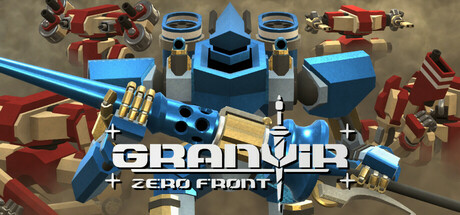
Granvir: Zero Front is a mech combat roguelite that combines tactical action, machine customization, and resource management into an experience that feels far more ambitious than its indie appearance initially suggests. Set during a desperate war against the invading Millennium Company, the game places players in command of customizable combat machines while forcing them to survive through increasingly dangerous operations across hostile territory. What makes the game stand out immediately is how seriously it treats mechanized warfare. These are not fast arcade robots sprinting around battlefields without consequence. Every mech feels heavy, dangerous, and vulnerable, creating combat encounters where positioning, preparation, and smart resource usage matter just as much as reflexes.
The combat system is one of the game’s strongest achievements because it manages to make every battle feel intense and physically impactful. Mechs move with noticeable weight, weapons hit with destructive force, and large firefights create a constant sense of danger. Players cannot simply rush into combat without consequences because armor, ammunition, and repairs are all limited resources that directly affect long-term survival during a campaign. This slower and more tactical pace makes victories feel rewarding since success depends heavily on planning and mechanical understanding rather than pure aggression. The battlefield constantly pressures players to think carefully about positioning, timing, and escape routes while enemy forces grow increasingly overwhelming.
Weapon variety contributes significantly to the gameplay depth. Players can build machines focused entirely on long-range artillery, close-range melee combat, heavy armor, or balanced hybrid configurations. Flamethrowers, rocket launchers, machine guns, giant blades, pile bunkers, and explosive spears all create dramatically different combat styles. The flexibility of the customization system encourages experimentation because changing even a single weapon or mech component can completely alter how a machine performs during combat. Some builds favor speed and hit-and-run tactics, while others become slow-moving fortresses capable of absorbing massive punishment. The constant discovery of new parts and equipment keeps progression satisfying throughout long campaigns.
Customization goes beyond weapons alone. Players can replace legs, frames, armatures, and support systems in order to improve mobility, survivability, or firepower. Salvaging parts from defeated enemies and ace pilots becomes one of the game’s most rewarding systems because upgrades feel meaningful rather than purely statistical. Every successful mission potentially unlocks new tools that reshape future strategies. The game does an excellent job making players feel attached to their machines because every modification reflects personal tactical choices and survival priorities.
The roguelite campaign structure adds another layer of strategic tension. Missions are connected through branching routes where players must carefully decide which battles to fight, which objectives to prioritize, and how to manage increasingly limited resources. Repairs cost money, ammunition must be replenished, and damaged equipment can quickly turn future encounters into disasters if not handled properly. Taking risky contracts may offer better rewards, but failure can cripple an entire campaign. These systems create a satisfying sense of long-term progression where every decision carries consequences beyond a single mission.
One of the more impressive features is the game’s cooperative multiplayer support. Campaigns can be played with multiple pilots working together, transforming missions into large-scale mechanized warfare operations where teamwork becomes critical. Coordinating builds, sharing resources, and supporting allies during intense firefights adds a strong sense of camaraderie to the experience. The co-op design works particularly well because the game’s slower pacing naturally encourages communication and planning between players rather than chaotic run-and-gun action.
Visually, Granvir: Zero Front focuses more on atmosphere and mech design than cutting-edge graphical technology. The environments are filled with ruined industrial zones, harsh battlefields, and militarized science fiction landscapes that reinforce the feeling of a world trapped in endless conflict. The mechs themselves are especially impressive because they look functional and heavily engineered rather than overly stylized or exaggerated. Explosions, weapon effects, and battlefield destruction create exciting combat scenes even if the presentation itself remains modest compared to larger-budget releases.
The sound design also deserves praise because it adds tremendous weight to the combat. Weapons roar with satisfying force, mechanical movement sounds heavy and industrial, and battlefield audio constantly reinforces the intensity of mechanized warfare. Metallic impacts, warning alarms, and radio chatter help every engagement feel tense and immersive. Combined with the game’s slower movement and tactical pacing, the audio design strengthens the illusion that players are piloting dangerous military hardware rather than simple videogame characters.
Another strength is the game’s commitment to replayability. Since campaigns involve randomized progression routes, changing enemy encounters, and constantly evolving mech builds, no two runs feel entirely identical. Experimenting with different weapon combinations and strategies gives the game strong longevity, especially for players who enjoy optimization and build experimentation. The roguelite structure also creates a constant sense of progression because even failed campaigns usually provide new parts, upgrades, or lessons that improve future attempts.
Despite its many strengths, Granvir: Zero Front is not especially welcoming to newcomers. The learning curve can feel overwhelming during the early hours because the game expects players to understand combat systems, resource management, customization mechanics, and campaign planning simultaneously. New players may initially struggle with running out of ammunition, suffering catastrophic damage, or becoming trapped in unwinnable situations due to poor resource management decisions. The difficulty can feel punishing, particularly for solo players attempting longer campaigns without cooperative support.
The game’s mission structure can also become repetitive over time. Although the randomized systems and customization options help maintain variety, many missions revolve around similar objectives involving combat, scavenging, and extraction. Players who spend dozens of hours with the game may eventually notice that the overall gameplay loop changes less dramatically than the customization systems themselves.
There are also moments where balance issues become noticeable. Certain enemy encounters can feel overwhelming depending on available resources, and some builds appear significantly stronger than others during specific stages of progression. While ongoing developer support helps address many of these concerns, occasional frustration still appears during particularly difficult missions or poorly timed encounters.
Granvir: Zero Front stands as one of the more compelling indie mech games in recent years because it combines satisfying combat, meaningful customization, and strategic campaign management into a highly addictive gameplay loop. While the steep difficulty curve and repetitive mission structure may frustrate some players, fans of mechanized combat and tactical action games will find an experience filled with depth, atmosphere, and rewarding progression. Its combination of heavy mech combat and roguelite survival mechanics creates a distinct identity that helps it stand out within the increasingly crowded indie action genre.
Rating: 8/10

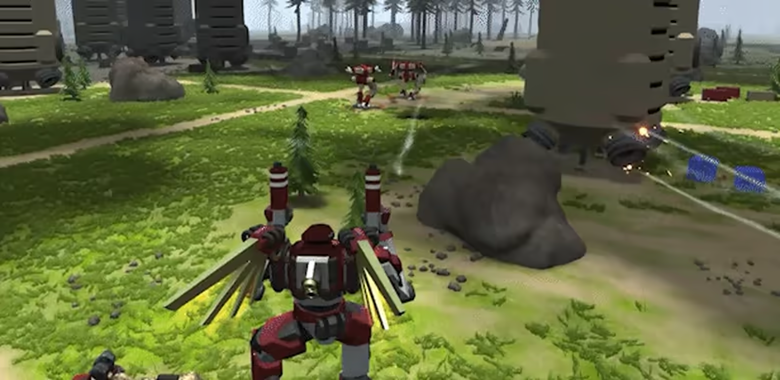 Equip devastating melee weapons such as swords, rocket spears and pile bunkers. Wield powerful long range guns like cannons, machine guns, flamethrowers and rocket pods. Mix and match armaments to suit your play style.
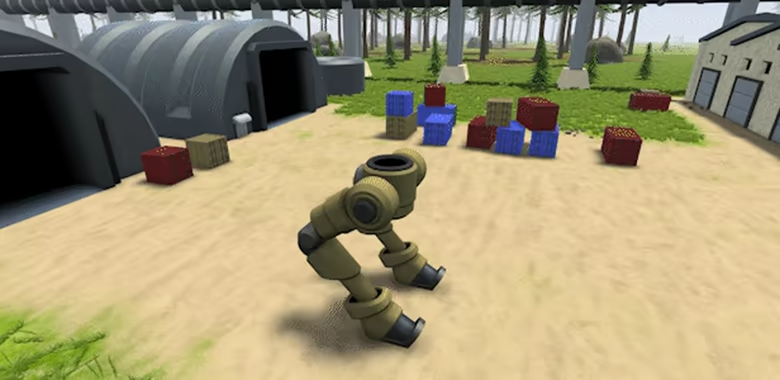 Mix torsos, legs, armatures and special modules to customize your Granvir. Defeating enemy ace pilots unlocks their unique parts.
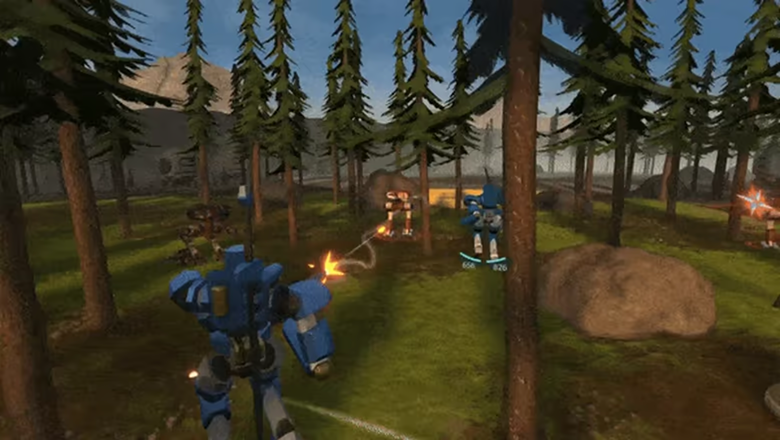

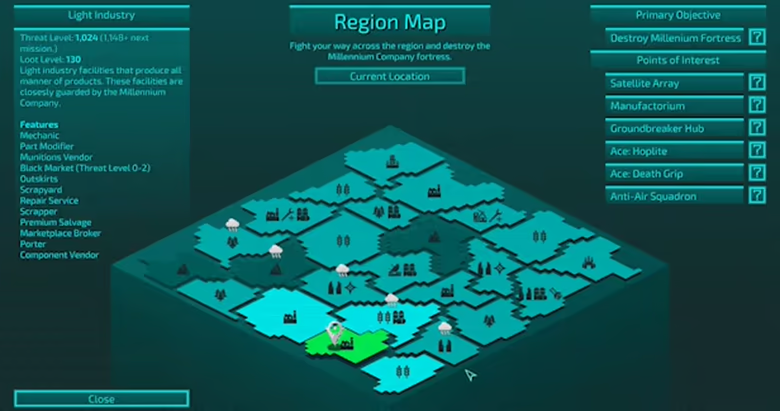 No campaign is the same as you manage time, resources and your route to each objective. Each zone impacts what services and resources are available. Use down time between missions to refit and upgrade your Granvir to prevail.