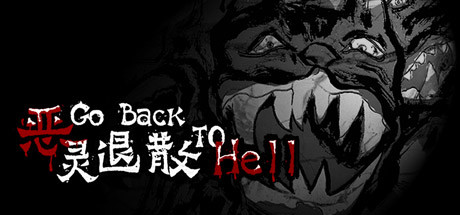
This is a click game with horror theme to find hidden items. Players play exorcists and go to all kinds of gloomy and terrible scenes. Please be sure to find every suspicious place, otherwise ghosts will suddenly appear!!!
Modeled estimate, not a reported figure. How we estimate →
Media

About
Stats
All-time low is the lowest price we've recorded for this game since we started tracking it.
Languages: English, French, Italian, German, Spanish - Spain, Danish, Ukrainian, Russian, Bulgarian, Hungarian, Turkish, Greek +17 more
Engagement
Hours played at review time, across 40 reviews with recorded playtime.
Reviews
Themes across 40 recent reviews and how positive each mention is. A keyword signal, not full sentiment analysis.
positive critical· bar length = how often the theme comes up
Reviews
有的时候找齐了还是会出BUG 不过全成就很方便一键解锁 KEY很便宜
比怕不怕趴喵霸霸要难一点 主要是二周目红色滤镜看不清 也不是很吓人
Жена сказала, что если на этом обзоре наберётся 10 лайков и 5 наград, то она подарит ящик пива. Мужики, выручайте!
https://vimeo.com/1068668335
画风挺不错,希望能加个新手提示,提示下退出按钮和心脏按钮的作用什么的 每关基本都卡在80%,我这关找不到的同一个东西,重开一把不也找不到,也没有游戏内提示和攻略啥的,打不到100%,很难受 等个攻略回来打全成就,有了踹我 ————二次编辑———— 原来输入777可以显示所有的隐藏点,稍微记一下就能找全了 二周目就是全损版的666+777,背下物品点就能过,没什么动力打
Go Back to Hell, developed and published by 冷笑黑妖, takes the familiar hidden object formula and reshapes it into a tense horror experience driven by observation, atmosphere, and psychological discomfort. Instead of focusing on combat or traditional survival horror mechanics, the game builds tension through careful environmental investigation and the fear of missing something hidden in plain sight. The result is a smaller-scale horror title that relies more heavily on pressure and uncertainty than direct action. Players step into the role of an exorcist tasked with investigating locations connected to supernatural disturbances. What initially feels like a straightforward paranormal investigation gradually becomes far more unsettling as strange activity begins revealing itself throughout each environment. Rather than confronting threats directly, players are forced to study surroundings carefully and identify hidden abnormalities before dangerous consequences begin to emerge. The central gameplay revolves around searching environments for suspicious objects, visual inconsistencies, and paranormal traces concealed throughout dark and unsettling locations. Unlike traditional hidden object games designed around relaxation or slower puzzle-solving, Go Back to Hell introduces tension by making every search feel urgent. The game constantly pressures players to remain focused while creating uncertainty regarding what might appear next. Observation becomes the most important skill throughout progression. Success depends on paying attention to small environmental details that could easily be overlooked. Hidden abnormalities blend naturally into surroundings, forcing players to carefully examine every corner rather than relying on obvious clues. The design rewards patience and concentration while punishing careless mistakes. One of the strongest qualities of the game comes from how effectively it transforms simple mechanics into something stressful. Searching a room for hidden disturbances sounds harmless in theory, but the horror presentation changes that experience entirely. Players often find themselves studying environments carefully while simultaneously dreading what they might discover. The tension comes not only from hidden threats but from anticipation itself. The atmosphere serves as the experience’s greatest strength. Dark environments filled with unsettling imagery create constant discomfort during exploration. Abandoned spaces and supernatural themes reinforce a sense of danger even when nothing obvious is happening. The game consistently maintains the feeling that something dangerous exists just outside immediate awareness. Visual design supports that atmosphere effectively. Environments remain dark and disturbing without sacrificing readability. Horror imagery appears throughout the experience without overwhelming gameplay clarity, which is particularly important in a game built entirely around careful observation. The visual presentation creates tension through mood rather than relying entirely on excessive visual shock value. The developers also strengthen replayability by preventing players from relying completely on memorization. Hidden elements can appear in different locations across repeated sessions, forcing players to remain attentive rather than mechanically repeating previous solutions. Familiarity improves performance, but attention remains necessary throughout every playthrough. Time pressure introduces another layer of challenge that separates Go Back to Hell from more traditional hidden object experiences. Players cannot simply investigate environments at a leisurely pace. Mistakes carry consequences, increasing pressure during already stressful situations. Incorrect choices can reduce available time and create additional tension during later moments. Audio contributes heavily to the overall experience as well. Sound design reinforces psychological pressure by supporting quieter moments with subtle tension while intensifying more dangerous situations effectively. Horror often relies on anticipation rather than direct confrontation, and the game understands how audio can strengthen that feeling without becoming intrusive. Progression remains focused rather than overly complicated. The game understands its central idea and avoids introducing unnecessary mechanics that could weaken its atmosphere. Additional challenge modes increase difficulty for returning players, providing stronger demands through reduced visibility, greater pressure, and more demanding observation requirements. The smaller scale does create certain limitations. Players expecting a larger horror narrative with extensive worldbuilding may find the experience narrower in scope. Gameplay remains heavily focused on observation mechanics, meaning players seeking broader mechanical variety may eventually notice repetition. Narrative depth also takes a secondary role compared to atmosphere and gameplay tension. However, those limitations stem directly from the game’s focused design philosophy. 冷笑黑妖 clearly built Go Back to Hell around a specific objective: transforming hidden object gameplay into a horror experience capable of creating anxiety through careful observation rather than direct confrontation. The result feels more distinctive because of that commitment. What ultimately makes Go Back to Hell memorable is how effectively it creates fear from uncertainty. Players spend much of the experience actively searching for hidden threats while simultaneously fearing what they might uncover. That balance between curiosity and discomfort becomes the foundation of the experience. For players who enjoy psychological horror, paranormal themes, and games that create tension through atmosphere rather than combat, Go Back to Hell offers an unsettling experience that successfully turns simple observation into something far more stressful and memorable. Rating: 7/10
Fajnaja karocieńkaja hulnia ź lohkimi dasiahnieńniami!
非常精巧的一款小游戏。个人很喜欢美术风格,线条杂乱,有种神经质的感觉,精神恐怖。赞
总会有一些地方找不到,让我这个强迫症玩家无法忍受!
恐怖版找不同,把一些不符合常识或者诡异的地方找出来就可以了,把自己当驱魔师会更有代入感(。游戏氛围感不错,虽然过程短但是正好不会让人感到很厌烦,虽然有的地方确实不仔细看很难找。规定时间内找不到会出现怪物图不过也还好。最主要的是非常非常便宜而且全成就也很容易达成所以给个好评
Related
Related
Trends
Modeled estimate over time, reconstructed from Steam's monthly review histogram.
Momentum
Pace estimated from the game's recent review growth (our daily snapshots) at its own sales-per-review ratio — a momentum signal, not booked sales.
Audience
Estimated from the language of this game's reviews — a proxy for where players are, not official Steam demographics.
Related
| Rocks and Rockets | $379 | 51 | 69% | $0.99 |
| SEARCH ALL - SEASHELLS | $372.8 | 50 | 90% | $2.99 |
| Dupio | $371.4 | 50 | 58% | $0.49 |
| Cavegirl Adventures | $371.4 | 60 | 58% | $0.49 |
| Village RPG | $384.2 | 56 | 54% | $0.49 |
| I commissioned some bees 13 | $370.4 | 54 | 94% | $0.99 |