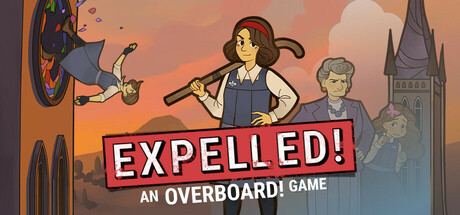
A School Prefect has been pushed out of a window, and everyone's blaming YOU. Can you find the culprit - or someone to take the fall - before you get EXPELLED? Mystery with a wicked twist, from the creators of Overboard!, 80 Days, Heaven's Vault and A Highland Song.
Modeled estimate, not a reported figure. How we estimate →
Media
About
1922. Miss Mulligatawney's School for Promising Girls is one of the best boarding schools in England. You are Verity Amersham, here on a scholarship - and today you're going to be expelled for attempted murder.
From the creators of Overboard! and A Highland Song comes a highly replayable detective game with a wicked twist. Can you escape expulsion through fair means - or foul? Can you find the culprit - or someone else to take the blame?
Starring Amelia Tyler (Baldur's Gate 3) as Verity.
Gossip, lie, steal, manipulate - but don't get caught!
Navigate the school day, talk to other characters, sneak around - and try not to get expelled!
Your actions will affect other characters, who remember everything they see and hear.
Everyone here has secrets - students and teachers alike. Remember, knowledge is power.
Unique morality system: the more EVIL you are, the more choices you'll have...
Next-gen visual novel: go where you want, when you want, and say what you want.
Simulated story-world: other characters move and act independently, remembering everything they see and hear - and everything you do.
Every minute counts: you have one school day to escape punishment. The clock is always ticking!
Who can you trust? Some characters are friendly and some are out to get you. Who will you befriend? Who will you betray?
Every run is different, with new leads and new opportunities for mayhem.
Avoiding expulsion is just the start. Can you rise to the position of Head Girl?
Mysteries abound. Why is the cellar locked? What is your best friend's dark secret?
One play-through lasts about 30 - 45 minutes, but achieving that perfect run will take a lot longer...
With music by jazz legends George Gershwin, Paul Whiteman, Louis Armstrong, Bessie Smith and more!
Stats
All-time low is the lowest price we've recorded for this game since we started tracking it.
Languages: English**languages with full audio support
Engagement
Hours played at review time, across 40 reviews with recorded playtime.
Reviews
Themes across 40 recent reviews and how positive each mention is. A keyword signal, not full sentiment analysis.
positive critical· bar length = how often the theme comes up
Reviews
[h3]An Intricate But Slow Timeloop Game[/h3] I am a bit conflicted for this one as I do like the premise of the game of trying to clear your name in a frame-up in a iterative timeloop alongside its cartoon aesthetics. Figuring out the schedules of characters and how they interact with each other is fun in this game (to a certain extent) and then culminating to various solutions to survive the end of the day. While the side characters themselves don't have much depth, I do have a soft spot for Susan even though she has been my bane and Natasha for living her best life. (Why Natasha likes the protagonist and saying one thing can nullify that is kinda heartbteaking.) I can kind of recommend this game for a casual playthrough but not really for completionist runs. With timeloop games, setting up events or sequences can be a source of tedium or frustration if it is too long to do. With how this game is setup, this game suffers from a lot of repetition. Fundamentally, the problem could be easily mitigated if it had faster animations and transitions to the speed of visual novels skips. As it stands, progressing dialogue and choices just feel so slow where it was quaint to see now becomes a hindrance. Second, only having a few choices at any given time is a strange limitation that limits what the game can do. Sometimes time sensitive options are not shown that can cost time or feel like janky UI mangling. Third, I kinda don't like the evil meter as a permanent progression where increasing it is the only viable choice and resetting it only for an alternative ending. Playing normally, the player is locked out of choices until certain thresholds are met which feels bad considering how the character is already and does not make sense thematically. I do get providing a meta progression element but this definitely was off the mark. Credit to the game that it has so much interweaving pieces where some of its genre alternatives feel so flat or simple but I did not bother with the perfect ending because of these issues. Aside from its genre issues, the story, crime and characters aren't too interesting or intriguing though. I feel the game's joy comes from being evil rather than being straight and narrow but even then there isn't much. There is a line between being mischievous and mean and this game falls on the latter. I sympathize with the protagonist for being framed but her means and methods make me want to just let them take the fall. To be fair, this might be the point but I did not like the protagonist and I am aware this is a prequel to another game. Going back to the crime, too many coincidences occur make it feel like a sloppy and contrived mess. Surprisingly though, I do think the adult characters are probably the more intriguing ones if given the chance specially the antagonistic principal. My last gripe really is finding the correct information feels random. Like to achieve a smoother early game, figuring out that one character only determines a person by their voice took a long time to acquire given the character has bad eyesight in the first place. In a way, I did not find it logical to approach certain characters in a certain way to produce consistent information more so people blurting it out on the side which is nuts. Given the numerous options, this is not so bad to miss one or two of these sweet nuggets of information yet I feel shortchanged trying to learn the game. I could probably go on with my grievances or unnecessary long playtime, but I can still say this is a game that tried and has a creative touch. If the game could be faster and less repetitive, I would have bumped this game a tier but as it stands I feel disappointed. I will still play the source game for context but I feel that could be worse (specially with a sex scene as part of a setup.)
way ropier than it's predecessor. get ready to read the same crap a bunch of times, and if you miss one specific dialog option, to read that same crap a bunch more times. very few instances where having knowledge of previous playthroughs is of consequence, very few instances of the player being able to actually use deduction to solve anything.
[h1]If only game's overall quality would be a little bit higher[/h1] It's not a terrible game, it's just full of technical issues. And not the "crashing" kind of issues but "dialogue options shows when it shouldn't, you press it and ruin your run" instead. Those are much more infuriating and made my playthrough pretty miserable. In the end I'm pretty conflicted but probably will still give it a thumbs down. Mostly for screwing some scenes - like dialogue with Headmistress is absolutely weird, and not in a good way.
Incredible game, and an improvement on the already great Overboard! in about every way. The characters in the game all of such depth to them, and their interactions are hilarious. Ever thought "I'm sure the game wouldn't let me say this.", it usually does, and curiosity is often rewarded with witty dialogue in retort. Go ahead, call the principal a tart in front of the school assembly, knock that student over during physed, stand up and leave in the middle of a lecture; the results can be surprising, and can leave unforeseen consequences or benefits later in the run. Cruel and nasty actions leave the player forever stained with 'evil points', but also unlock more pragmatic options for dealing with situations. A student is about to rat you out? Glare them into silence. Got caught red-handed doing something bad? Blackmail them with something worse. Each playthrough remembers previously learned gossip and information, which must be used to progress further in the game and unlock different branches. Once enough dirt has been gathered, the game can be won. Exploratory players can also find ways to break past the 'evil points' cap, and unlock some truly monstrous options, although this isn't necessary for completion. The game is most fun when the silly options are picked during dialogue choices, and fits well with the tone of the game. Definitely worth a play, or maybe a few dozen.
Expelled! is an interactive narrative adventure developed and published by inkle Ltd, a studio widely recognized for its strong emphasis on branching storytelling and player-driven narratives. Known for creating games where dialogue, character interaction, and choice shape the experience more than traditional gameplay mechanics, the developer continues that philosophy here with a mystery that unfolds entirely through decisions, exploration, and social manipulation. Rather than focusing on combat or puzzle-solving in the conventional sense, Expelled! builds its gameplay around investigation, timing, and the consequences of words and actions within a tightly constructed story environment. The game is set in 1922 at Miss Mulligatawney’s School for Promising Girls, an elite British boarding school where reputation and social status carry enormous weight. Players take on the role of Verity Amersham, a scholarship student who stands apart from her wealthier classmates. As someone who does not come from privilege, Verity already occupies a vulnerable position within the school’s rigid social structure. The story begins with a shocking incident: a prefect has been pushed from a window, and the blame immediately falls on Verity. Before she has a chance to defend herself, the administration prepares to expel her from the school. With her future hanging in the balance, Verity must spend the remaining hours of the day uncovering the truth behind the incident or finding another way to escape the punishment. The narrative takes place across the span of a single school day, and time functions as one of the game’s most important mechanics. Every decision—whether it involves questioning another student, sneaking into a restricted area, or attending class—causes time to move forward. Because the school operates according to a daily schedule, characters move between locations, events occur at specific times, and opportunities may disappear if the player hesitates too long. This system forces players to think carefully about how they spend each moment, turning the story into a strategic experience where timing can determine success or failure. Exploration within the school plays a key role in gathering information and shaping the narrative. Players guide Verity through classrooms, dormitories, hallways, gardens, and other areas of the campus while searching for clues related to the mysterious fall. Each location can contain new conversations, hidden objects, or overheard rumors that reveal more about the situation. The environment itself becomes a storytelling tool, gradually exposing secrets about the students, teachers, and underlying tensions that define life at the school. Dialogue forms the core of the gameplay, and the choices players make during conversations can dramatically alter how the story unfolds. Characters respond dynamically to Verity’s words and actions, remembering past interactions and adjusting their attitudes accordingly. A careless accusation might turn a potential ally into an enemy, while a clever lie might redirect suspicion toward someone else entirely. Because characters communicate with one another, information spreads throughout the school in ways that can influence later events. This interconnected social system transforms dialogue into a powerful mechanic where persuasion, manipulation, and careful listening are often more valuable than direct evidence. One of the most interesting aspects of the game is its moral flexibility. While Verity can attempt to clear her name honestly by uncovering the truth, the game also allows for far more deceptive strategies. Players can choose to lie, spread rumors, steal incriminating items, or frame other students if it helps them avoid expulsion. These darker options are not merely cosmetic; they open up entirely new paths through the story and lead to different outcomes. The result is a narrative experience where players are constantly weighing the consequences of their actions and deciding how far they are willing to go to protect themselves. Replayability is built deeply into the game’s structure. A single run through the school day is relatively short, but the number of possible outcomes encourages players to repeat the experience multiple times. Each playthrough reveals new pieces of information, alternative conversations, and hidden storylines that gradually expose the full truth behind the incident. Because knowledge gained in earlier runs can influence decisions in later ones, the game develops a layered mystery where understanding the social dynamics of the school becomes the key to mastering the story. The characters that populate Miss Mulligatawney’s School are one of the game’s greatest strengths. Each student and teacher has their own personality, motivations, and secrets that contribute to the unfolding drama. Some characters appear supportive at first but later reveal hidden agendas, while others may become unexpected allies depending on how the player treats them. These personalities bring the world to life, making every conversation feel meaningful and often unpredictable. Visually, the game adopts a distinctive hand-drawn art style that resembles an illustrated storybook or graphic novel. Character portraits feature expressive animation that captures subtle emotional changes during conversations, helping players interpret reactions and mood shifts. The environments of the school are richly detailed, with classrooms, dormitories, gardens, and hidden corners all rendered with an aesthetic that evokes the elegance and formality of early twentieth-century British institutions. The audio design reinforces the game’s historical setting through a soundtrack inspired by the music of the 1920s. Jazz influences and period-appropriate instrumentation give the game a lively yet slightly mischievous tone that fits its blend of mystery and dark humor. The music shifts depending on the situation, supporting both tense investigative moments and lighter scenes of social interaction. Beyond the immediate mystery, the story also explores deeper themes related to social class and privilege. Verity’s status as a scholarship student places her at a disadvantage within a school dominated by wealthy families. Many characters are quick to assume her guilt not because of evidence but because she does not belong to the same social circle as the others. This dynamic adds an underlying layer of tension to the narrative, highlighting how prejudice and class divisions influence the characters’ behavior. While Expelled! excels as a narrative experience, its focus on dialogue and replayable story paths may not appeal to players seeking traditional gameplay systems such as combat or complex puzzles. The game relies heavily on reading, conversation, and experimentation with different narrative choices. However, for players who enjoy interactive fiction and games that emphasize storytelling over mechanics, this design approach creates a deeply engaging experience. Ultimately, Expelled! succeeds by transforming a simple accusation into a rich and interactive mystery filled with secrets, social intrigue, and moral choices. Its clever use of time management, branching dialogue, and replayable storylines allows players to approach the situation from many different angles. Combined with strong writing, memorable characters, and a distinctive visual style, the game delivers a compelling narrative adventure that rewards curiosity and creative thinking. Rating: 8/10
Neutral Review. Was not a huge fan of this one. I loved the British banter and the witty dialogue, but I struggled to figure out what I was supposed to be doing next most of the time. You need to be able to figure out little details of what people are saying to be able to know what to do next. Prepare to repeat the same story over and over again to get where you're supposed to be going. I don't think I'd ever be able to finish this without some sort of guide. It's not really the game's fault, it just doesn't work for my brain personally. I also dislike an unreliable narrator in stories in general because it makes me unable to trust her and feel any sympathy for her. Finished? No (don't know if I ever will) Steam Achievements? Will take multiple runs, lots of grinding. Steam Deck? Great Rating? - Not for me. My curator page: https://store.steampowered.com/curator/45865425-CozyAriGames/ Full videos on Youtube.
This was fun, though I didn't find it as fun as Overboard. I found replaying the day to get super repetitive, as I had trouble keeping track of the implications of each choice I made. I might try again sometime with a guide. Certainly worth playing for a few hours, especially if you get it on sale.
What a dramatic, exciting ride! Best played in a few sittings as it is a timeloop game that requires you to remember facts, steps, people etc. I enjoyed it immensely and really adored the characterization and art - skillfully constructed. Definitely recommend for those looking for a good mystery game (and have a bit of patience for replaying for the best ending).
Interesting game but it gets too repetitive.
It's fun, and I like the range of dialogue and the art. However, as the game progresses, it gets kind of confusing how to get a perfect run :') Not all the dialogue boxes are the same every time, they're randomised and sometimes I need to spend extra time picking other options just to eliminate them to get the option I want. Still, overall an interesting story.
Related
Related
Trends
Concurrent players on Steam, sampled daily since tracking started.
Momentum
Pace estimated from the game's recent review growth (our daily snapshots) at its own sales-per-review ratio — a momentum signal, not booked sales.
Audience
Estimated from the language of this game's reviews — a proxy for where players are, not official Steam demographics.
Related
| Futa Nights: Bloody Sluts 💋 | $86.8K | 162 | 75% | $14.99 |
| Whispered Promises ~ 14 Days of Love with Anna | $86.7K | 167 | 93% | $15.99 |
| Cities XL Platinum | $86.8K | 1.6K | 59% | $1.49 |
| Chonkers | $86.8K | 595 | 88% | $4.99 |
| KUUKIYOMI: Consider It | $86.8K | 602 | 78% | $4.99 |
| Arcadian Atlas | $86.8K | 191 | 54% | $19.99 |