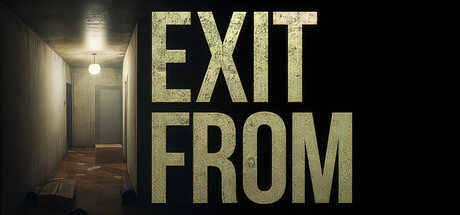
Exit From is a first-person psychological horror game that turns an ordinary apartment building into a disorienting maze of darkness, uncertainty, and lurking danger. Developed by White Box and Elendely and published by White Box, it focuses on exploration, stealth, environmental puzzles, and procedural elements rather than action-heavy combat. Its strongest quality is the way it takes a familiar residential environment and gradually makes every hallway, doorway, and poorly illuminated room feel unsafe.
The game begins with the protagonist awakening during a thunderstorm with little understanding of the circumstances. The building appears abandoned, and the immediate goal is simple: find an exit. That straightforward objective allows the horror to develop naturally through exploration instead of overwhelming the player with exposition. As the search continues, it becomes apparent that something dangerous is present within the building. The feeling of being watched or pursued makes even routine exploration increasingly stressful.
A major feature is procedural generation. Elements of the environment and the placement of important objects can change, meaning repeated attempts are not necessarily identical. This unpredictability fits the psychological horror concept particularly well because complete memorization cannot always eliminate the tension. A location that seemed safe during one attempt may not provide exactly the same circumstances during another. It also gives the game more replay value than a completely linear horror experience, although randomized design can occasionally produce uneven pacing.
Stealth is central to surviving the building. Darkness is not merely decorative because shadows can be used to conceal the player from threats. This creates an interesting relationship between exploration and visibility. Players naturally want enough light to understand their surroundings, but remaining exposed can make movement more dangerous. Instead of encouraging aggressive confrontation, the game rewards patience, observation, listening, and knowing when hiding is preferable to advancing.
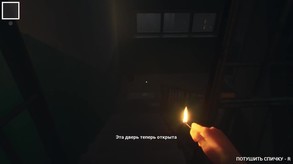
Matches reinforce this vulnerability by functioning as a practical source of illumination. They provide only temporary comfort against the darkness and fit the bleak environment more effectively than an unlimited source of light would. Entering a dark room becomes a small decision involving risk because seeing more clearly can also make the player feel exposed. The lighting mechanics work especially well alongside stealth, turning darkness into both a source of fear and a potentially useful form of protection.
Environmental interaction is another important part of the experience. Doors and surrounding objects are more than static scenery, while exploration involves searching apartments and other areas for useful items and clues. Puzzle and quest elements provide structure to the player's attempts to escape. Progress often depends on paying attention to the environment rather than simply moving toward an obvious objective marker. Players who enjoy carefully investigating horror environments should find this more appealing than those who prefer constant action.
The Soviet apartment-building aesthetic is one of the game's defining characteristics. Its aging residential interiors, narrow passages, gloomy rooms, staircases, and generally oppressive architecture create a distinctive atmosphere. The setting feels grounded enough to be recognizable while becoming increasingly unnatural as the horror develops. Sound also contributes substantially to the experience, with the storm and noises throughout the building encouraging players to wonder whether a sound is harmless ambience or an indication that danger is nearby.
There is more replay incentive than simply reaching an ending. The game contains a substantial collection of achievements, with certain accomplishments providing special rewards that can affect later attempts. Steam Inventory support and trading cards add another layer for completion-oriented players. These systems are not the main attraction, but they give players additional reasons to explore the mechanics, pursue challenges, and return after successfully escaping once.
The visual technology is surprisingly ambitious for an indie horror title. Support for features such as RTX and DLSS can enhance lighting and image presentation on suitable hardware, which is particularly relevant in a game built around darkness, shadows, and enclosed interiors. The overall presentation remains relatively modest compared with major-budget horror productions, however, and occasional roughness should be expected. Its appeal comes more from atmosphere and mechanical ideas than cinematic spectacle.
Procedural generation can also be a weakness. Randomization improves uncertainty, but it cannot always reproduce the deliberate pacing of a carefully scripted horror campaign. Searching similar residential spaces can become repetitive, particularly when the player is unsure which object or route will advance an objective. Some players may also find the intentionally limited guidance frustrating. The experience is consequently better suited to people who enjoy experimentation and environmental investigation than those wanting a tightly directed narrative adventure.
Steam Deck compatibility deserves some qualification. The game does not have an official Steam Deck compatibility rating confirming it as Verified or Playable. Since it is primarily a Windows PC release, Steam Deck users would generally need to rely on Proton, and functionality should therefore be considered unofficial rather than guaranteed. Controller support is beneficial for handheld play, but the absence of an official Deck rating means potential compatibility issues, interface quirks, performance differences, or configuration requirements should be expected. It is best described as having unverified Steam Deck compatibility rather than being officially supported.
Exit From ultimately works because most of its systems reinforce the same feeling of vulnerability. The changing environment prevents complete familiarity, darkness simultaneously threatens and protects the player, matches provide temporary reassurance, and stealth makes encounters something to fear rather than seek out. The apartment setting is particularly effective because it transforms mundane architecture into something oppressive and unpredictable.
It will appeal most strongly to fans of independent psychological horror who enjoy slow exploration, hiding from threats, environmental puzzles, randomized elements, and unsettling atmosphere. Its procedural structure and modest production values prevent it from reaching the refinement of the strongest games in the genre, but its unusual setting and interconnected horror mechanics give it a recognizable identity. As a compact, replay-oriented escape horror experience, it offers enough tension and experimentation to justify several journeys through its disturbing apartment complex.
Rating: 8/10