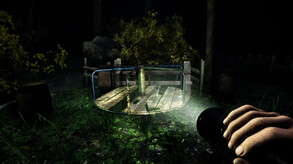
Lunacy: Saint Rhodes is a first-person psychological horror adventure game. Explore your dark family history, solve puzzles and experience a gut-wrenching feeling of terror. You are being watched; never alone, never safe.
Modeled estimate, not a reported figure. How we estimate →
Media
About

Stats
All-time low is the lowest price we've recorded for this game since we started tracking it.
Languages: English*, French, Italian, German, Spanish - Spain, Russian, Simplified Chinese, Dutch, Portuguese - Brazil*languages with full audio support
Engagement
Hours played at review time, across 40 reviews with recorded playtime.
Reviews
Themes across 40 recent reviews and how positive each mention is. A keyword signal, not full sentiment analysis.
positive critical· bar length = how often the theme comes up
Reviews
Довольно мрачная игра и вторая половина ее, прохождение лабиринта, изрядно пощекотала нервы, а ближе к концу игры, так вообще окунаемся в мифы о Древних богах и ощущаем влияние самого Лавкрафта. Приятная графика, интересные локации, несложные загадки и довольно интересный сюжет который ведет игрока до самого финала. Коих тут два. Звук просто на высоте. Вот он именно и порадовал больше всего. Все реалистично хрустит, шуршит, скрипит и воет. Взяв в последнее время за практику запускать игры на топовых конфигурациях тех времен, прошел это увлекательное и мрачное приключение на Quad Core 6600, Asus P5KC, 8gb RAM и легендарной MSI Cyclone GTX 460.
Conarium and the Darkness Within games are among my favorite horror games, so I had to try this one. I don't know if they had the B-team working on this one or what, but it just wasn't very good at all. You end up walking around with the world's dimmest flashlight (which thank god there were no batteries to worry about) through houses so full of garbage as to be comical, trying to find the hidden object to interact with. It was so dark that I was getting eye strain and cranked my brightness way up. God help you if you have to leave the cabin as your running speed is slower than my walking speed. I dunno, what happened here. I'll give Stormling Studios another shot after this, but this one just ain't it. Grade: D+
也谈不上差吧,六七分的水平,毕竟烂作实在是玩太多了。引导稀烂无疑是最大问题,得做好随时查攻略的准备。但不知是不是我运气爆棚,玩着反而是近期相对较顺的一款。(被尼罗河折磨疯了)比如开头这个拉电闸,我顺着墙上的电线摸索一下子就找到了;后来一个藏得特深的戒指,因为翻箱倒柜的习惯又直接找到了? 前半段在宅子里有啥就奔哪的一本道解谜体验最佳,逻辑非常清晰(做到这点在独恐里并不容易),经典的JS和密道一应俱全。中期在幻境中祖母的分阶段BOSS战有着不错的关卡设计,一直到这都是可以给八分的。(忽略引导问题只谈游戏性的话)但后期的潜行追逐很平庸,缩水的内容像是在草草收尾,双结局聊胜于无,分数就直接垮掉了。另外,这游戏明明做了整个村子的半开放地图,但流程相当线性,等于把这点浪费掉了,遗憾。 剧情讲述男主家族和四大恶魔之间的渊源,又是为了治疗绝症而动用黑魔法的故事,我觉得恶魔典故里最开始为了爱情而放弃永生还怪浪漫的?本来对这个褒贬不一有所戒备,结果体验出乎料的还行。荒了可以当个低配版心魔代餐一下,有一两处对希区柯克的致敬有点意思。
This game has too much running/hiding/sneaking. The level with the catacombs is the worst. The sigils will NOT stop the demon from crossing them once you fill them. Also to charge the various crystals to open the doors you need to charge them using the skull, which attracts the demon. If there were an easy mode or a cheat to turn off all the dying/running then I would likely recommend it, but as it is now I must warn other players to avoid this game.
lot of bugs, fell off the map a few times, 30/31 candles 1 is missing searched everywhere and i never found the last one and the story is not great
+крутая графика(с художественной точки зрения) +очень крутые звуки, ходишь по дому все скрипит хрустит и вообще +хорошая приятная музыка +богохульные текста, пропитанные неописуемым ужасом -можно залочиться столом -противники скорее надодают чем нагнетают -в целом сюжет странный, заставляют повторять один ритуал несколько раз, если выкинуть повторы, игру можно было сделать в 2 раза короче и она бы от этого только выйграла Резюмирая все выше сказанное, пройти можно за пару вечеров, но ничего супер крутого ждать не стоит, не смотря на банальность сюжета и надоедливостью гейм плея с монстрами, все же реально прикольные текстовки и местами гнетущая атмосфера
Ребята скатились от самобытных ктулхуХорроров, до модных сейчас игр с блужданием в темноте со скримерами. Картинка в игре наводит на мысль, что это проект из 2012-2013-х годов (да и чёрт бы с ней, игра отталкивает с первых минут). Хватило на 40 минут. Желания проходить этот проект совершенно нет. Я с интересом читал записки в Conarium, восторгался атмосферой в Transient. А здесь ... темнота и беготня по лесу с деревянными коробками. Это я ещё не дошёл до кривой боёвки и постоянно появляющимся то там, то тут монстром (про это я прочитал позже).
Lunacy: Saint Rhodes, developed by Stormling Studios and published by Iceberg Interactive, is a first-person psychological horror experience that aims to immerse players in a slow descent into madness. The game centers on Thomas Rhodes, who returns to his abandoned family home in the ghostly town of Saint Rhodes to investigate his family’s mysterious past. What begins as a personal journey of discovery quickly unravels into a surreal nightmare filled with dark secrets, reality distortion, and encounters with forces that defy explanation. It is a game that strives for an unsettling atmosphere rather than relying on constant scares, pulling the player into a psychological labyrinth that blurs the line between truth and hallucination. From the outset, the game establishes a strong sense of place and mood. The environments are detailed and oppressive, filled with crumbling architecture, scattered relics of the past, and dimly lit corridors that evoke both curiosity and fear. The Rhodes mansion serves as the game’s central hub, a decaying structure that feels alive with secrets. The player’s flashlight flickers against peeling wallpaper, dust motes drift in the light, and shadows move just slightly too quickly for comfort. The sound design contributes greatly to the tension—creaks, whispers, and distant footsteps echo throughout the halls, making every step forward an act of will. The visual effect of wiping condensation or grime from the protagonist’s glasses is a clever immersive touch, briefly distorting vision to enhance the feeling of vulnerability and instability. In these moments, the game succeeds brilliantly at creating a sense of unease that few indie horror titles achieve. Gameplay in Lunacy: Saint Rhodes revolves around exploration, puzzle-solving, and environmental storytelling. Rather than equipping the player with weapons, the game keeps them defenseless, emphasizing observation and survival. Players uncover letters, photographs, and diaries that piece together the Rhodes family’s tragic history while navigating between dimensions or altered realities. At its best, the game feels like a haunted mystery that rewards curiosity. The player’s journey through fragmented memories and shifting environments creates a feeling of discovery that keeps the story engaging. However, as the narrative unfolds, Lunacy introduces sequences where the player is hunted by hostile entities. These sections can heighten tension, but they also disrupt pacing; the chase mechanics and one-hit kill design can feel unforgiving, forcing restarts that sometimes undercut the carefully built atmosphere. Narratively, the game combines traditional haunted house tropes with themes of madness and guilt. The story’s nonlinear progression mirrors the protagonist’s deteriorating mental state, and as the boundaries between reality and hallucination blur, it becomes difficult to trust what’s seen or heard. The writing occasionally stumbles—dialogue and voice acting range from adequate to awkward—but the central mystery remains compelling. The game’s dual endings provide some replay value, allowing players to see how their decisions affect the outcome, though the differences between them are subtle. Despite its narrative ambition, the pacing can feel uneven at times. Key story revelations are front-loaded or delayed by tedious exploration segments, and some puzzles require backtracking through dimly lit areas that feel repetitive after multiple visits. Still, for players invested in atmospheric horror, the mystery surrounding the Rhodes family remains a worthwhile draw. Technically, Lunacy: Saint Rhodes shows both ambition and limitations. The graphics are impressive in their art direction rather than raw fidelity; textures and models occasionally appear dated, but the lighting and environmental design compensate by crafting a consistently eerie tone. When the game uses its lighting well—flickering lamps, sudden shifts between warm and cold tones, or the subtle glow of a door leading into darkness—it creates genuinely haunting imagery. Unfortunately, technical issues are not uncommon. Some players have reported inconsistent frame rates, occasional clipping bugs, and lighting glitches that can break immersion. The autosave system is also a point of frustration, as progress may be lost after lengthy sections, forcing replay of entire sequences. These technical shortcomings don’t destroy the experience, but they remind players that Lunacy’s scope sometimes exceeds its polish. The audio design remains one of the game’s strongest aspects. The ambient noise shifts dynamically, intensifying when danger approaches and quieting in lulls of false security. The music is sparse but effective, using low drones and faint piano motifs to heighten psychological tension. At times, the sound design itself becomes a storytelling tool—players might hear distant sobs or the scratching of unseen claws, prompting them to question whether these sounds are real or imagined. It’s this manipulation of perception that sets Lunacy apart from more conventional horror titles. The scares don’t always rely on jump tactics; instead, they emerge from the creeping realization that the environment—and perhaps the protagonist—cannot be trusted. Overall, Lunacy: Saint Rhodes is an uneven but compelling entry into the psychological horror genre. Its atmospheric presentation, layered environments, and surreal storytelling elevate it above many low-budget horror efforts, but its technical flaws, clunky stealth sequences, and inconsistent pacing prevent it from achieving greatness. When it leans into its strengths—slow dread, exploration, and ambiguity—it delivers moments of genuine fear and intrigue. When it overreaches with chase mechanics or underdeveloped puzzles, it risks breaking immersion. Still, the experience lingers long after the credits roll, not because of cheap shocks, but because of the haunting world it constructs—a world where memory, grief, and madness intertwine. For fans of atmospheric, story-driven horror who value mood over precision, Lunacy: Saint Rhodes offers a flawed yet memorable journey into darkness that’s worth taking, especially for those willing to forgive its imperfections in favor of its ambition. Rating: 6/10
💋
Lunacy: Saint Rhodes tries to be many things - and doesnt succed with most of them. Some positive aspects at the start: The general (level)design is quite good, dare I say atmospheric. As long as its night (which it is for all of them game except one ending) the game looks quite good! The puzzles are adequat, sometimes a bit pixel-hunty. Theres one "stealth" sequenz that works quite well. Its both fair and "scary". I didnt encounter any technical problems - no bugs, no savegame-issues etc. Very smooth experience in that regard. Now for the bad stuff: First of all - the story and your characters motivation are not even a bad joke. The writing is quite bad so that any "mystery" you might want to discover just falls flat on its face. George - the guy you're playing as - does comment things from time to time but never in a convincing way - just walked into a shed filled with dead pigs hanging from the ceiling that turned into human bodies? Nah, doesnt affect George, no need to react to it! His commentary for the most part is very functional, aka telling you that doors are blocked and the like. Its also unclear why he doesnt just turn around and nope out of this empty village with all its ghosts. The game scatters lots of documents everywhere but all of them are so "clearly" written that you dont need to piece together some horrible family-mystery-drama-story, you just get it served on a very dull plate. Same goes for the familytree: When I first started the game I was quite excited to see it in the menu because I assumed it would be some big riddle where you needed to piece it together over the course of the game. But it just auto-completes when you find some items and is, on top of that, completly meanigless. The story and design also borrow heavly from different horror-tropes that dont fit together but would let you play horror-bingo. As I mentioned before there is one effective stealth-sequenz about 2 hours into the game (a hours btw which are really quite boring). After that stealth sequenz the game gives you a weapon and a ton of enemies to defeat/stun... and ruins the atmosphere again by turning into some light "shooter". All in all the game lacks a clear, well executed vision. It feels like the developers took pieces from different horrorgames, didnt fully understand what made those pieces work in the games they came from and threw all of them into Lunacy Saint Rhodes. The game works. Just not as a good horrorgame.
Related
Related
Trends
Concurrent players on Steam, sampled daily since tracking started.
Momentum
Pace estimated from the game's recent review growth (our daily snapshots) at its own sales-per-review ratio — a momentum signal, not booked sales.
Audience
Estimated from the language of this game's reviews — a proxy for where players are, not official Steam demographics.
Related
| Sea of Survivors | $73.8K | 417 | 82% | $6.99 |
| Zombies Ate My Neighbors and Ghoul Patrol | $73.8K | 263 | 65% | $14.99 |
| Fork Road | $73.8K | 975 | 75% | $2.59 |
| Filcher | $73.8K | 222 | 95% | $9.99 |
| JANITOR BLEEDS | $73.8K | 275 | 86% | $12.99 |
| Dragon Fin Soup | $73.8K | 146 | 60% | $19.99 |