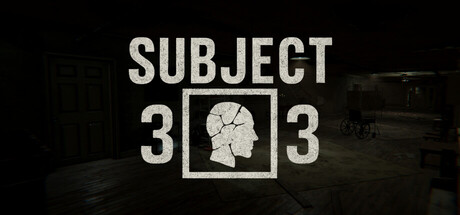
SUBJECT 33 is a story-driven psychological horror game set in an abandoned asylum. You are Ephraim, sent on a mission to uncover what happened before its sudden closure in 1984. As you explore, the line between reality and memory begins to blur — and the truth you uncover might destroy you.
Modeled estimate, not a reported figure. How we estimate →
Media

About
“Subject 33” is a psychological horror game focused on exploration, tension, and atmosphere.
Inside an abandoned asylum, every file and every room hides traces of unauthorized experiments.
As you dig deeper, reality and memory begin to overlap.
Ephraim, an archivist sent on a banal mission, ended up living a nightmare. Sent to retrieve patient records from an asylum that had been closed in 1984. Soon realizes the place wasn’t just for treatment. With every door opened, every note found, every new discovery, his memory begins to unfold. He begins to understand that his past is deeply connected to what happened there.
Explore Body A and Body B of the asylum, gather documents, unlock doors, and piece together the twisted history of Subject 33. Each room hides clues, personal notes, and files left behind by staff and patients. The more you discover, the more dangerous the asylum becomes—as if someone or something is trying to prevent you from uncovering the truth.
Immerse yourself in a rich and atmospheric narrative, full of psychological tension, environmental storytelling, and puzzles. You'll collect 40 patient files, unlock hidden passages, and reveal the secret of Body C, where the real story lies.
🗝 Story-Rich Gameplay: A psychological narrative slowly revealed through notes, files, and environmental clues.
🔦 Immersive Atmosphere: Explore dark corridors, generator-powered lights, and sound design that keeps you on edge.
🧩 Puzzles & Secrets: Unlock doors, find hidden objects, and solve puzzles to progress.
🎭 Psychological Horror: Experience moments where reality bends, hallucinations strike, and your perception is challenged.
🎧 Full Voice Acting: Fully voiced prologue and key dialogue sequences for a cinematic experience.
📜 Collectible Lore: 40 unique patient files, personal letters, and secret notes to uncover.
👁 First-Person Exploration: For maximum immersion and tension.
Stats
All-time low is the lowest price we've recorded for this game since we started tracking it.
Languages: English*, Romanian*languages with full audio support
Reviews
I was going to record this to put on youtube. I did not finish this game for a few reasons. Quite frankly, this seems like a walking simulator with a few jumpscares thrown in. By a few, I mean all jumpscares. Nothing is subtle. I thought the atmosphere was good until I was constantly getting jumpscared. A huge problem is that some papers you cannot turn over and look at the back, and some you can. This makes finding the photos/numbers for the safe pretty annoying to get. I did not realize I need those numbers until I turned one over by happenstance and then realized I needed to find four. It is hard to figure out what papers and items you can pick up and not, because there is only a small "q to pick up" prompt and if you dont see it, you miss it. I made it to the third number, then could not find any more. There is still a locked door I couldn't do anything with. I'm unsure if this is operator error, but I searched every room in the house 12 times and could not find the last number. I am assuming it may be in the locked room. Nonetheless, my issues are: - It builds up a slight atmosphere, then just ruins it with jumpscares over and over. Ones that are way too loud. - A few of the jumpscares are repeating, so if you go in the same area/pick up the same thing, it'll play again. The car was honking after the second time it went off, and I could not turn it off AT ALL. It definitely ruins the experience when you hear a honking toy car the entire time you're playing the game. - The game promised a lot of lore and atmosphere, but honestly there were only a few notes and they were more casual than actually explaining what was going on in the story. I still have no clue what happened. This may be later in the game, but I explore 95% of the areas, rooms, and environments and there was not a lot of story. - The game advertises as "voice acted" but it's AI, it's a bit misleading. It may have been I who could not find the third number or a key to unlock the last door, but honestly it was near impossible to find every single paper/notes as they don't really stand out enough to say "that's a grabbable item" and I promise you I went through the entire place at least 4, 5 times. Maybe more. Overall it was not worth it to me to keep going with a car honking in my ears, jumpscares that had played already repeating, and having to look in every drawer, shelf, ect a 5th or 6th time for a number (brute forcing didn't work). I think this game has promise, but has a lot of work that needs done.
scary game
For a beginner its a good horror game
Also bin mir unsicher das Spiel ist jetzt nicht wirklich gut aber auch nicht das schlechteste der Anfang geht voll klar aber nach der Zeit entwickelt es sich in nur ein einziges Rätsel mit zwischendurch mal nen Jumpscare,das Spiel kann an manchen stellen echt frustrierend sein. https://youtu.be/FL7cGGpgZPQ
“SUBJECT 33” is a psychological horror experience that leans heavily on atmosphere, narrative discovery, and environmental tension rather than shock value or action. Developed by Matei Mihai and published by PIXELWAVE GAMES, the game places you in the role of Ephraim, an archivist sent to recover patient files from an asylum that was shut down decades earlier. What appears at first to be a routine archival task slowly unravels into an unsettling exploration of abandoned medical wings, forgotten documents, distorted memories, and the haunting legacy of unethical experimentation. The premise is familiar to the genre, yet the game’s commitment to slow-burn dread and environmental storytelling helps carve out its own identity. The asylum setting is where “SUBJECT 33” spends most of its creative energy. Dilapidated corridors, dimly lit therapy rooms, sealed wards, and scattered fragments of patient histories combine to form an environment that feels simultaneously oppressive and intimate. The game pushes you to study your surroundings with care: flickering lights, distant echoes, and subtle environmental cues heighten tension without relying on loud jumpscares. This design choice encourages a more contemplative engagement with the world, making each room a potential source of new information or creeping unease. The visual presentation—dust-laden hallways, outdated medical equipment, peeling documents—works together with a restrained audio design to evoke a chilling sense of abandonment and unresolved trauma. Gameplay unfolds primarily through meticulous exploration and the slow assembly of information. Your main objective—recovering dozens of patient files—becomes a narrative puzzle, inviting you to piece together a story that grows more disturbing the deeper you delve. Locked doors, note fragments, environmental details, and subtle shifts in atmosphere guide progression, reinforcing that you are not just wandering the asylum but excavating layers of hidden truth. There is no combat, no weaponry, and no reflex-based challenge; the horror stems instead from what the environment reveals, what it suggests, and what your character slowly comes to understand. This approach draws from the traditions of “walking simulators” and psychological thrillers, where immersion and narrative tension take precedence over mechanical complexity. Where the game excels is in its ability to build dread through restraint. It avoids overusing visual monsters or constant scares. Instead, it roots its horror in implication—focusing on the personal tragedies of past patients, the unethical experiments that took place, and the sense that the asylum itself retains a lingering, malignant consciousness. As Ephraim uncovers more files, elements of memory and hallucination start blending with reality, offering glimpses of a mind under strain and a past that refuses to remain buried. For players who appreciate slow, atmospheric horror—where the fear arises not from sudden frights but from the gradual erosion of trust in your surroundings—“SUBJECT 33” can be deeply engaging. However, the same design philosophy may alienate players expecting more traditional horror elements. The pacing is intentionally slow, and much of the experience involves reading documents, revisiting rooms, and paying close attention to environmental detail. Without action or frequent event triggers, those seeking fast-paced scares may find the experience too subdued. The repetition of similar-looking hallways and rooms, a common challenge in asylum-themed games, can also lead to moments of monotony if environmental variation does not remain strong enough throughout the experience. For a game so dependent on atmosphere, any lull in tension or environmental engagement becomes more noticeable. Additionally, because the game is a relatively new indie release with a small community, there is limited information on its long-term polish, potential bugs, or planned updates. The small player base means that pacing issues, navigation difficulties, or technical hiccups may not yet be widely documented or resolved. Indie psychological horror often thrives on word-of-mouth and gradual refinement, and only time will reveal whether “SUBJECT 33” receives the attention or patching needed to sharpen its strengths. Despite these caveats, “SUBJECT 33” stands as an intriguing entry in the psychological horror genre—compact, atmospheric, and focused on narrative discovery. It appeals most strongly to players who enjoy unraveling mysteries slowly, who appreciate environmental storytelling, and who prefer unsettling mood over kinetic action. It may feel understated compared to more flashy horror titles, but its commitment to subtle dread and careful exploration gives it a haunting quality that lingers after the credits. For fans of immersive, introspective horror experiences, it offers a thoughtful and eerie journey into a forgotten asylum and the psychological wounds it left behind. Rating: 6/10
[h1] 不推荐 完全不恐怖 高能非常蠢 BUG也多 [/h1] [h2] 有些剧情比如 玩具汽车鸣笛 以及电话来电 第二次进场景依然会触发这些剧情 然后还没办法停下来 非常的吵 然后部分解密你不翻译一下完全是解不出来的 2025年了 你就是拿ai翻译也能糊弄一下吧 但你就是不愿意 那我只能给帮你差评了[/h2]
Related
Related
Trends
Concurrent players on Steam, sampled daily since tracking started.
Momentum
Pace estimated from the game's recent review growth (our daily snapshots) at its own sales-per-review ratio — a momentum signal, not booked sales.
Related
| Glasses and Girls | $315.6 | 51 | 82% | $0.99 |
| Dances and Girls | $322 | 52 | 83% | $0.99 |
| Bongo Quest | $322 | 52 | 46% | $0.49 |
| Anime Sunset Ride | $334.4 | 54 | 67% | $0.49 |
| Cosmic Journey PC Live Wallpaper | $336.3 | 52 | 71% | $0.99 |
| Forest and Girls | $340.5 | 55 | 82% | $0.99 |