English Teaching Assistant VR
Play, sing, and dance along with the world's first fully animated chat-bot in VR while you improve your English skills.
Estimated lifetime revenue
Free-to-play
Revenue comes from in-game items and microtransactions, which our price-based model doesn't estimate. The player count below is how many people own it, not what they spent.
Est. players
662
people who own it
Reviews
23
Review score
65%
6.5/10
Concurrent players
0
read Sep 17, 2026, 15:00 UTC
Followers
About
About the game
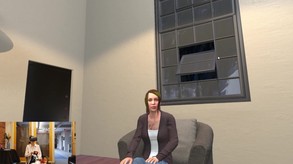
English Teaching Assistant VR is the world's first fully animated chat-bot in VR. It can keep up with conversations and accurately answer questions. It can dance, recite poetry, play games with you, and even tell jokes. It is also able to make eye contact, and lip-sync.
This is a free tester software that has been developed to display and showcase our most recent successes with development. It is currently in development and will receive monthly updates and additions, such as new locations, new skins, and overall general changes. It will eventually be used to direct English language learning courses and programs.
CONTROLS:
In order to speak to the bot, please hold down the correct push-to-talk button while you say your sentence. You will be able to see subtitles with your sentence, then let go of the button.
Keyboard:
WASD - Move
CTRL - Push to talk
C - Crouch
Space - Jump
Shift - Run
HTC Controller:
Touchpad - Teleportation
Grip Buttons - Squeeze to talk
Oculus:
Thumbstick - Teleportation
Inner Triggers - click to talk
Microsoft Mixed Reality:
Thumbpad - Teleportation
Grip Buttons - Squeeze to talk
Before playing, please make sure you have speech services turned on. To turn speech services on, please follow the following instructions:
Windows settings --> Privacy --> Speech inking and typing --> turn on speech services
If you are not a native english speaker, we recommend turning on the following setting:
Windows settings --> Time and Language --> Speech --> turn on recognize non-native accents
We welcome and encourage constructive feedback as we progress and grow.
During Early Access, this bot is only able to respond to English. As we continue to update, we will be releasing further language integrations. Please be patient with us during this time.
This is a free tester software that has been developed to display and showcase our most recent successes with development. It is currently in development and will receive monthly updates and additions, such as new locations, new skins, and overall general changes. It will eventually be used to direct English language learning courses and programs.
CONTROLS:
In order to speak to the bot, please hold down the correct push-to-talk button while you say your sentence. You will be able to see subtitles with your sentence, then let go of the button.
Keyboard:
WASD - Move
CTRL - Push to talk
C - Crouch
Space - Jump
Shift - Run
HTC Controller:
Touchpad - Teleportation
Grip Buttons - Squeeze to talk
Oculus:
Thumbstick - Teleportation
Inner Triggers - click to talk
Microsoft Mixed Reality:
Thumbpad - Teleportation
Grip Buttons - Squeeze to talk
Before playing, please make sure you have speech services turned on. To turn speech services on, please follow the following instructions:
Windows settings --> Privacy --> Speech inking and typing --> turn on speech services
If you are not a native english speaker, we recommend turning on the following setting:
Windows settings --> Time and Language --> Speech --> turn on recognize non-native accents
We welcome and encourage constructive feedback as we progress and grow.
During Early Access, this bot is only able to respond to English. As we continue to update, we will be releasing further language integrations. Please be patient with us during this time.