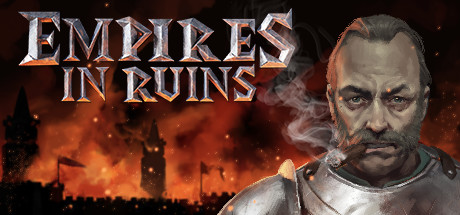
The bastard child of Grand Strategy and Tower Defense, with a black humor infused plot, set in a grim, disillusioned world. Quell the rebellion, tame the Western Marches, disobey your orders and save your brandy. Not strictly in this order.
Modeled estimate, not a reported figure. How we estimate →
Discounts
Every price cut of more than 20% we have observed, in each market that quoted one, with this game's chart position on either side of it. These are episodes, not a model: a sale is one event, and one event cannot tell you what the next one will do.
Reviews, worldwide (the counter carries no country): 0/day in the week to Sep 4 → 0/day in the week after.
For scale, across Steam · Top Sellers · Brazil over the last 30 days: the 26 chart moves that followed a price cut of more than 20% went a median of 7 places towards #1, and the 2,402 moves with no price cut behind them went 2 away. One store, one chart, one country — it is the only place we have enough observations to say even that.
Prices outside the United States have been collected since 6 August 2026 and chart positions since 19 July 2026, so a cut older than that has no market to compare and a market that joined later has no history yet. Nothing here is converted between currencies.
About


Engagement
Reviews
Themes across 42 recent reviews and how positive each mention is. A keyword signal, not full sentiment analysis.
Reviews
能不能把攻击塔的怪物全删了 让我很难办啊
Empires in Ruins is an unusual strategy experience that refuses to stay within the boundaries of a single genre. Developed by Hammer & Ravens and published by Hammer & Ravens alongside WhisperGames, it blends turn-based empire management with real-time strategy and tower defense. Instead of simply moving armies around a map or surviving predetermined enemy waves, players must think about territory, economics, technology, politics, and battlefield defenses as interconnected parts of the same campaign. It is an ambitious combination that occasionally feels rough, but the willingness to experiment gives the game an identity of its own. The campaign follows Sergeant Hans Heimer, an irritable and frequently intoxicated soldier who has little patience for authority or bureaucracy. He is sent to deal with rebellion in the Western Marches, territories that have broken away from the Principality of Koth. What initially appears to be a straightforward military assignment gradually develops into a broader story involving political schemes, neighboring powers, questionable leadership, and personal conflicts. The writing embraces dark and cynical humor rather than treating its medieval-inspired setting with complete seriousness. Hans is particularly important to the game's personality, serving as an entertainingly bitter counterpoint to the politicians and officers surrounding him. Much of the larger campaign unfolds on a strategic map where provinces must be conquered, developed, and defended. Controlling territory provides resources and opportunities for expansion, but simply capturing land is not enough. Provinces can be improved through infrastructure, while governors can be appointed to oversee them. Political relationships and diplomacy also influence the campaign. These elements make territorial growth feel more involved than merely changing the ownership of locations on a map, since maintaining an expanding domain requires economic and administrative attention. Technology adds another substantial progression layer. There are numerous research options covering economic development, military improvements, battlefield capabilities, and other strategic advantages. The combat system itself provides a sizable collection of towers, abilities, buildings, and upgrades to unlock. This creates a satisfying sense of development as the campaign progresses. Early limitations gradually give way to more specialized defensive combinations and broader strategic possibilities, encouraging experimentation instead of relying indefinitely on the same basic approach. Battles shift the experience into real-time tower defense with noticeable RTS influences. Players establish defensive structures, manage battlefield resources, construct production facilities, position officers, and prepare for incoming enemy forces. Workers are responsible for construction, making them meaningful battlefield assets rather than invisible background mechanics. The selection of towers allows different defensive configurations, while elemental and status interactions reward thoughtful combinations. Covering enemies with oil before exposing them to fire, for example, demonstrates how different defensive tools can complement each other rather than functioning independently. Enemy forces also prevent the battlefield from becoming entirely predictable. Different routes and methods of attack can force players to reconsider supposedly secure positions. Threats may approach through conventional ground routes as well as air, water, amphibious, or less obvious paths. Enemies can also interfere with buildings and economic infrastructure, so building an impressive defensive line does not automatically guarantee safety elsewhere. This makes battlefield awareness important and gives the RTS side of the design more relevance than simply placing towers and watching enemies follow fixed lanes. The greatest strength of Empires in Ruins is also responsible for many of its weaknesses. Combining grand strategy, management, RTS mechanics, narrative progression, and tower defense creates considerable variety, but individual systems do not always reach the sophistication found in games dedicated exclusively to those genres. Players expecting an extremely detailed empire simulator may find the strategic layer relatively modest, while traditional tower-defense fans may consider the campaign management surrounding battles unnecessarily complicated. The experience works considerably better when accepted as a hybrid where each mechanic supports the larger campaign. Presentation is functional rather than extravagant. Its isometric battlefields provide a practical view of defenses and incoming threats, while the overall visual design fits the smaller-scale production. The game's personality comes more strongly from its writing, unusual premise, and mechanical combination than from technical spectacle. Its intentionally cynical depiction of incompetent officials, political manipulation, military bureaucracy, and unreliable authority also creates a distinctive atmosphere. The humor can be abrasive, but players who appreciate sarcastic and dark comedy may find it one of the more memorable parts of the campaign. Steam Deck compatibility is officially categorized as Playable rather than fully Verified. Performance with the default graphics configuration is considered suitable, and the game can run successfully on SteamOS. However, handheld players should expect compromises. Some functionality is not fully accessible through the default controller configuration, touchscreen interaction or a community controller layout may occasionally be useful, and text entry can require manually opening the virtual keyboard. Some interface text may also appear small, while certain prompts can display keyboard, mouse, or non-Steam Deck controller icons. It is therefore functional on the Deck, but the experience is less seamless than a fully optimized handheld release. Empires in Ruins ultimately stands out because it attempts something more complicated than a conventional tower-defense campaign. Managing provinces, researching technologies, dealing with political concerns, building an economy, and then personally defending territory through real-time battles gives victories a broader purpose. The execution has some uneven edges, and players interested exclusively in one of its component genres may wish for greater specialization. For those attracted to experimental strategy games, however, its mixture of strategic planning, tactical defense, progression, dark comedy, and story creates an engaging and surprisingly distinctive adventure. Rating: 7/10
Media

Related
Related
Price dynamics, follower growth, revenue and sales trajectories with interactive tooltips
This and every other Pro feature is free until October 20, 2026. A free account is all it takes.
Genres
Stats
All-time low is the lowest price we've recorded for this game since we started tracking it.
Languages: English*, Simplified Chinese, Italian, Russian, Spanish - Spain, Portuguese - Brazil, German, Japanese, Korean*languages with full audio support
Hours played at review time, across 42 reviews with recorded playtime.
positive critical· bar length = how often the theme comes up
Selling now
See how fast this game is selling right now — estimated copies and revenue per day from recent review growth.
Players by region
Where this game's players are, estimated from review languages.
Related
| Game | Estimated lifetime revenue | Reviews | Review score | Price |
|---|---|---|---|---|
| $108.3K | 241 | 66% | $14.99 | |
| $1.7M | 1.2K | 78% | $39.99 | |
| $999.5K | 1.2K | 81% | $19.99 | |
| $914.1K | 963 | 71% | $24.99 | |
| $437.8K | 458 | 58% | $13.99 | |
| $282.3K | 1.2K | 93% | $6.99 |
Related
| Game | Estimated lifetime revenue | Reviews | Review score | Price |
|---|---|---|---|---|
| $66.2K | 3.5K | 82% | $0.99 | |
| $66.2K | 182 | 87% | $9.99 | |
| $66.2K | 444 | 94% | $4.99 | |
| $66.2K | 421 | 71% | $7.99 | |
| $66.1K | 215 | 53% | $9.99 | |
| $66.2K | 98 | 86% | $29.99 |