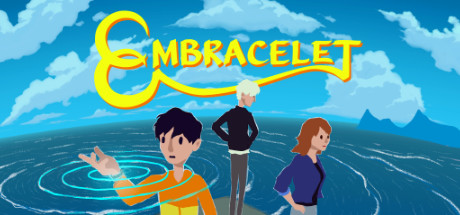
Embracelet, developed by Mattis Folkestad and published by machineboy, is a delicate and heartfelt narrative adventure that blends quiet storytelling, light puzzle mechanics, and emotional reflection into a small but moving experience. Set in Norway, the game tells the story of Jesper, a seventeen-year-old boy living in the city of Oslo who inherits a mysterious bracelet from his late grandfather. This object becomes both a literal and symbolic source of power, allowing Jesper to manipulate the world around him while guiding him toward an understanding of his family’s past. What begins as a simple trip to a remote northern island soon transforms into a journey of discovery about identity, friendship, and the weight of legacy. Embracelet may appear unassuming at first glance, but beneath its soft visuals and restrained pacing lies a deeply personal exploration of belonging, empathy, and emotional growth.
The story unfolds through Jesper’s return to the isolated island of Slepp, a place his grandfather once called home. It is a small, rugged community surrounded by cold waters and crumbling cliffs, struggling to hold on to its history in the face of modernity and decline. Jesper’s mission to uncover the secret of the bracelet becomes intertwined with his exploration of the island and its remaining inhabitants. Along the way, he meets Karoline and Hermod, two locals whose personalities contrast sharply—Karoline is spirited and outspoken, while Hermod is more reserved and contemplative. Their friendship with Jesper forms the emotional center of the narrative, and through dialogue choices, the player can shape these relationships in subtle but meaningful ways. Each conversation feels personal, emphasizing empathy and understanding rather than conflict or moral binaries. The writing is simple yet sincere, and it captures the awkwardness and tenderness of youth with authenticity. The story’s themes of family memory, cultural preservation, and self-discovery resonate deeply because they are grounded in the small moments between characters, not in grand drama or spectacle.
Gameplay in Embracelet functions as a quiet extension of the narrative rather than as a source of challenge. Players guide Jesper through exploration, dialogue, and environmental interaction, occasionally using the bracelet’s telekinetic power to manipulate objects or solve small puzzles. These moments are never meant to test skill but to maintain a gentle rhythm that keeps the player engaged with the story. Moving boulders, repairing bridges, or restoring mechanisms becomes a metaphor for Jesper’s emotional growth, as if each act of manipulation is a small restoration of balance in both the world and himself. The mechanics are intuitive but intentionally slow-paced, reinforcing the reflective tone of the game. There is no combat, no fail state, and no pressure to rush. Instead, Embracelet rewards curiosity and patience, inviting the player to absorb the sights and sounds of Slepp at their own pace. Some may find the repetition of walking or the absence of more complex puzzles tedious, but these design choices are deliberate—they mirror the contemplative quality of the narrative and the stillness of life on a remote island.
The presentation is one of Embracelet’s greatest strengths. Its minimalist art style, composed of low-poly models, soft lighting, and pastel color tones, creates a warm and inviting aesthetic despite the game’s melancholic undertone. The simplicity of the visuals allows emotion and atmosphere to take precedence over realism, evoking a sense of calm that complements the story’s pacing. Every sunset over the fjord, every snow-covered trail, and every softly glowing interior feels carefully composed, almost like a painting. The lack of sharp textures and detail gives the world an ethereal quality, as if it exists halfway between dream and memory. The camera, while fixed in its positioning, is used effectively to guide focus and frame moments with cinematic intention. Sometimes it highlights a character’s isolation against a vast landscape; other times it captures the intimacy of a quiet conversation beneath the northern lights. These visual flourishes, combined with the ambient sound of wind, sea, and gentle piano music, create a sensory experience that perfectly complements the game’s emotional core.
The sound design further deepens the atmosphere. The score, composed of soft piano melodies and restrained acoustic arrangements, flows through the game like a gentle current. It rises during emotional moments but never overwhelms the scene, instead allowing silence to carry equal weight. The lack of voice acting adds to the quiet intimacy of the experience. Dialogue is conveyed through simple text, which gives the player time to absorb each word and contemplate Jesper’s emotions. The soundscape of Slepp—waves crashing against the shore, gulls calling in the distance, and the creaking of wood—anchors the game in a tangible sense of place. The result is a mood that feels nostalgic and introspective, as though you are walking through a living memory rather than a traditional adventure game world.
While Embracelet’s strengths lie in its storytelling and presentation, it is not without its limitations. The pacing can feel uneven, especially during sections where the objectives are unclear or when backtracking across familiar areas becomes necessary. The fixed camera angles, while artistically justified, can occasionally make navigation awkward, and some players may find the slow walking speed frustrating. The puzzles, though thematically integrated, rarely evolve beyond simple environmental interactions, and the lack of variety may disappoint those expecting more mechanical depth. Yet these issues are minor compared to the emotional resonance the game achieves. Its design intentionally avoids complexity to maintain focus on the narrative, encouraging reflection rather than stimulation. It is less concerned with mastery and more with meaning.
At its core, Embracelet is a game about connection—between people, between generations, and between past and present. Jesper’s bracelet symbolizes more than just magical power; it represents the ties that bind him to his family’s history and the responsibility of carrying that legacy forward. Through small acts of kindness, shared laughter, and difficult choices, the story gently examines what it means to grow up and to find your place in the world. The island itself mirrors these themes: it is both decaying and beautiful, filled with echoes of a community that once thrived. The story’s climax offers a choice that feels intimate rather than dramatic, and its ending resonates with quiet melancholy rather than closure, leaving the player with a lingering sense of wonder and nostalgia.
Embracelet stands out as one of those rare games that values sincerity over spectacle. Its power lies not in grand gameplay systems or technical prowess, but in its ability to make you feel something genuine. It captures the bittersweet emotions of youth, the tension between progress and preservation, and the small acts of human kindness that give life its meaning. Though short in length and modest in scope, it leaves an impression far larger than its runtime. For those who appreciate games like Journey, Oxenfree, or Life is Strange, Embracelet offers a similarly reflective experience but with its own Nordic warmth and quiet magic. It is a beautifully understated work that invites you to slow down, listen, and remember what it means to care.
Rating: 8/10