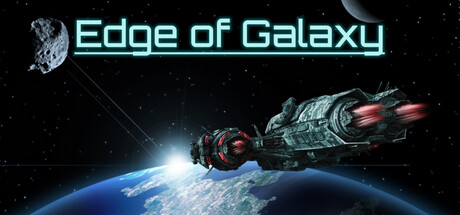
Edge of Galaxy is a space strategy and management game focused on fleet control, expansion, and survival at the frontier of a hostile sci-fi universe.
Modeled estimate, not a reported figure. How we estimate →
Media

About
Edge of Galaxy is a space strategy game centered on exploration, expansion, and survival in a dangerous and unforgiving sci-fi universe. Players command fleets, manage resources, and make strategic decisions while operating at the very edge of known space.
The game emphasizes planning and long-term thinking rather than fast reflexes, rewarding players who enjoy systemic gameplay and careful management.
As you explore new regions, you’ll build and manage fleets, establish control over territory, and respond to threats that emerge from the unknown. Progression comes from expanding intelligently, allocating resources efficiently, and adapting to changing conditions.
Every decision affects your ability to survive and grow in a hostile environment.
Edge of Galaxy focuses on mechanics, systems, and player choice. The universe is designed to feel isolated and dangerous, reinforcing the tension of operating far from safety or support.
This is a single-player strategy experience intended for players who enjoy thoughtful pacing, exploration, and emergent gameplay rather than scripted missions.
Space strategy gameplay focused on exploration and expansion
Fleet management and resource control
Survival mechanics in a hostile sci-fi setting
Systems-driven progression and player choice
Sandbox-style gameplay with replay value
Single-player strategic experience
Genres
Stats
All-time low is the lowest price we've recorded for this game since we started tracking it.
Languages: English, Russian
Engagement
Hours played at review time, across 31 reviews with recorded playtime.
Reviews
Игре куча времени, за 1 час получил 7 багов! Вышел удалил зря потраченные деньги и время!
Edge Of Galaxy is a science fiction strategy and management experience developed by Kinderril and published by Meridian4 that places players in a harsh and isolated corner of space where growth, survival, and careful leadership determine long-term success. Rather than emphasizing cinematic storytelling or large-scale action spectacle, the game focuses on resource planning, fleet expansion, and calculated decision-making. Its structure leans heavily toward players who enjoy strategy systems that reward patience and thoughtful planning rather than constant excitement. The game's setting revolves around operating in dangerous territory beyond the comfort of established civilization. Players are tasked with building a presence in remote regions of space while dealing with limited resources, uncertain threats, and the pressure of maintaining expansion without collapsing under their own ambition. The feeling of isolation becomes an important part of the experience. Space feels large, hostile, and unpredictable, creating an atmosphere where every achievement carries weight because survival itself is never guaranteed. Fleet development sits at the center of progression. Building stronger forces and managing available assets becomes increasingly important as exploration opens additional opportunities and challenges. Players cannot simply expand without considering long-term consequences. Growth requires balance. Investing too aggressively can expose weaknesses, while hesitation may leave operations stagnant. This constant tension creates much of the game's strategic appeal, encouraging players to think carefully before committing resources. Resource management also plays a major role in shaping gameplay. Every decision carries opportunity costs, forcing players to determine where investments matter most. Expanding infrastructure, maintaining fleets, and supporting long-term development all compete for limited resources. The game consistently pushes players toward evaluating priorities rather than relying on quick solutions. Success comes through efficient planning and adaptation rather than brute force progression. Exploration adds another layer to the formula by introducing uncertainty into expansion efforts. Unknown sectors hold valuable opportunities but also potential dangers that can disrupt carefully built plans. The frontier atmosphere strengthens immersion because moving deeper into unexplored territory feels meaningful rather than routine. The game captures the idea of operating beyond safe boundaries where every advancement introduces both reward and risk. One of the stronger aspects of Edge Of Galaxy lies in its focus on player-driven progression. The experience relies less on scripted moments and more on allowing systems to create situations naturally. Players build their own momentum through decisions and long-term strategy. This design creates satisfying moments where success feels earned because outcomes develop directly from planning and execution rather than predetermined sequences. The pacing reflects the management-heavy direction of the game. Players expecting constant combat or high-intensity encounters may find its approach slower than anticipated. Edge Of Galaxy favors measured progress and deliberate thinking over fast action. Decisions often matter more than reaction speed, creating a gameplay rhythm built around observation and preparation. For strategy enthusiasts, that design philosophy becomes one of the title's strengths. The atmosphere further supports the experience effectively. Remote space environments and the uncertainty surrounding expansion reinforce themes of survival and exploration. Building stability in an unforgiving environment creates rewarding progression because advancement feels tied directly to overcoming meaningful obstacles. The setting successfully communicates the challenge of operating far from security, where mistakes carry consequences and every improvement strengthens long-term survival. Presentation prioritizes function over spectacle. Information remains accessible and management systems remain central to player interaction. While players seeking cutting-edge visuals or heavily cinematic presentation may find the experience modest in that regard, the game's priorities remain focused on delivering strategic depth rather than visual excess. The design choices consistently reinforce the core gameplay systems. The game does show limitations depending on player expectations. Those searching for heavily narrative experiences or large amounts of mission variety may occasionally find the experience somewhat restrained. Edge Of Galaxy relies heavily on management mechanics and player-created momentum to sustain engagement. For some players this creates depth and replay value. For others it may feel less dynamic than more narrative-focused strategy titles. Kinderril delivers a space strategy game aimed squarely at players who enjoy management systems, exploration mechanics, and long-term planning. Meridian4 supports an experience that embraces slower pacing and rewards strategic thinking over immediate gratification. Edge Of Galaxy may not revolutionize the genre, but its commitment to survival management and frontier expansion creates a rewarding experience for players willing to invest time into mastering its systems and building success at the farthest reaches of space. Rating: 6/10
A simple game about space wars. There are different types of ships and skills. All in all, nothing special.
Edge Of Galaxy - simple and short game about space wars. some part of interface and graphics are poor but otherwise its good indie strategy
No.
The game is quite interesting, as a child I played similar games. Updates are released from time to time, but the game has not been noticed by users. Many ships and add-ons to them in the form of modules and weapons. The game is cool, relaxing :)
After watching Samstra video, I added this 2D space game to my library. I did not experience any bugs/crashes during my playtime. The basic idea seems to be a mix of light action with more emphasis on exploration and decision making. I do not think any amount of skill can get you out of a jam in this game. You participate in combat by piloting the main ship and weapon while your escorts engage on their own. You will face decisions about salvage, rescue, and weapon/part mix of the ships. The economy is odd because after each victory you must split the money between your main ship and escorts. Sometimes you can afford an upgrade, but cannot use it because of the current level of investment in the escorts. Leveling escorts uses a different currency than parts/weapons. The goal is to win by exiting the spiderweb style map. The negatives for this game are the main ship weapons. You get a random weapon to start and it can only be changed if you stumble upon a vendor that happens to have one for sale. Not really a big deal because each run is not very long if you have a bad weapon! Secondly, the density of giant asteroids [which block shots and can damage your craft] seems too high. The rogue style unlocks are factions and weapon types for your starting escorts and they are in a fixed order. Good news is that you are awarded points even when you do not escape the map [which I have not done]. Finally, it can sometimes be difficult to tell who is on your side and you may fire at your own escorts in the scrum- even though friendly fire is safe, wasting the weapon recharge is tough. I think this game should have an option to fully automate your main ship and allow for a complete strategic mode. It does have auto-targeting mode for weapons, but you have to select the target and when it is gone it does not appear to choose next target. Still it is an engaging ship-to-ship combat game and has some replay value as you get access to more items.
Game crashed repeatedly during second fight in the campaign. At lowest graphics setting. ... No, thanks.
The basic idea seems to be a mix of light action with more emphasis on exploration and decision making. There is a research mode - You fly through the sectors of the ships, in principle, are immortal, and you fight, but if you pump, it turns out too easy in the next stages
Complete trash.
Related
Related
Trends
Modeled estimate over time, reconstructed from Steam's monthly review histogram.
Momentum
Pace estimated from the game's recent review growth (our daily snapshots) at its own sales-per-review ratio — a momentum signal, not booked sales.
Audience
Estimated from the language of this game's reviews — a proxy for where players are, not official Steam demographics.
Related
| Super Destronaut | $970.5 | 54 | 85% | $0.79 |
| Lost Wing | $972.1 | 56 | 75% | $1.03 |
| Cats of the Tang Dynasty | $970.2 | 64 | 92% | $0.99 |
| 混世萌王喵霸霸 Cute Chaos Demon Nyanbaba | $973.4 | 152 | 98% | $0.99 |
| Monkey Business | $973.7 | 71 | 96% | $0.99 |
| Skinny | $967.3 | 98 | 57% | $0.71 |