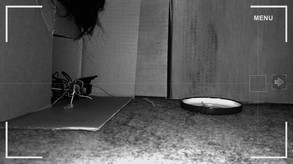
Use a remote-controlled robot to find the treasure lost under the bed.
Revenue comes from in-game items and microtransactions, which our price-based model doesn't estimate. Copies below reflect the player base, not paid sales.
Media

About
Genres
Stats
Languages: English
Engagement
Reviews
Themes across 40 recent reviews and how positive each mention is. A keyword signal, not full sentiment analysis.
Reviews
[h1]Before I played DUMB: Treasure, I had a small pp, no friends, no gf, depression, and no life. These things havent changed, but the game is pretty good[/h1]
"DUMB: Treasure" is an unusual experimental game, more of a tech demo than anything else, featuring static 2D real world photographs that you navigate through, in a maze underneath the developers bed, somewhere I never, ever wanted to be. What's the game about? This is a point-and-click adventure game with horror elements. The game involves controlling a remote robot to navigate the uninteresting space under a bed, supposedly searching for a lost item described as treasure. The player simply directs the robot through this dark environment by clicking around and clicking on hotspots. The graphics in this game are passable, but could be better. I mean.. obviously photos are realistic. But also... not really computer graphics, are they? Nor is this a fun FMV adventure like "Press X Not To Die". And while it's vital for any game to have impressive visuals (gaming is a visual medium, after all), there's more to a game than just the graphics. To be worth a gamers time, the game must match top tier visuals with top tier gameplay, and that's not happening here. It's too simple and short. On the matter of pricing and value for gamers, most "free" games on Steam aren't really free. There's often nasty mobile app cash shops, or content locked behind DLC, or donations being requested, or any other number of shady pricing schemes that could mislead gamers, but in this case I'm glad to say this really does appear to be a fully free game. Nothing demonstrates a developers belief in themselves and their work than giving it away without any remuneration. This is a service to themselves, and the gaming industry, and should be applauded. Of course, just because something is free, doesn't necessarily mean it's valuable, or something you might want to spend your time on. Despite having no up-front cost, this failed to appeal to the 120 million+ gamers on Steam. SteamDB showed the game peaked at only 4 concurrent players... this is a dismal public reception. This was so bad they couldn't even give it away. Bearing in mind that free games don't add +1 to your game collector count, should you bother adding this to your library and downloading it? This is a "maybe" experience... if you have a lot of free time on your hands and nothing else to do, why not? But for the purposes of a review, this isn't something I can say everyone must try. It's not quite there. Valve doesn't give us a "maybe" option in reviews, but if they did, that's what I'd choose for this.
Related
Related
Trends
Concurrent players on Steam, sampled daily since tracking started.
Hours played at review time, across 40 reviews with recorded playtime.
positive critical· bar length = how often the theme comes up
Эта игра самая пустая из серии DUMB, здесь только 1 концовка и нечего исследовать практически. Отдельно от всей серии игр DUMB Я бы не стала играть в эту игру, тем более она платная и довольно дорогая. Если говорить про лор, то из этой игры выясняется, что !!! СПОЙЛЕР!!! [spoiler]кукла Элизабет означает маму главного героя? Не уверена, возможно это просто условности детской игры в куклы - Элизабет всего лишь репрезентует мать не интересующейся и невежественной по отношению к ребенку (мальчику).[/spoiler]
DUMB: Treasure, developed and published by Desert Fox, is a compact and highly experimental horror experience that feels more like an interactive vignette than a traditional game. It belongs to a broader series of abstract, symbolic projects from the same creator, and it carries that identity with confidence. Rather than offering structured gameplay or a clearly defined narrative, it invites the player into a short, unsettling journey that relies on mood, suggestion, and interpretation. Its premise is deceptively simple—controlling a small remote device to retrieve something hidden beneath a bed—but this simplicity quickly gives way to something far more eerie and psychologically charged. The core interaction is built around navigating tight, enclosed spaces from the perspective of a remote-controlled robot. This choice immediately creates a sense of detachment, as the player is not directly embodied within the environment but instead observing and interacting from a slight remove. Movement is slow and deliberate, reinforcing a feeling of vulnerability as the player explores a maze-like space constructed from familiar objects. What begins as a mundane setting gradually becomes distorted, transforming an ordinary under-bed environment into something that feels unnatural and quietly threatening. One of the game’s most effective qualities is how it manipulates scale and familiarity. The confined space beneath the bed, often associated with childhood imagination or fear, is reinterpreted as a labyrinth of cardboard structures, shadows, and hidden corners. The environment feels grounded enough to be recognizable, yet altered just enough to create discomfort. This balance between the familiar and the surreal gives the experience a lingering tension, as players are never entirely sure whether what they are seeing is real, imagined, or symbolic. Visually, the game uses a mix of simple geometry and photo-based textures to create a sense of realism within its otherwise abstract design. The textures, in particular, contribute to the unsettling atmosphere by grounding the environment in something that feels tangible. At the same time, the lack of detailed animation and the sparse nature of the world give it a raw, almost unfinished quality that works in its favor. The presentation does not aim for polish, but rather for a kind of unsettling authenticity that aligns with the game’s tone. The narrative is intentionally fragmented and largely left open to interpretation. There are no explicit explanations or clearly defined story beats; instead, meaning is conveyed through environmental cues, subtle visual hints, and the overall progression of the experience. Themes of fear, memory, and hidden truths seem to underpin the journey, but they are never directly stated. This approach encourages players to form their own conclusions, which can make the experience feel more personal and thought-provoking, though it may also leave some players feeling disconnected or unsatisfied if they are looking for a more concrete storyline. Audio design plays a crucial role in maintaining the game’s atmosphere. The use of ambient sound, subtle noises, and occasional unsettling cues creates a constant sense of unease without relying on traditional jump scares. The soundscape complements the visual design, reinforcing the feeling that something is always slightly off, even when nothing overtly threatening is happening. This restraint allows tension to build naturally, making the experience more psychologically engaging. In terms of gameplay, DUMB: Treasure remains extremely limited. There are no puzzles to solve in the traditional sense, no combat, and no evolving mechanics. The experience is linear and focused, guiding the player through a sequence of events that unfold at a steady pace. While this simplicity helps maintain the game’s atmosphere, it also means that there is little variety or replay value. Once the experience is complete, there is not much reason to return beyond revisiting it for a different interpretation. Its short runtime is both a strength and a limitation. The entire experience can be completed in a brief session, which allows it to maintain a consistent tone without becoming repetitive. At the same time, its brevity means that it may feel more like a concept piece than a fully developed game. It delivers a strong impression, but it does not have the scope to explore its ideas in greater depth. Ultimately, DUMB: Treasure succeeds in creating a memorable and unsettling atmosphere within a very limited framework. It does not aim to provide traditional entertainment or long-term engagement, but instead offers a focused, introspective experience that lingers in the player’s mind. For those who appreciate experimental horror and abstract storytelling, it stands out as a unique and thought-provoking piece. For others, its lack of gameplay depth and narrative clarity may make it feel too minimal to fully engage with. Rating: 7/10
I was so not ready for this amount of dread.. and that's just a demo! I can't wait to play the full thing. I highly recommend this to anyone who likes horror that doesn't rely on jumpscares
left up left right up left left The dragons in this game get a rating of 0/10, for no dragons.
Little gem of the Darnkess Under My Bed game series. Really liked this and Game For Anna too.
Nice excursion.
Mama me cague
Huh okay. Well. Cool atmosphere, like the art style. Very short.
Audience
Estimated from the language of this game's reviews — a proxy for where players are, not official Steam demographics.
Related
| House Flipper | $65.8M | 110.8K | 94% | $24.99 |
| Soulmask | $22.2M | 22K | 77% | $29.99 |
| Occupy Mars: The Game | $3.4M | 3.1K | 70% | $29.99 |
| Emberward | $2.3M | 3.8K | 97% | $19.99 |
| The Descendant | $1.9M | 7.2K | 88% | $14.99 |
| Kindergarten 2 | $1.7M | 5.7K | 98% | $14.99 |