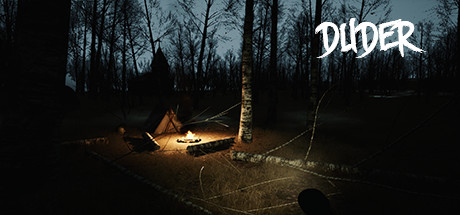
Duder is an independent first-person horror game developed and published by HorrorC that centers on isolation, exploration, and psychological tension rather than action. Set within a shadowy forest filled with uncertainty, the game challenges players to uncover the truth behind a mysterious creature known as Duder. The premise is straightforward but intriguing, placing players in an unfamiliar wilderness where every discovery brings them closer to understanding the mystery while simultaneously increasing the danger. Its minimalist approach to storytelling reflects many classic indie horror experiences, relying on atmosphere and curiosity to keep players moving forward.
The primary objective revolves around locating seven hidden notes scattered throughout the forest. These notes, described as vital truths, gradually reveal pieces of the story while also making the environment progressively darker and the creature significantly more aggressive. This mechanic introduces a natural escalation of tension, ensuring that the journey becomes increasingly difficult as players advance. Rather than providing combat mechanics or powerful tools for defense, the game encourages careful navigation, observation, and quick reactions whenever Duder appears. The lack of direct confrontation reinforces the feeling of vulnerability and keeps survival as the player's highest priority.
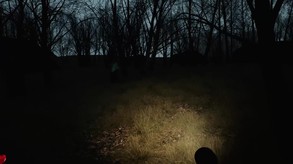
One of the game's strongest qualities is its commitment to creating an unsettling atmosphere. The dense woodland environment, limited visibility, and eerie silence combine to generate a persistent sense of unease. Players rarely feel completely safe, as every step into the darkness carries the possibility of encountering the relentless creature. Ambient sound effects contribute significantly to the experience, making the forest feel alive while heightening suspense even during moments when nothing appears to be happening. The introductory cinematic also establishes a mysterious tone that encourages players to seek answers beyond simple survival.
Narrative progression remains intentionally subtle throughout much of the experience. Instead of delivering lengthy dialogue or cinematic storytelling, Duder allows the mystery to unfold through exploration and collectible notes. As players piece together the information they discover, the game gradually builds toward a separate final chapter that promises to explain the true nature of Duder and provide a more definitive conclusion. This emphasis on mystery gives the game additional purpose beyond merely escaping a monster, rewarding players who remain invested in uncovering the complete story.
Despite its promising concept, the gameplay eventually begins to show its limitations. The repeated cycle of searching for notes while avoiding the same pursuing enemy becomes predictable over time, reducing the excitement that accompanies the early stages of exploration. Although the increasing aggression of Duder is intended to raise the challenge, the creature's behavior can occasionally feel frustrating instead of intelligently threatening. This sometimes shifts the experience from suspenseful horror toward trial-and-error gameplay, making success feel dependent on luck as much as skill.
Visually, Duder presents a respectable atmosphere considering its independent origins, but it also displays the constraints of a small-scale production. The forest environments effectively create a gloomy mood, though environmental detail, animations, and character models lack the refinement found in more polished horror titles. The presentation succeeds in supporting the intended mood without being visually impressive, proving that atmosphere can often compensate for technical simplicity. Likewise, the audio design generally performs better than the graphics, using environmental sounds and subtle effects to strengthen immersion throughout the adventure.
The game's overall length is relatively brief, making it suitable for players seeking a short horror experience that can be completed in a single session. However, once the mystery has been solved and the ending experienced, there is little incentive to revisit the game. Since objectives, note locations, and progression remain largely unchanged between playthroughs, replay value is fairly limited aside from earning achievements or revisiting the atmosphere.
Duder demonstrates genuine ambition by attempting to combine survival horror with an unfolding mystery instead of relying solely on jump scares. Its escalating difficulty, unsettling setting, and story-driven finale provide enough intrigue to keep horror enthusiasts interested, particularly those who enjoy smaller independent projects. However, repetitive gameplay, inconsistent enemy behavior, and technical shortcomings prevent the experience from reaching its full potential. While it may appeal to players curious about lesser-known indie horror games, those seeking a more refined and mechanically polished experience may find its shortcomings difficult to overlook.
Rating: 5/10