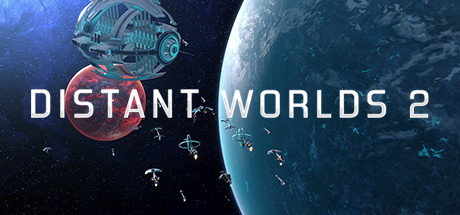
Distant Worlds 2 is a vast, pausable real-time 4X space strategy game.
Modeled estimate, not a reported figure. How we estimate →
Prices
Each in the currency that store quoted — not converted: the gap between two rows is the publisher's pricing, not an exchange rate.
Every market we collect.
Discounts
Every price cut of more than 20% we have observed, in each market that quoted one, with this game's chart position on either side of it. These are episodes, not a model: a sale is one event, and one event cannot tell you what the next one will do.
Reviews, worldwide (the counter carries no country): 0.43/day in the week to Jul 23 → 1.71/day in the week after.
For scale, across Steam · Top Sellers · Brazil over the last 30 days: the 25 chart moves that followed a price cut of more than 20% went a median of 10 places towards #1, and the 2,413 moves with no price cut behind them went 2 away. One store, one chart, one country — it is the only place we have enough observations to say even that.
Prices outside the United States have been collected since 6 August 2026 and chart positions since 19 July 2026, so a cut older than that has no market to compare and a market that joined later has no history yet. Nothing here is converted between currencies.
About


Updates
Build ids and update times come straight from Steam's PICS — the same source SteamDB reads. Patch history grows as we record new builds.
Engagement
Reviews
Themes across 819 recent reviews and how positive each mention is. A keyword signal, not full sentiment analysis.
Reviews
This game has a definition problem. Many reviewers look at it and compare it to other strategy, 4X, or grand strategy games—but that would be incorrect. It’s like reviewing an FPS as if it were a medieval RPG; the comparison will never align. Distant Worlds 2 is trying to be a macro-management game—or a macro strategy game. But “trying” is the key word here. It’s not necessarily failing, but it’s not fully succeeding either. So what is this game trying to achieve? You know that problem where strategy and 4X games are really fun in the early to mid game, and then start to fall off? You end up with 10+ planets or cities to manage, a growing number of fleets or armies, and suddenly the game just isn’t built for its own late game. In my experience, that’s true for almost every strategy title—Stellaris, Civilization VI, Galactic Civilizations, X4: Foundations, and so on. Distant Worlds 2 is trying to solve that problem. Instead of focusing on micromanaging every detail, it gives you a more “administrative” view of your empire. However, it doesn’t do this perfectly. The game’s biggest issue is its lack of full commitment to this vision. It doesn’t fully embrace being a macro-management game. Many systems feel underdeveloped—more like in-between solutions than fully realized mechanics. That said, despite the issues—many of which are common in games this ambitious—it is still a very fun experience, and genuinely unique. I know “unique” is an overused word, so let me be specific: this game really does feel like nothing else. Here, you don’t micromanage your fleets. Instead, you assign them parameters: a base of operations, a target, a range, and an objective. The fleet then carries out tasks—attacking, raiding, invading—on its own. It’s a fantastic idea. The execution isn’t flawless (refuelling logic can be bizarre—fleets sometimes stop just short of a station and wait years for a tanker), but the concept is incredibly engaging. This isn’t a game about manually moving every fleet from system to system. It’s about building the infrastructure—supply lines, ship design, research, and economy—so that when you give an order, your empire actually functions on its own. The result is a truly unique experience. Unfortunately, it’s also very difficult to learn. There are few YouTubers covering the game, and the advice you do find is often contradictory. Some recommend full automation so you can observe and learn; others suggest minimizing automation to understand every system. For new players, I recommend the latter: set most systems to manual or advisor recommendations. The game will guide you just enough to learn without completely taking over. It will be challenging at first, but once you understand what’s happening, it’s not as difficult as it seems. It can be tedious at times—but it’s also deeply rewarding. And you get to automate the really tedious parts that just don't really make sense. This is a dream game for anyone who wants to build a galactic empire without the constant micromanagement of every building or ship. It still has shortcomings, but for fans of space and strategy, it’s absolutely worth picking up. Don’t be misled by negative reviews that completely misunderstand what this game is trying to be. If you are tired of typical strategy late game states and slowness, gives this game a shot, it might be a lot of fun for you too! Edit: I feel some negative aspects of the game should be addressed more specifically, as to give players and devs a better understanding of what I believe to be the weakest points of the game. Independent Colonies While the idea could be good, it is implemented terrible. The colonies are just there for you to take and then use the population to colonize other planets, specifically ones that the conquered species prefers. This is a fundamental mechanic. But I feel like it takes out a lot of the game. Interracial tensions? Policies? You just go and your happy little empire lives together with multiple species without problems? It seems a bit far fatched, and a not well implemented system, in my opinion. Wars Wars have war scores, but for what I have no idea. You can't properly use diplomacy to "win" or form a peace deal, where the loser gives certain colonies, etc. It only works if the colonies you want to take are already in your sphere of influence. The score system isn't useful in any matter, as far as I can tell. Subjugating someone is a joke. I got 93 credits per month from a vassal. And in neutral territory they still attacked me. There is no visible way to integrate them, ask them to go to war, defend them etc. The whole system is really disappointing and needs some huge improvements.
Media

Related
Related
Price dynamics, follower growth, revenue and sales trajectories with interactive tooltips
This and every other Pro feature is free until October 20, 2026. A free account is all it takes.
Related
| Game | Estimated lifetime revenue | Reviews | Review score | Price |
|---|---|---|---|---|
| $5.8M | 22.2K | 81% | $9.99 | |
| $5.8M | 5.1K | 73% | $39.99 | |
| $5.8M | 23.6K | 92% | $9.99 | |
| $5.9M | 13.9K | 79% | $19.99 | |
| $5.9M | 8.3K | 73% | $39.99 | |
| $5.9M | 12.2K | 83% | $24.99 |
Related
| Game | Estimated lifetime revenue | Reviews | Review score | Price |
|---|---|---|---|---|
| $9.3K | 18 | 50% | $14.99 | |
| — | 0 | — | — | |
| $242.6K | 832 | 84% | $9.99 | |
| $92.2K | 121 | 49% | $19.99 | |
| $54.8K | 79 | 75% | $17.99 | |
| $18.9K | 34 | 79% | $19.99 |
Genres
Stats
All-time low is the lowest price we've recorded for this game since we started tracking it.
Languages: English**languages with full audio support
Hours played at review time, across 819 reviews with recorded playtime.
positive critical· bar length = how often the theme comes up
Distant Worlds 2 has become my "comfort" 4X game. As someone who always loved grand strategy and sci-fi, you are faced with the dilemma of your heart wanting to jump right into a new magnum opus of a game, but being restricted in terms of time and mental energy to fully commit to learning that new game. 4X games face the unique predicament in that if it is too simple and "dumbed down", you end up losing interest quickly. You want that crunchiness and complexity. But at the same time, as a middle-aged person, I often find myself lacking the time to learn the details. And by mid-game, once all the mechanics in a 4X game comes into play, it is so easy to get overwhelmed with the micro-management and choices at your disposal. Distant Worlds 2 solves this challenge to a great extent by allowing pretty much all aspects of this vast game to be automated. This allowed me to dip my toes tentatively without being scared away. Then, as you get a bit more comfortable, you can choose to manually manage just the areas that you am interested in. This is a really novel way to learn a 4X game, while playing it. I also really enjoy the "sim" feeling when you run with a certain level of automation. It counters the other great challenge (in my opinion) for all 4X games, which is for a player to resist the urge to find the optimal path and micro-manage every detail. I am fine if my colonies and tax rates and civilian structures are managed by my AI advisors, even if perhaps they are not optimal. The whole point of grand strategy for me is to focus on the big decisions that I care about, like which planet to subjugate next. :) I love that the combat in Distant Worlds 2 is modeled in great detail. Your technologies and ship fits matter. Support infrastructure like nearby docks to repair and places to refuel also matter. With the Return of the Shakturi expansion, now we have a real end-game challenge as well to deal with as well. I love that each of the playable races you can choose are very unique. Since this is not a multi-player game, the developers fully embraced making these factions asymmetric in their capabilities and strengths. So each new game as a new race plays very different. Multi-player games often end up making every race/faction feel same-y for the sake of "balance", which is not an issue here. The game has also been getting regular (and substantial) free updates since launch. In an age where AAA games are resorting to the most BS monetization practices, it is truly refreshing to still have a few developers like this, where substantial amount of content is provided when they sell a DLC. X4 foundations is another game I personally think is monetized very reasonably. And for games like these, I absolutely will buy every new paid content edition so that the game can continue to evolve and be even larger in scope over time! Overall, I would wholeheartedly recommend this game in its current state, to any sci-fi, 4x or grand strategy fan.
In the mid-90's there was a game called Stars! published by Empire Interactive, it was one of the first computer games I played. My friend introduced me to it in the 5th grade. This is the game that young me fantasized Stars! to be, but 30 years later that isn't enough. I want to love Distant Worlds 2; desperately, if only to fulfill that childhood fantasy. Here there is a captivating spark that never quite blooms. It's always a little clumsy, shallow and not quite functional but always seemingly close with that promise just one update away. I've chased that dream for almost 800 in game hours, the most of any game in my Steam account of 16 years. Mechanically, I can't decide if I want more control or less, more detail or less. Mostly, the desire for highly manual control of a large empire, or an empire of any size really, is due to the inadequacy of the automated processes. This failure of automation ranges between annoying and devastating, essentially requiring manual control wherever possible. However in doing so, I'm never sure if I'm exploiting something that isn't intended or simply working efficiently. Some playstyles and races are just objectively better than others, some hulls and components simply superior to others, and that's fine to have some separation of strengths and weaknesses for races but this results in playing more or less the same way every play through. There is finally an endgame crisis, but its only the Shakturi every time. Taking on the Shakturi isn't particularly difficult, but its a nuisance and annoying to deal with. Frankly, this end game crisis is just not very fun, but at least there is one now. I can't tell exactly what this title is meant to be; its more than Stars! but what is it? It feels like its trying to ride the line between too many concepts and loses a coherent, concentrated vision or maybe its just poorly implemented. I have never ended a session of this game without a contrast of disappointment and hope. Fundamentally, there is too much to learn to only spend 50 hours and not enough to reward 500.
I have rarely encountered a game in more dire need of spending a solid year on nothing but quality-of-life fixes. I know making content is the fun part of game design, but that's not what Distant Worlds 2 needs. It needs a middle ground for its automation settings, somewhere between 'constantly fighting the player at every turn' and 'off.' Fleets need a 'retire fleet' option instead of having to hunt down all their ships to select and retire them directly (especially for when you end up gifted with a million utterly worthless pirate fleets and have to spend half an hour hunting them down so you can stop bleeding your economy white to maintain them). The game needs to package required modules with the ship types that depend on them, so new players aren't left mystified as to why they can't build a ship they researched. Any player who's spent any time with the game has their own list of times when they had to fight the game rather than a hostile empire. And yet, it's *absolutely* a blast when you can get past all that. I love a good, meaty 4X game, and this is a great example of the genre...when it gets out of its own way. Give it the love it desperately needs and it could become great. I hope it will. I spent a while mulling over whether to recommend the game or not, and ultimately I can't do so in good conscience. I'm not planning on trying to refund it, because I DO enjoy it, but I wouldn't wish the frustration on a friend. Maybe someday I'll be able to revisit this review. Please, let me.
This game is frustrating because it's so close to greatness, but then fails completely in ways that seem reasonably easy to fix. The Good: The core principle of the game is really enticing. Every ship in your massive empire is a real thing you can look at. With it's own equipment, stats, cargo and potentially mission. This includes !freighters! actually moving resources across the universe, and those resources are actually needed to construct things. And much of this can be controled in great detail. This core of the simulation works great. But to make this work as a game it relies heavily on automation. There is simply *too much* to control for any reasonable player themselves. Making the game very reliant on it's automation. This also makes it more of a simulation than a strategy game in many ways. Which is not a bad thing! And one can, in theory, turn off and on automation on a whim for every aspect of the game. The bad: Automation takes a very all or nothing approach to things. Want to manually control some stockpile and leave the rest to the AI? Not possible. Want to manually control some fleet designs but let the AI update others? Not possible. Want to control positioning of some fleets in key areas while leaving the rest of a war to the AI? Not *really* possible. This wouldn't be so bad if the game wasn't cleary designed for the AI to handle things in larger games. It's unrealistic for a player to manually set stockpile levels in 1k+ locations. You probably don't want to manually control staging locations for 50+ fleets and constantly update them. Although some people might enjoy that. And that's when things break down. The AI will set key shipard stockpile up such that 90% of the time there will be a resource shortage. Despite half the freighters being idle and the mining outposts being filled up with resources. You could fix this by setting a higher stockpile target, but you can't that without controlling every stockpile in the galaxy. You can let the AI decide which ships to build, but it will build new exploration ships while you already have 20 exploration ships doing nothing for some reason.But you probably don't want to check if you need to replace ships every 5 minutes manually. You can let the AI handle fleet actions. But the AI doesn't seem to really consider current locations when assigning tasks for fleets. Resulting in fleets often pointlessly milling around. That being said at least the AI plays by the same rules and suffers from all the same issues. So your empire isn't disavantaged by any of this. But it's still frustrating to have resource shortages while half your haulers are sitting empty and your mines overflowing. If the add some more granularity to the controls/made the AI a bit less dumb this game could be truely amazing. As is I would only recommend it to people who are really into this sort of game.
After seeing the "very positive" recent evaluations, I gave this game a go. And boy, am I glad I got this for almost 0€ through Humble Choice... I really wanted to like it, but it's just not possible. Although it's a vaguely engaging universe and the basics are there, this game is janky as ♥♥♥♥ in tons of ways and it gets grating extremely fast. The automation rules don't always work so you have to do tons of stuff manually, the money management system makes no sense and credits disappear without letting you know why, and there's absolutely no downside to debt. You can't even lose because of it and you don't have to pay interest or anything so you can easily make gigantic offers to buy planets and then repay the debt with the income generated by said planet. As said elsewhere, there's no politics, the economy is just a play pretend system where almost nothing matters, et cetera. Diplomacy-wise, nothing makes sense. When you're a rising star everyone wants to be your friend and begs for defense treaties every single ♥♥♥♥♥♥♥ day, until you destroy the Xanyyr Hive, then a switch flips and everybody hates you. And at that point everyone has a defense pact with everyone, except you, because you're number one. It's absolutely ♥♥♥♥♥♥♥♥ and it makes no sense whatsoever. At least if there were two or three different alliance blocs among the 10+ remaining factions I had, it would have been believable, but no. It was literally everyone against me, even though before destroying the Hive I was everyone else's best trading partner and generally best ally for centuries. Software-wise, it's just wack. The game lets you create a 2000-star galaxy but large galaxies ends up horribly laggy once the entire galaxy has been discovered, even on powerful PCs (7950X3D, 64GB DDR5 5600MHz, 7900XTX), and if you dare look up close, ships turn out frozen in space, traveling outside of the galaxy, or going through planets constantly (not with warp travel, mind you, just the old "nothing has a hitbox" issue). Everything goes wrong when you start playing too long. Your money ebbs and flows even when the game is paused because it's catching up with itself, fleets get stuck in the same system for decades even though they should be able to get out of it in a matter of days, planets don't get invaded at all because the battle calculations don't get solved, and sometimes the system starts doing completely stupid stuff like ordering your fleets to nuke your own planet because the war management AI didn't register that the planet changed hands. This game somehow is worse than Starsector at managing a large galaxy even though it's not made with Java... UI-wise, it's painful. The interface is ridiculously lacking, in every single way possible. You can't select multiple fleets at the same time and give the same order through the fleet management menu, and it's the same for planets. You can't set up an automatic rule that says every new colony gets X and Y buildings in that order as soon as they're colonized. You can't build ship models where you allow for some components to be auto-upgraded by the game while some others (like especially powerful weapons) must be kept the same. You can't get a list of a faction's planets even when you know their entire territory, instead you have to scrub through the entire galaxy looking at an abominable border gore 1400s germany ♥♥♥♥♥♥♥♥ with abysmal colors that are all the same because you can't change anything about how the galaxy map looks and how faction territories are represented. Crusader Kings did it right for 10+ years but no, the Distant Worlds 2 developers would rather have no clearly visible indication whatsoever of whose territory is where, apart from a very faint blue-greenish color that is almost exactly the same as the 20 other blue-greenish colors on the map except for that of one faction whose territory is bright orange. Oh, and somewhere on the map, most often nowhere near where you're looking at, there is a small text box above a faction's capital. But that's the ONLY indication you get of which color belongs to whom, instead of the large text everywhere that Crusader Kings uses. Audio-wise, I did hear worse before, but not very often. The music and sounds are mostly awful, there's no other word to describe it. And it's a shame because I kinda like some of the medleys. It's just that some of the music, especially the one you get when looking at the science / diplomacy screens, are incredibly terrible in a way that is hard to describe. It's a sort of droning, repetitive bad 70s scifi movie soundtrack, just with a cleaner sound... And when you get one of the other songs, the ones with a little bit more tonicity, they systematically go crescendo until they just stop in the middle of a note, as if somebody cut the file in half. Then, another song begins, and it's one of the two again : either brain-melting boredom or the musical equivalent of a terrible cliffhanger. And lastly, the cherry on the cake : when you win that abominable game with 20 factions that are all the same in this huge, bugged out galaxy where spaceships travel more randomly than an average housefly on crack... All the game does is display the victory condition screen with "GAME OVER : The (name of your faction) wins" added on top of the progress bars. That's it. There's not even a little victory jingle ! It's just a handful of words and you're done. They've pulled the exact same thing as the worst of NES games decades ago. So.... Yeah, this game's completely screwed up and I'm absolutely amazed it got such positive ratings. Are all these reviewers blind and deaf ? I've seen alpha versions of other games that were less buggy and more feature-complete than this. It's absolutely impossible to recommend this to anyone who actually likes 4X games.
A decade ago, I wrote a review for a game called 'Distant Worlds'. I opened that review with the bold claim that it was "The best 4x money could buy". If you asked me today what's the best space 4x money can buy, I'd be tempted to say Stellaris, along with all it's DLC and a few dozen mods to make it really interesting. However, the other title that would come to mind would be this one, Distant Worlds 2. Yes, Stellaris is brilliant, if you're willing to spend your hard earned cash on a plethora of DLC and a chunk of time playing 'compatibility roulette' with more mods than you can shake a stick at. But Distant Worlds two is brilliant too, in a different, less obvious kind of way. All the standard 4x bits and pieces are here. You'll design and build ships and stations, you'll colonise and develop planets, you'll research tech to build fancier ships and better colonies. You'll meet the neighbours and try to kill them. It's all good space strategy fun. But where this game sets itself apart is with the sheer volume of resources to discover and exploit. Every ship you design is going need different 'stuff' to construct it. You might have researched a fancy doodad which you've incorporated into your new ship design, but do you have a supply of the thingamajigs and whatchamacallits to manufacture it? Even if you are mining the resources you need, they're no use to you stuck in some far off storage facility on the other side of the galaxy. If they're not at the construction site where the ship is being built then they'll need to be hauled there. That's where the civilian sector comes into play, and that's what makes Distant Worlds 2 really special. At first your civilian sector is going to be buying a lot of resources to build the components you'll need for your ships and stations, but before long, you'll have a fleet of civilian ships (all AI controlled) flying around mining asteroids for minerals and mining Gas Giants for the much needed fuel you're going to need to expand further. Unlike most other 4x games, Distant Worlds has a fully featured Civilian economy which works independently to you. You can influence it with your actions but you can't control it directly. You can design civilian ships, freighters, passenger shuttles etc. and then the civilian economy will buy them from you and use them move goods around to complete the building contracts or colony requirements within your empire. This happens automatically, and you can actually see every single civilian ship flying around, check it's cargo, see what it's carrying and where it's carrying it to. Place a large military ship build order at a space port and watch all the little civilian ships scuttle around sourcing the resources for the project and ferrying them to the construction site. Of course the civilian ships can be easy prey for pirates, so you might want to protect them with a military escort. The scope and depth of this game is amazing. It always feels like you're playing in a "real" universe. Of course this depth comes with a learning curve which can be punishing at first. This is a game you're going to want to watch a lets play or two on before you take the plunge. You can also automate almost everything, so if you ever feel overwhelmed you could hand the reigns to the AI, sit back with a coffee and watch how your growing empire gets on without you. I started this by referring to my original DW1 review from 2014, A review which I ended with the line "Now if the developer could just make a prettier sequel..." 10 years later and that's exactly what they've done. I gave up writing game reviews a long time ago, but I've come out of retirement to key one last review, that's how special I think this game is. Distant Worlds 2 is amazing as long as you're willing to take the time to get to know it. What's even better is that as I write this, a new DLC is about to be released! I've waited a decade to write this review, now all I need to do is wait until payday to buy the DLC. Now I'm here, I know which wait will seem longer... Seriously folks, if you're looking for some space opera feels and like 4x games then you can't go wrong with Distant Worlds 2. Thanks for reading and If you do take the plunge, I hope you love it as much as I do!
My review is a YES if you love these types of games no matter how poorly implemented as a game they are. Otherwise would avoid, I've played pretty much every game in this genre (board as well as computer) since the days of the original MOO. Distant Worlds 2 is beautiful, love the depth and detail and the very slow pace. However it is "broken" in several regards, in no particular order: (1) the game mechanics; (2) user information; and (3) forced modes of play. I'll explain what I mean by these. (1) Game Mechanics There is so much cool detail and it is hard to look behind the curtain on how thins are done but there are several things that just don't work as advertised. Tourism is meaningless, which is a shame as there are many cool location where you can build resorts and passenger ships can visit, but even with 60 colonies and as many resorts and passenger ships, a thriving economy in the millions of credits...tourism income is barely 8000 credits. So a whole part of the game that could be deleted and you wouldn't even notice it, UNLIKE other games. Espionage is meaningless. I'm several tiers ahead in the tech tree, built all the espionage helping facilities (or maybe that is singular) and your chance of doing the most basic of things is so low your spies mean nothing AND there is no way to change this, UNLIKE other games. I may be told, but if yo only do x, y and z you can do those things. Which gets me to point 2. (2) User Information By this i mean how well the game conveys the rules to you and how you can control the various aspects of the game; AND since this is a detail oriented "spreadsheet" type game, handy tables or charts somewhere...like for all important resources. That's the least of it. The most annoying is you cannot move to "galactic coordinates" given through exploration discovery. That's a whole other post but the funny thing is you can get a coordinate location by selecting a ship and right-click empty space BUT the coordinates will be different select a different ship EVEN IF you right'click the same spot. Now I've seen well if you set things on "auto explore" it works out *this also applies to your fleets which for the life of me i cannot manually order to guards a system, they will guard a location but not the whole star system.or maybe you can but then this gets back to point 1)...which leads me to my last point 3. (3) Forced Mode of Play The only really viable way to play (at least by the AI and if you let the game auto control as much as possible) is the Merchantile Guild government. No other way to play compares or can compete. You can't disallow it as the AI switches to this government if it can. UNLIKE other games, a technology focused route, or military route, or espionage route, etc. is viable. All the bonuses of those other routes are anemic compared to the might of credits. Credits can overcome any advantage those other routes may possess, UNLIKE other games. The mechanics are pretty opaque (see point 2) so it may well be population is the real determinant coupled with favorable money making. Lastly, the game really does not want you to play it. It is difficult to actually manually control your empire (see point 2). It really wants to play. If exploration, colonization, resource gathering, diplomacy, and research are all best done automated then what is the point? Is there a story embedded in there? Had to say (see point 2) even after over 100 hours of play. I believe this could be a great game, it has a good basic structure, it's just the point above make it unplayable unless you play one way, with letting the computer do most of your thinking. The good news is with the game editor you can "correct" some of this and it is a fun and beautiful little galaxy sim engine.
I want to like this game, I really do. I enjoy 4x games, especially science fiction ones, and a real time one, like this one, should be a refreshing treat. But, it isn't. It just feels flat. Then there are all the little quality of life things it doesn't have. From the constant spam of messages for things you may not want to do, to the deep menus you have to dig through to find a specific setting. For example, if you want your fleets to defend your assets, or attack targets, you have to set every single fleet manually. There might be an empire wide setting, but I've not found it yet. There are DLCs, but what do they add to the base game? Each DLC adds two new factions to the game. That is it. This is like a college level project competing in the professional market. It has some good things it is a solid meh. There are a lot of customization options in the minus, but digging through menu layers to adjust one setting every time I play the game is a waste of my time. And while you can automate a lot of stuff in the game, you still have to micro manage a lot of things. Distant Worlds 2 is a buy on sale game at best, and I mean at least a 50% off sale, as it is not a 50USD valued game, 30 maybe. I'm sure there are people who like this game, but I'm not one of them.
Very interesting premise, but in practice you're basically not in control unless you feel like micro-ing a buncha meaning-less ♥♥♥♥. I thought I'd be the admiral for my fleet but kept getting attacked guerilla style by random pirates due to the FTL system where pretty much anything can go anywhere at anytime. I actually thought that was really cool. It opened up so many possibilities that things like stellaris streamlined away with strict, chokepoint-y hyperlanes. I daydreamed about deep-space black sites and shadow fleets laying in wait in deep space during a conflict only to sail out of nowhere for the perfect decapitation strike, and the need to build a sensor networks so my enemies don't do the same to me. I thought about the insane secrets I might find just laying out there in deep space. Well all of that was pretty misguided. While theoretically possible, the execution of these concepts is very, very lackluster, as is true of pretty much all the promises in the game. While on the surface, the game pretends to be complicated, in reality it's actually really, really simple. Mind-numbingly so. Basically the only complicated thing to understand is all the weird-ass stats and dubious equations that make them up. The gameplay itself is dead simple. You start on a planet and get some basic space flight going. You always have ancient ancestors that were once spacefaring, and you rebuild a space station that can build basic economic ships. So you do that, and the touted private sector mechanic kinda just takes them over and builds stuff. You're not even really paying for it most of the time, the private sector has it's own money kinda like in Victoria 3. But before you get excited, it's not nearly as complex. It's just one big ol' gob of money that sits there accumulating as private ships do business. You basically only benefit by collecting resources and empire buffs from their infrastructure and being the exclusive builder of ships (which they buy from you in waves in big spending runs). Then you use their money to buy more mining and fuel stations when you're prompted by pop-ups. That is, excluding some complicated physical resource transportation mechanics which are not really that fun or important, the whole economy of the game. You click "build that station" when you see a nice resource that you want. There's pretty much no reason not to, the private sector always has too much money and they pay for it. "Why am I buying with the private sector's money instead of just taking orders?"" you may ask. Well, 'cause there's not much distinction, it's pretty much the only thing the private sector can buy as far as you're concerned, other than ships. That's right, they never compete with you by bidding for resources in a private economy or anything. They just kinda are there. You can tax them more or less for basically a direct impact on happiness which controls population growth. You gotta have a lot of positive income or you can't research, so that forces a bit of compromise. "What happens if I have a huge stash of cash and don't need an income to research?" You may ask. ♥♥♥♥ you, either grow or research! Speaking of which, you're hard capped by the number of research sites you can find. Even if you find a lot, your empire is hard capped to a certain science income limit for reasons. Only one research site for each type of research can boost you, it's not cumulative. So being big doesn't help with research except with acquiring stations, of which only a certain number are really useful at all. The research sites do nothing to really enhance the lore or setting of the game because...there really isn't one. It's got the most bland flavor text you could possibly imagine, telling you nothing of interest about the wider world except "this planet has mammoth's with cinnamon ballsacks. They taste nice and make your people happy. Wanna build a thing-y here for more cinamon ballsacks?" That's pretty much true of the whole game too...there's a kinda diplomacy system that's okay (can be leveraged to get a ton of tech fast) and you can build relations to assimilate independants. Nothing to really write home about but not awful. Oh yeah, I forgot. Being an admiral. Yeah, when you're a new civ, you're immediately hit up by these generic pirates who have way more advanced tech. They're leftovers from some kind of bland flavor-text-y apocalypse and for some ♥♥♥♥♥♥♥ reason they've stuck around for like millennia afterwards and maintained and lived in giant space stations despite having zero industry. They've just been waiting to bully your ass or something man, idek what to tell you. So they --- and there are a lot of them --- will all one by one approach you and demand protection money to not get constantly raped by raids before you know which side of a rail gun is the business end. So you generally can pay them off and it's kinda cheapish at first. Then it gets mildly expensive but generally it's still fine if you progress steadily. Eventually you have a fleet and you can start to refuse their demands via the diplomacy system. You can also stay friends with like one and trade them a buncha plantary/empire-related techs you've developed that are totally ♥♥♥♥♥♥♥ useless to them for like a ton of different early-game techs. So that's cool. But you should really kill the rest. So you start to fight a few and it's kinda easy. You just outnumber them and start ganking them with bigger fleets. But they do raid the ♥♥♥♥ out of your commercial ship traffic. Which is kinda novel for a while. ♥♥♥♥ doesn't arrive places. Space stations are blown up. They kinda guerilla attack everywhere, so you have to have a fleet on standby that may or may not get there in time. Kinda fun. After a while of kinda same-y battles, I realized I could just automate the whole thing by setting the right fleet posture and a radius to respond to things in. So I tried for a while before realizing the whole mechanic was broken. Came back years later and it worked. So I did it. Killed all the pirates. Didn't really get anything for it. Nothing unique really happened. The raids weren't really that crippling in the first place so kinda a meh achievement. Then I realized most of the game that actually needed my input was easily automatable, not under the automation in settings, but in a gameplay mechanic. I was pretty much only ever really enjoying the combat. Planetary management is pretty much nonexistent. Literally just set a tax rate and that's mostly all you can do. There's some derpy ground combat too ig. You can build ships and on the surface there are all these stats and capabilities to add modularly...but it's not really much of an improvement over just having a pre-made ship type that can do certain things...like you generally don't need to make hybrids or really choose a strength in combat. There aren't a lot of trade-offs worth really micro-ing. Another system that doesn't really need your attention. So the game lets you totally automate it. in fact, I think that's the default. So, uh, what else is there to do. You can keep clicking notifications to keep building more resources to maybe sometimes go gank another civ. Honestly, never really fought other civs because by the time I beat all the pirates and took all their tech, it was clear that I was going to dominate all the other civs with pretty much zero effort. I was huge. The worst part is, the whole marketing strategy for the game is to talk all about the amazing automation and duel economy....but the reality is it's all super simple to automate 'cause there's never really a choice to anything. All tech is pretty much "do you want 50% better shields, yes or no." Okay, now you need a new resource. Finances are like "do you have enough" And that's the closest it gets to a gameplay loop. The whole universe is super dry too, there are like zero scripted events or really any sci fi things happening.
Active players
Estimated daily and monthly active players (DAU/MAU) modeled from peak concurrency.
Players by region
Where this game's players are, estimated from review languages.
Players also reviewed
The games this title's players most often review too — audience affinity.