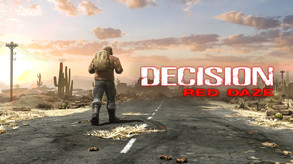
Decision: Red Daze is an action RPG with a unique mix of survival and tower defense mechanics. Explore an apocalyptic wasteland, build a safe haven, and lead your team of specialists in a hopeless world, searching for a cure for the infectious disease that turns people into monsters.
Modeled estimate, not a reported figure. How we estimate →
About
Stats
All-time low is the lowest price we've recorded for this game since we started tracking it.
Languages: English*, French, German, Spanish - Spain, Portuguese - Brazil, Russian, Simplified Chinese*languages with full audio support
Engagement
Hours played at review time, across 40 reviews with recorded playtime.
Reviews
Themes across 40 recent reviews and how positive each mention is. A keyword signal, not full sentiment analysis.
positive critical· bar length = how often the theme comes up
Reviews
There are a lot of just weird decisions made in this game that just made it too much of a slog to stick with. The UI is genuinely terrible, and there's little to no options for you to do anything about even basic things. Options menu is legitimately one of the worst I've seen (a slider for vsync???) Character creation was equally bad. I rolled two characters, one ended up being a level higher for reasons entirely unexplained (level and stat system itself seems entirely out of player hands as well, just randomly assigned values) and you cant even type in your own name which is a thing I've only seen from games that have a dedicated character name but this doesn't for some reason??? You just randomly roll first and last names until you get something you like which is just. Incredibly weird. Inventory management is a pain, that weird rotary "slider" was a choice I don't think anyone should have made. It's entirely too finicky and just annoying. Having a carry capacity and an odd switch to squad based gameplay just makes the core gameplay loop of scavenging a pain and the menu interface just makes things worse. Being unable to pool carry capacity and instead having to talk to each individual squad member is very annoying. The combat itself is a mess. You have to hold down to do any damage worth a damn even with non-melee weapons and it's entirely departed from the usual Decision "carry an entire arsenal on you" style which was a big shame. You get two weapon slots and that's it. And even equipping items is a mess. Want to put your melee weapon in the first slot so you can use it with a shield? Better equip your gun first because you can't just click and drag into slots here like a usual game no sir! We're going to just throw it into the first slot and then whatever you've got there gets booted into the second slot and then eventually kicked back to the inventory. And when you do finally get into the combat it's entirely unsatisfying. Back in the older decision games you could at least kill the basic enemies in one or two hits, here you spend several seconds and a few power attacks just to kill one and there's always several more swiping at you so you just end up circling and swinging and it's monotonous and boring. It all around just feels entirely unpolished despite being released in 2022, a huge departure from the formula that I think was not handled well.
Compared to the classic flash games that the Decision series is built on, Red Daze is genuinely a severe disappointment. Combat is focused on short range engagements due to the rather limited field of view, and therefore puts a much greater emphasis on melee combat, which in turn means that for balancing purposes movement is overall quite slow and getting around the map is time consuming. Combat itself is very heavily reliant on the mechanic of charging attacks to increase damage by repeatedly holding and releasing M1, which is not remotely enjoyable compared to being able to simply hold down the trigger. [b]Overall:[/b] Definitely not worth buying even on a heavy discount. If you want to give money to say thanks to Fly Anvil for the previous four Decision games which actually [i]are[/i] worth money for, I would suggest finding some other alternative to purchasing Red Daze.
# Updated Review I'm going to keep this review brief and start with the negatives—things I encountered that were either issues or areas where the game needs improvement. ## 1. Add a Gym System The game needs a gym that allows players to train their party members. For example, you could pay 20–30 food to train a stat of your choice. To keep it balanced, each stat could only be trained five times before you have to head back into the wasteland and improve it naturally through combat, looting, searching, healing, crafting, breaking items down, and other activities. This would remove the gym cap and encourage active gameplay. ## 2. Weapons Sound Bland This might just be me being picky, but the weapons in this game sound far less exciting than the ones from the original Decision games. Many of them should have their sound effects adjusted to make them feel like they have more punch. ## 3. Zombie Armor Is Just Scrap Honestly, you spent time creating armor icons and even gave them stats, yet we can't actually wear them. They end up being sold or scrapped. Why put all that effort into designing the armor and its stats if players can't equip it? ## 4. Oversight/Bug – Explosive Barrels Explosive barrels don't trigger chain reactions when placed next to each other. That feels like a major oversight, especially in a game where blowing things up is part of the fun. ## 5. Armor Slots Feel Too Limiting I like the armor system, but it feels restrictive. Eye protection and mouth protection are combined into the same category, which reduces equipment variety. It would be better if armor were split into separate Head, Eyes, Mouth, and Body slots. ## 6. We Need an Additional Weapon Slot Instead of only two weapon slots, there should be three: * One for melee weapons * One for pistols * One for heavy weapons Right now, the game limits you to two. The AI also has a nasty habit of rearranging your manually equipped weapons whenever a new day begins. A control scheme like this would work well: * **1, 2, 3** = Weapon switching * **R** = Reload * **C** = Self-heal * **V** = Eat food ## 7. Stability Issues The game generally seems stable, but there are noticeable technical issues. I've seen purple texture flickering on defensive towers, map pop-in while returning to base, and even instances where I clipped into the desert mountains as if I'd broken the game's boundaries. I also experienced a few crashes. ## 8. Companion AI Is Unpredictable Companion AI can be frustrating. Sometimes companions perform well, but most of the time they seem to exist more for appearances than effectiveness—unless you buy a lot of mercenaries to take the bullets for them. This is where I would love to see a gym system similar to the one in Decision 3. You could gather the resources needed to turn a low-level citizen into a sturdy warrior—or at least a reliable meat shield. In this game, however, all the stat grinding is left to the player. That means if you want a capable team, prepare to put in some effort. It felt less like fun and more like a job. # Positives With all the negatives out of the way, what about the positives? The game now has a mouse-based charge attack. I actually like it, but some weapons might not work well with this style of combat. A minigun, for example, feels more like a spray-and-pray weapon than something designed for precise targeting. The base construction system isn't bad, but I do think it was toned down compared to Decision 3. Instead of upgrading each part of the base individually—such as walls, gates, and maybe even land mines—the system has been simplified. Now, progression largely depends on how much you've upgraded your guard towers. No more gates, which is a bit of a bummer. Wall upgrades are also tied to tower levels. Generally, if you upgrade your towers to a high level, you'll see noticeable changes, just not to the same extent as in Decision 3. The game does offer some variety in the locations you capture, but many of them feel copy-and-pasted, with the main difference being the size of the area. Still, it's better than nothing. Trading has some use. It's not amazing, but it exists. I just wish there were a system that notified players when a trader was offering discounted supplies. For example, it would be nice to know that a trader is currently selling goods 15%, 20%, 30%, or even 40% cheaper than other traders. Right now, you just pick one and think, "I guess this one will work." You can set up a trade, but there aren't really any trade deals or market opportunities tied to it, which feels like a missed opportunity. Overall, I think the game has what it takes, but it could use some more work. It's not great, but it's not bad either. It just needs some tweaking and a few additional features to really reach its potential.
Не идеал, но всё же чем-то цепляет. Есть проблемы с однообразием игрового сюжета, неудобными инвентарём, управлением базами и т.п., однако если быстро всё разом пройти - не так уж это и сильно заметно.
服了 切换小队角色的时候 50%的概率会让你位置瞬移到营地,本来好好跑图到那里又得他妈重新跑
Больше на бета версию похоже. 1.3.4: персонажи могут телепортироваться в соседний город при смене, жители перебегают в другие города, при поиске выживших они могут в первом лагере появиться вместо города. Профессии бесполезны: медики не лечат, разведчики не осматривают тайники рядом и т.д. Звуки выстрелов кошмарные.
Jugué todos los Decision, tal como los juegos flash, no hubo ninguna decepción, 100% recomendado (nostalgia de la infancia de los juegos flash)
后期重复度很高,缺乏新意,制作组在用十几年前的理念做游戏 这部作品推崇集体主义,然而全程玩下来都在操纵同一个角色,队友只会打架,不会干别的,连帮忙拉人或者搜刮物资的指令都没有。队友不会一边移动一边射击,残血了只会站在原地打药,不会先拉开距离再打药,怪物数量多了,往往会倒地一两个人,还必须要主角去拉。不明白为什么要削弱人物的实力,前作里有很多优秀的技能,例如,中世纪版本里有腾空跳跃,冲撞,狂暴之类的技能,而现在这部作品里没有任何技能,只有无趣的职业数值。
Decision: Red Daze, developed by FlyAnvil and published by Nordcurrent Labs, is an ambitious blend of action RPG, survival management, and light strategy set in a bleak, disease-ravaged world. The game unfolds in the Dust Bowl, a harsh and desolate region overrun by infected creatures, where scattered groups of survivors struggle to rebuild some semblance of order. Rather than focusing on a tightly scripted narrative, the game leans heavily into systems-driven gameplay, placing the player in charge of a growing community and tasking them with expanding, defending, and sustaining it in the face of constant threats. It is a game that thrives on its mechanics, offering a layered experience that is both engaging and, at times, uneven. The central gameplay loop revolves around venturing out into dangerous territories, clearing infected zones, and turning them into functional outposts. Each reclaimed location contributes to the player’s overall infrastructure, generating resources, providing safe havens, and unlocking new opportunities for expansion. Survivors can be recruited from these areas and integrated into the player’s group, with each individual capable of being shaped into different roles depending on how they are equipped and utilized. This flexible approach to character management creates a sense of ownership over the community, as players gradually build a team tailored to their preferred playstyle. Combat plays out in real time from a top-down perspective, emphasizing quick decision-making and situational awareness. Players can switch between squad members on the fly, adapting to changing circumstances as they face off against hordes of enemies. The inclusion of stamina and resource limitations adds an extra layer of tension, forcing players to think carefully about how far they can push into hostile territory before needing to retreat. Alongside these excursions, base defense becomes an increasingly important element, as waves of enemies periodically threaten the settlements players have worked to establish. Preparing for these attacks—by reinforcing defenses, assigning survivors, and managing supplies—adds a strategic dimension that complements the action-oriented gameplay. One of the game’s more interesting strengths lies in its sense of progression. There is a constant feeling of forward momentum, as each successful expedition yields new materials, new recruits, or new areas to secure. The gradual expansion of the player’s influence across the map gives the experience a satisfying rhythm, where small victories accumulate into larger achievements. However, this same structure also exposes one of the game’s main weaknesses: repetition. The cycle of exploring, clearing, returning, and defending remains largely consistent throughout, and while it is initially compelling, it can begin to feel predictable over time. Without significant variation in objectives or encounters, the experience risks becoming more routine than exciting during extended play sessions. Narratively, Decision: Red Daze takes a minimalist approach. The world is established through environmental details and scattered bits of context rather than a deeply developed storyline or character arcs. While this allows players to focus on the gameplay systems, it also means that the emotional stakes remain relatively low. The survivors themselves, though mechanically useful, lack the depth needed to form strong attachments, which can make the broader struggle for survival feel somewhat detached. Players looking for a rich, story-driven experience may find this aspect lacking, as the game prioritizes functionality over narrative immersion. From a presentation standpoint, the game adopts a stylized visual approach that is clear and readable, though not particularly detailed. The environments effectively convey the desolation of the setting, but they do not evolve significantly over time, contributing to the sense of sameness that can emerge during longer sessions. The interface, while generally serviceable, can feel clunky in places, particularly when managing larger groups of survivors or navigating multiple systems at once. These rough edges do not break the experience, but they do add friction that becomes more noticeable as the game grows in complexity. Despite its shortcomings, Decision: Red Daze succeeds in creating a persistent sense of pressure and survival-driven urgency. The need to balance expansion with defense, to allocate limited resources wisely, and to maintain a functioning community in a hostile environment gives the game a steady tension that keeps players engaged. It may not reinvent the genre or deliver a deeply emotional narrative, but it offers a solid and often addictive loop for those who enjoy managing systems and watching their efforts gradually take shape. In the end, Decision: Red Daze is best appreciated as a mechanically focused survival experience that prioritizes progression and management over storytelling. Its combination of action, strategy, and base-building provides a strong foundation, even if it does not fully capitalize on its potential due to repetition and limited narrative depth. For players who enjoy building something out of chaos and are willing to accept a degree of monotony in exchange for steady progression, it offers a rewarding, if imperfect, journey. Rating: 7/10
So. Let me start by saying. There's something to enjoy here. Whether or not you will enjoy it is based on your tolerance for scuff... and your love of anything remotely fallout flavored. If you've been craving for a top down Fallout action RPG, your enjoyment of this game will greatly increase relative to your tolerance for said scuff... Let me set aside the good from the bad and then give an argument as to why I still recommend this game... The Good: -Leveling your squad up and turning them from wasteland newbies into hardened desert rangers feels great! -Reclaiming the wasteland feels rewarding and progression feels meaningful -Combat is fast and fluid if you can adapt to dancing between increasingly powerful weapons -The story SEEMS intriguing* -Me like Fallout/Wasteland The Bad: -Squad management sucks, it's tedious and nonsensicle -Many of the game's mechanics are unclear and there's no real way to figure out what stats do what -The game says you can play as anyone... this is false, you will make your squad and then never swap them. -The UI and controls can be quite cumbersome -I've not finished the game but I've had frame drops and a single hard crash thus far -The map geometry is not forgiving, you will get caught on an invisible wall over an inch high rock on occasion Yeah... that's a lot of subjective stuff on the good list isn't it? Sooo... why still give this game a thumbs up? Because that fallout vibe and really just how close the game comes to being something really cool is there... there's the notes of a good action RPG here, unfortunately the song it makes is off tempo. What do I mean? I cannot for the life of me tell if this is a localization thing or translation issue but each time I get immersed in the game, something happens that throws me. The story has hints of something intriguing but the translation is SO bad that I can't figure out what's supposed to be happening. Was there an actual story here or did they just throw a bunch of random crap into a generator and paste it into the game? I'm almost tempted to believe the later because one line you can get references events that happened centuries ago and another line states that it's not long after 1945... huh? And I cannot tell if we're supposed to be in Europe or America because apparently we're somewhere in Texas but the capitol is named Komarov? Also the mutants and zombies are intelligent but really don't like you because they so damn angry but have very complex societies? Well... WHICH IS IT?! The idea of intelligent zombies is a really cool idea but the localization or translation just missed the mark. This doesn't help at all when it comes to explaining how the game works as many tips are misleading or unclear. And finally, when it comes to the gameplay itself... there are many hallmarks of the Decisions series that the creators held onto... that... really just... needed to be taken out back and SHOT. I don't know if they were intent on making this an ARPG or a Top Down Survival, or just a horde killing game but... they really should have taken one of those out of the formula... this was the game that made me realize that there is such a thing as too much of a good thing. Good ideas, do not necessarily translate to good game design. If they wanted to make this more an ARPG, they failed because the combat at times can be somewhat cumbersome. Managing your squad is TEDIOUS as you have to navigate menus upon menus instread of having somewhere you can access everyone at once and a shared squad inventory right from the inventory menu. In fact there's features and menus that you'd expect from an ARPG that just aren't there. Instead everything is opened up via a dialogue window. You get used to it... but it took me a while to figure out the best way to re-equip my squad to armor and gear so I wasn't fumbling through redundant menus. I don't mind the stamina mechanic where you need to return to a camp to rest but there's no way to really tell when you need to eat other than being told "You is hungry" by a popup. So if they were going for a survival style game, there's not really enough there either. Lastly for the more negative stuff is that while the game says you can play as anyone you won't change off your initial squad members since the longer you work with them the more powerful they become and there's really no reason to ever swap them out for a fresh lowbie. You'll likely always play as one character in particular because one of the skills "Ranger" skill, affects your looting speed and (i think?) loot quality. So... why would I swap off a 100 "Ranger" skill character to get worse loot when the individual loot spots that aren't from enemies, are finite. What saves this game is... unfortunately, how much you enjoy the Fallout aesthetic. I kid you not. This game, from the armor, some of the weapons and chiefly one of the enemy factions is almost 1-to-1 lifted from Fallout. The "Mutant" faction... they're Super Mutants. I'm not gonna dance around it. That's all they are. The various tiers of armors? They're ripped right outta fallout; first few armors you get are just the Fallout (or Mad Max) leathers... the combat armor? It's Combat armor. Fallout 1&2 Combat armor (or Advanced Combat armor if you prefer New Vegas) The desert setting reeks of Fallout 1, 2 and NV. I don't mind this. If this were an actual fallout game, with actual fallout writing. It would be peak. So yeah. I do think there's something to enjoy here, but... you REALLY need to get through a lot of... questionable design choices and that god awful translation/AI generated writing to get the most out of it. Addendum, My advice to the devs; The greater focus on close range combat would have been GREAT for a Decision: Medieval 2, if they do decide to take another crack at it, lean into the RPG mechanics, go for a fantasy zombie apocalypse aesthetic and add magic as an option for ranged attacks to compensate for the lack of guns. Oh... and streamline the menus please...
Related
Related
Trends
Modeled estimate over time, reconstructed from Steam's monthly review histogram.
Momentum
Pace estimated from the game's recent review growth (our daily snapshots) at its own sales-per-review ratio — a momentum signal, not booked sales.
Audience
Estimated from the language of this game's reviews — a proxy for where players are, not official Steam demographics.
Related
| Splatter - Zombiecalypse Now | $404.2K | 2.4K | 90% | $6.99 |
| Gladio Mori | $404.2K | 1.1K | 81% | $11.19 |
| Velvet Assassin | $404.3K | 2.6K | 62% | $5.99 |
| Shady Knight | $404.4K | 935 | 94% | $19.99 |
| 淑女同萌! | $403.7K | 850 | 95% | $29.99 |
| The Legend of Heroes: Zero no Kiseki Kai | $404.5K | 657 | 91% | $34.99 |