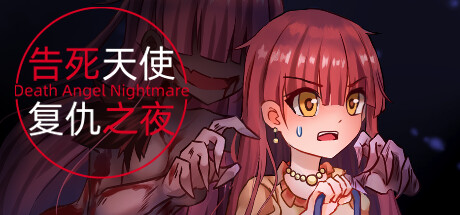
Death Angel Nightmare is a traditional RM horror character adventure game with single story and multiple death achievements. The story length is less than 2 hours.Matsushita and Taojing are a loving couple, but they are caught in the chase. Why is this?
Modeled estimate, not a reported figure. How we estimate →
Media

About

Stats
All-time low is the lowest price we've recorded for this game since we started tracking it.
Languages: Simplified Chinese
Engagement
Hours played at review time, across 31 reviews with recorded playtime.
Reviews
Death Angel.❤️
没想到时隔了这么久,还有续作,当初就觉得《告死天使》的叙事复杂度颇高,很难想象作者未成年时能做出那样的游戏。 如今,续作的手法和表现力上升了许多,作为电影鉴赏的爱好者,确实看到了作者说的:“《看不见的客人》的表现手法作为尝试”,但是,在剧情上和表现手法,还是和原来的作品有些不合适,所以才会有人觉得逻辑存在问题。 虽然体验上并不足够让我称赞,但是我还是那句话对于国产独立制作是支持的、相对包容的。希望作者能再接再厉吧,同时觉得可以出外传,换个游戏制作形式,以gal那种交互会更好体现某些方面。
十哥的画风一直在进步,相比于第一部,有了很大的进步,不过也有一些建议,就是希望这一部能够添加一些关于《告死天使之言》的一些彩蛋,游戏还是很推荐的!
玩完之后才知道这部作品是《告死天使》系列的第三部,体验下来觉得剧情写的很棒,挺喜欢这种立绘的画风,游戏难度偏中,大概一个半小时就能通关,不过通关之后还有晴天娃娃和溺水这两个成就不知道怎么达成
“Death Angel Nightmare” emerges as a compact yet atmospheric indie horror experience that embraces the strengths of the RPG-Maker style while focusing entirely on mood, tension, and quick pacing. From the outset, the game establishes a somber tone that follows two high-school lovers whose innocent day together unravels into a desperate fight for survival. When Matsushita suddenly disappears after sending a desperate message, the protagonist Taojing is thrust into a frantic nightmare where every hallway, every flicker of sound, and every shadow seems to hint at danger. The game wastes no time on lengthy exposition; instead, it pulls the player straight into its eerie rhythm, letting the dread settle gradually through quiet environments, muted lighting, and a constant sense that something malicious is closing in. The story unfolds in a tightly controlled, linear fashion, designed to be completed in under two hours. This brevity works in the game’s favor: it trims away filler and focuses on delivering a concentrated dose of tension. Instead of branching paths or complex character arcs, the narrative follows a streamlined route that keeps players moving forward, uncovering fragments of what caused Matsushita’s disappearance and why Taojing is now being hunted. The structure also lends itself to replaying certain segments, as the game includes various “death achievements” that reward players for discovering alternate failure states and missteps. These small touches give the experience a layer of interactivity beyond simply racing to the end, even if the overall scope remains modest. Atmosphere is unquestionably the game’s strongest element. Rather than relying on frequent jump scares, it builds its tension through subtle sound cues, deliberate silence, and slow shifts in environment. Footsteps echo in empty corridors, faint noises trickle from unseen spaces, and the minimalist pixel art—while simple—uses its limitations to enhance the sense of vulnerability and isolation. The environments often feel claustrophobic, giving every chase or sudden encounter an extra layer of urgency. Players who enjoy psychological discomfort rather than sudden shock will find the game’s approach refreshing, as it leans into the feeling of being watched or stalked instead of resorting to loud surprises. The gameplay mechanics complement the atmosphere with straightforward controls that emphasize exploration and survival rather than complex combat or puzzle-solving. Movement is simple, saving can be handled manually or through auto-save, and most challenges revolve around navigating tense escape sequences or uncovering small clues in the environment. While the simplicity makes the game approachable, it also means that seasoned players might find the mechanics basic. Some may even perceive the controls as slightly stiff at first, especially in moments requiring precision under pressure, though these quirks become manageable after a short adjustment period. Despite its strengths, the game does carry limitations tied to its design philosophy. Its short playtime and linear progression mean it lacks the narrative depth or mechanical complexity of longer horror titles. Once the main story is completed and the death achievements are collected, there is little left to explore. Additionally, the lack of English support restricts its reach to a wider audience. Since the game’s narrative relies heavily on text, non-Chinese speakers may struggle to fully appreciate the emotional weight and context of its scenes. For players who can understand the language, however, the story comes across clearly and effectively, particularly in its portrayal of fear, loyalty, and desperation. Nonetheless, for those who appreciate compact indie horror experiences that deliver atmosphere over scope, “Death Angel Nightmare” offers a satisfying and unsettling journey. It presents its story with focus, builds tension with restraint, and uses its limited runtime to maintain a tight grip on pacing. While it may not appeal to players seeking sprawling adventures or elaborate systems, it succeeds in providing a haunting, bite-sized experience that lingers long after the credits roll. Rating: 7/10
游戏不错,期待下一作
晴天娃娃的成就试出来了,获取方法, 第一次去松下家不能进卧室,第二次去时,进松下的卧室以后什么都别做 直接去右侧房间站上板凳获得,作者加油!
还行
一坨屎
流程上卡了一个成就晴天娃娃,算下来也花了两个小时。 剧情短小精悍,该说的都说清楚了很不错。 不过还是没给渣男渣女一条活路,建议可以给个机会哈哈!
Related
Related
Trends
Modeled estimate over time, reconstructed from Steam's monthly review histogram.
Momentum
Pace estimated from the game's recent review growth (our daily snapshots) at its own sales-per-review ratio — a momentum signal, not booked sales.
Audience
Estimated from the language of this game's reviews — a proxy for where players are, not official Steam demographics.
Related
| Again? | $430.9 | 58 | 36% | $0.49 |
| Tails and Pines | $432.2 | 63 | 71% | $0.49 |
| SEARCH ALL - STEAMPUNK | $432.6 | 58 | 91% | $2.99 |
| 4 Seasons Girls | $425.1 | 62 | 77% | $0.99 |
| Elems | $434.8 | 52 | 67% | $0.99 |
| Space Candy | $422.3 | 62 | 66% | $0.49 |