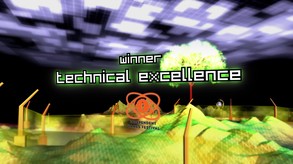
Darwinia blends real-time strategy, action, and puzzles with a unique gesture-based control system. Save the Darwinians, battle viruses, and restore order in a retro-inspired digital world. Winner of multiple prestigious awards, including the Seumas McNally Grand Prize at IGF 2006.
Modeled estimate, not a reported figure. How we estimate →
Media

About
Darwinia is a unique mix of real-time strategy, action, and puzzles, featuring an innovative gesture-based control system. Save the Darwinians, battle viruses, and solve challenges to restore order in a stunning, retro-inspired digital world. Winner of multiple prestigious awards, including the Seumas McNally Grand Prize at IGF 2006, Darwinia is a must-play for strategy and action fans alike.
Step into the vibrant world of Darwinia, a digital theme park created by the eccentric Dr. Sepulveda, where evolving AI creatures called Darwinians live. Their peaceful existence is disrupted by a dangerous virus, and as a hacker, it's up to you to save them. Dive into this corrupted digital realm, battle the virus, and uncover the mysteries threatening the Darwinians' survival.

Darwinia blends real-time strategy, action, and puzzles in an exciting mix. Control "programs" to fight viruses, herd Darwinians, and complete objectives. With a unique gesture-based control system, you draw shapes to summon units, adding a fresh twist to the strategy genre. As you progress, new abilities and tougher challenges keep the gameplay engaging.

Darwinia's retro-inspired, polygon-based visuals transport you to a colorful, abstract digital world that feels like a love letter to 80s classics like Tron and Defender. Its striking style, combined with fluid animations, makes it visually timeless. The game’s unique blend of nostalgia and modern flair led to widespread acclaim, winning multiple prestigious awards, including the IGF's Seamus McNally Grand Prize. Now fully remastered for modern systems, Darwinia’s classic charm shines as brightly today as when it first launched, making it a must-play for both old and new fans alike.

Introversion Software has been developing games since 2001, and stands behind acclaimed titles like Uplink, Defcon, Darwinia, Multiwinia, Prison Architect, Scanner Sombre, and their latest release, The Last Starship. Introversion has garnered both critical and commercial success being recognised with multiple awards including the IGF grand prize for Darwinia and BAFTA for best persistent game (Prison Architect). They have sold more than 4M copies of their games worldwide.
Genres
Stats
All-time low is the lowest price we've recorded for this game since we started tracking it.
Languages: English, German, French, Italian, Spanish - Spain
Engagement
Hours played at review time, across 106 reviews with recorded playtime.
Reviews
Themes across 106 recent reviews and how positive each mention is. A keyword signal, not full sentiment analysis.
positive critical· bar length = how often the theme comes up
Reviews
Other than some small pathfinding issues this game is a work of Art. Someone will dig this out of an archive one day in the future and it will blow them away.
i love the 2005 pahtfinding. I also really appreciated how V-Sauce guided me through the game as emotional support through this tortourous hellhole.
Darwinia, developed and published by Introversion Software, stands as one of the most creative and distinct independent games ever made. It merges the structure of a real-time strategy game with elements of action, puzzle solving, and digital simulation, wrapped in a visual style that feels like a living homage to the early days of computing. The story unfolds within a massive virtual theme park known as Darwinia—a digital world created to simulate the evolution of artificial life. When a viral infection spreads through this artificial ecosystem, the player is tasked with helping the Darwinians, tiny pixelated inhabitants of the world, fight for survival and rebuild their fragile society. What makes the experience special is how it blends nostalgic computer aesthetics with an emotional sense of discovery and preservation, turning what could have been an abstract idea into something surprisingly moving. The world of Darwinia is striking from the very first moment. Everything is presented in a stylized, low-poly visual design reminiscent of classic vector graphics, but with a vibrant color palette and dynamic lighting that breathe energy into its simplicity. Each area feels like a digital diorama, filled with geometric landscapes, abstract structures, and glowing lines that represent circuits and code. Despite the minimalist presentation, the world feels alive and beautiful, constantly humming with movement and light. The visual style isn’t just for show—it reinforces the concept of entering a simulated environment, a computer world that feels both familiar and alien. It’s a rare case where the art direction defines the tone so completely that it becomes inseparable from the game’s identity. Combined with a subtle, ambient soundtrack that hums like a machine at work, the atmosphere is hypnotic and strangely serene even amid chaos. Gameplay in Darwinia is an intricate blend of strategy and direct control. Players interact with the environment by deploying “programs” such as squads, engineers, and officers—each represented by simple but functional polygons. Squads serve as your combat units, clearing out viral infections and defending the Darwinians. Engineers recover digital souls from fallen creatures and repair key infrastructure, while officers help organize the movement of the population. The game cleverly balances high-level management with hands-on control, allowing you to switch between overseeing the battlefield and directly steering units in real-time combat. This hybrid system gives the game a unique rhythm: one moment you’re managing population logistics and production, and the next you’re personally fighting off a swarm of enemies with laser fire. It captures the thrill of action while retaining the cerebral satisfaction of strategy. As the campaign progresses, the depth of Darwinia’s design becomes apparent. Each level introduces new challenges—whether it’s reclaiming infected territory, guiding survivors across dangerous terrain, or reconstructing the virtual world’s systems. There’s a gentle learning curve that rewards experimentation and persistence, and every victory feels earned. The sense of progress doesn’t come from unlocking flashy upgrades but from watching the digital world come back to life. The more you save the Darwinians and rebuild their environment, the more vibrant and self-sustaining the world becomes. This creates a powerful emotional loop where your actions have tangible, visible results. Despite the abstract visuals, the game manages to evoke genuine empathy for its tiny inhabitants, making their survival feel meaningful. The story of Darwinia is minimalist yet profound. It doesn’t rely on cutscenes or heavy exposition, instead using environmental storytelling and the natural evolution of gameplay to communicate its ideas. The premise—that you are helping a creator restore a broken digital ecosystem—is simple but layered with thematic resonance. It explores ideas about artificial intelligence, creation, digital decay, and the ethics of intervention in a simulated world. The Darwinians, though made of polygons and simple animations, become symbols of resilience and adaptation. The narrative’s subtlety invites interpretation, and players often find themselves reflecting on the nature of life and technology as they guide these artificial beings toward a new future. Darwinia’s one notable limitation lies in its brevity and learning curve. The campaign is relatively short, and while its pacing feels tight, some players may wish it lasted longer or offered more complex scenarios. The gesture-based interface for summoning units can also feel cumbersome at first, though it becomes second nature with practice. Yet these imperfections are part of what gives the game its charm—it feels handcrafted and experimental, the product of vision rather than formula. Its concise length means it never overstays its welcome, and the sense of wonder remains intact from beginning to end. Even years after its release, Darwinia remains an exceptional achievement in independent game design. It’s both a technical experiment and an artistic statement, proving that innovation doesn’t require massive budgets or photorealistic graphics. Introversion Software succeeded in creating a world that feels alive, mysterious, and deeply personal—a digital space where strategy meets empathy. Its blend of retro aesthetics, clever mechanics, and emotional subtlety makes it a timeless experience that still feels original today. For players seeking something different, something that feels like a cross between an old-school computer dream and a modern meditation on creation, Darwinia is a journey worth taking—strange, beautiful, and unforgettable. Rating: 7/10
There aren't many games like this. The music and atmosphere is so good. The gameplay is, odd. You really feel like you are transported into some retro futuristic computer world and you gotta save those little green men.
One of the best classic games ever. It is a brilliant story with a very clever gameplay. It is a digital experience until the end....
I got this game in the Introversion Classics Pack, which I got as a gift years ago from a friend. Unfortunately, that friend told me they got it for me because I played a lot of local multiplayer games, and it turns out that none of the games in the pack are local multiplayer (whoops). I never actually ended up playing any of them at the time, but I decided to try them out now, starting with Darwinia, and while the game did show some promise with a unique low poly art style and an interesting story, I found the game to be far too slow and tedious, and didn't end up finishing it. I found the story in this game to be intriguing, but there isn't a lot of it unfortunately. The story is primarily delivered via short messages before starting each area, and given the small number of different areas and the amount of time it takes to get through one of them, the game ends up feeling a bit light on narrative. Unfortunately I found the gameplay to be worse. In general, you spawn one of a few different unit types and move them around the map to fight virus or reclaim souls or spawning areas. At it's core, the gameplay isn't terrible, although the controls feel a bit awkward and take some getting used to. Everything in this game takes far too long though. The units take a really long time to move, and given the fairly small number of spawning areas, if you lose them, you're often forced to respawn new units far away and wait for them to travel accross the entire map again. The pathfinding also isn't very good, and units often get stuck on things. Combat isn't very satisfying either, as it's often hard to tell when you're damaging the enemy or exactly what part of the enemy you're supposed to be targetting. Additionally, the autonomous mode of the squad unit which does most of the fighting only does it's weakest attack unless you're manually controlling it, so you usually have to manually control and kill every virus yourself, unless you want the game to take even longer. The game has a really neat low poly aesthetic, which is fairly simplistic, although I quite liked it. Most of the game doesn't have music though, which is a bit of an odd choice, and really didn't help during those long, drawn out battles. The game ran well for the most part, although there was quite a bit of jank with units navigating certain types of terrain and getting stuck on things. I also ran into a bug where [spoiler]an armor unit wouldn't turn into a turret no matter what I did[/spoiler], requiring me to create another one and drag it across the map again, which was frustrating, although I only ran into that once. [b]TL;DR[/b] This is a neat simplistic RTS, with an intriguing story and unique visuals. Unfortunately, it's light on story content, has awkward controls, units often get stuck on things, and everything in this game just takes too long. As such, I can't recommend it.
Still a great game almost 20 years later.
Quite a unique little game. Nice blast from the past. Had no problem making this work on the Win 10 and new hardware.
Painfully slow.
Fun and original swarm management game, sort of Pikmin-y, sort of RTS-y, and as aesthetic as TRON.
Related
Related
Trends
Modeled estimate over time, reconstructed from Steam's monthly review histogram.
Audience
Audience
Estimated from the language of this game's reviews — a proxy for where players are, not official Steam demographics.
Games most often reviewed by the same players — an audience-affinity signal from our review sample, not full ownership data.
Related
| 7 Days to Die | $425.3M | 403.5K | 87% | $44.99 |
| Mount & Blade II: Bannerlord | $309.8M | 293.9K | 88% | $49.99 |
| RimWorld | $149.6M | 205.9K | 98% | $34.99 |
| Don't Starve Together | $130.6M | 373.1K | 95% | $14.99 |
| Satisfactory | $164.4M | 275.8K | 97% | $27.99 |
| Hell Let Loose | $51.5M | 148.7K | 82% | $17.49 |
Related
| Subside | $417.3K | 514 | 97% | $24.99 |
| Gabriel Knight: Sins of the Fathers 20th Anniversary Edition | $417.4K | 1.2K | 91% | $19.99 |
| Under the Sand REDUX - a road trip simulator | $417.4K | 1.6K | 78% | $9.99 |
| The Divine Speaker | $417K | 447 | 96% | $29.99 |
| Civil War II | $417.5K | 293 | 78% | $39.99 |
| 道衍诀 | $417.7K | 1K | 50% | $11.99 |