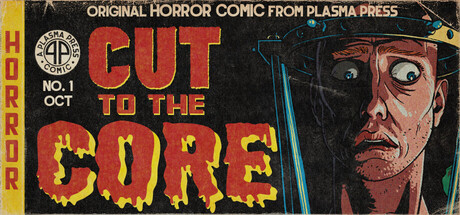
Cut to the Core is a relentlessly dark and confrontational narrative experience developed by Plasma Press and published by AAD Productions that positions itself firmly at the intersection of graphic horror, psychological torment, and illustrated storytelling. Rather than attempting to soften its themes or ease players into its world, the game immediately establishes an atmosphere of dread and inevitability, signaling that this is not an experience designed for comfort or empowerment. It is, instead, a tightly controlled descent into suffering, one that draws heavily from the traditions of horror comics and grim anthology tales where the outcome is often as cruel as it is unavoidable.
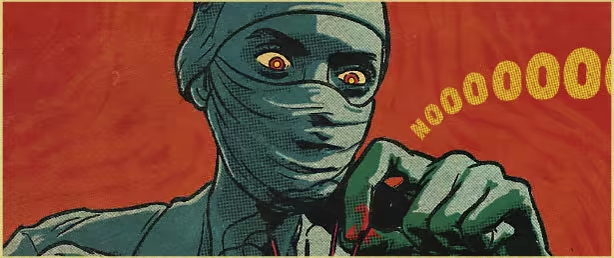
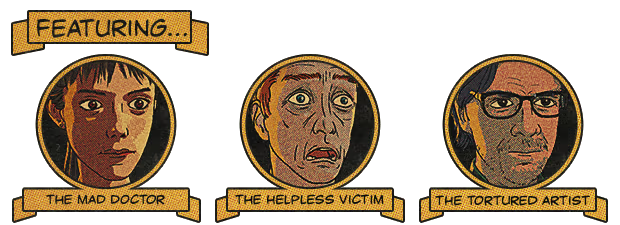
The narrative follows Jack Weir, an ordinary man whose life unravels after what should have been a routine medical procedure. Under the supervision of the sadistic and unsettling Dr. Lacey Scalia, Jack’s situation rapidly transforms from discomfort into full-blown nightmare. The story unfolds with deliberate pacing, layering psychological horror on top of increasingly explicit body horror as Jack struggles to understand and survive the grotesque circumstances he finds himself trapped in. The writing leans heavily into feelings of helplessness and violation, reinforcing the sense that Jack is not a hero overcoming adversity, but a victim caught in a system that delights in his pain. This framing gives the story much of its emotional weight, making it less about suspense and more about enduring a steadily escalating ordeal.
Structurally, Cut to the Core is a kinetic visual novel, meaning it offers virtually no branching choices or alternate story paths. Player interaction is limited to advancing text and scenes, with no decisions that alter the narrative’s direction. While this lack of agency may be disappointing to players who associate visual novels with choice-driven storytelling, it is a deliberate design choice that strengthens the game’s oppressive tone. By denying the player control, the game mirrors its protagonist’s lack of autonomy, reinforcing the feeling that events are unfolding with grim certainty no matter how desperately one might wish to intervene.
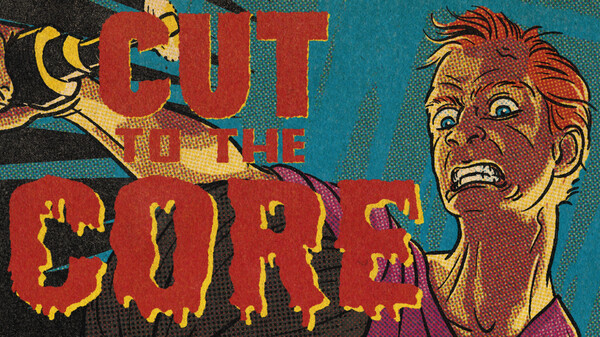
Visually, the game adopts a striking hand-drawn comic-book aesthetic that channels the spirit of classic horror anthologies. Scenes are framed like illustrated panels, often lingering on disturbing imagery that leaves little to the imagination. The art style uses sharp contrasts, exaggerated expressions, and unsettling compositions to convey both physical suffering and psychological collapse. This approach allows the game to deliver intense horror without relying on real-time animation or jump scares, instead letting static imagery and pacing do the work of unsettling the player. The result is an experience that feels closer to reading a forbidden graphic novel than playing a conventional video game.
Thematic content in Cut to the Core is unflinchingly extreme. It explores subjects such as bodily mutilation, abuse, addiction, and psychological degradation in explicit detail, and it does so without attempting to justify or sanitize them. These themes are not merely implied but are placed front and center, often in ways designed to provoke discomfort or revulsion. For some players, this rawness gives the story its power, lending authenticity to its horror and ensuring that nothing feels watered down. For others, the intensity may feel overwhelming or even excessive, underscoring how narrow and specific the game’s intended audience truly is.
Sound design plays a subtle but important role in sustaining the atmosphere. Rather than relying on constant music, the game often uses sparse ambient sounds, unsettling audio cues, and moments of near silence to heighten tension. These quiet stretches allow the player’s imagination to fill in the gaps between scenes, making the horror linger even when nothing overtly violent is happening on screen. When sound does intrude, it tends to do so in a way that amplifies unease rather than providing relief.
Because of its linear structure and focused narrative, Cut to the Core is relatively short, typically lasting only a few hours. Replay value is minimal in the traditional sense, as there are no alternate endings or branching routes to explore. However, the experience is crafted to be memorable rather than repeatable, aiming to leave a lasting impression rather than encourage multiple playthroughs. Its brevity works in its favor, preventing the relentless darkness from becoming exhausting while ensuring the story remains tightly paced and impactful.
Overall, Cut to the Core stands as a bold and uncompromising example of horror-driven interactive fiction. It does not attempt to appeal to a broad audience, nor does it prioritize fun or player empowerment. Instead, it commits fully to its vision of bleak, graphic storytelling, using its kinetic novel format to deliver a focused and disturbing narrative with confidence. For players who appreciate extreme horror, illustrated storytelling, and experiences that challenge emotional comfort rather than mechanical skill, it offers a haunting and difficult journey that lingers long after the final scene fades to black.
Rating: 8/10