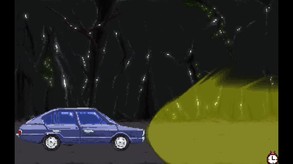
Contact is a horror point and click adventure game. In a bizarre world where you are trapped in an accident, you must investigate and find the whereabouts of your family. You have to run away from the creatures that attack you and collect items to overcome obstacles.
Modeled estimate, not a reported figure. How we estimate →
Media

About
Stats
All-time low is the lowest price we've recorded for this game since we started tracking it.
Languages: English, Korean
Engagement
Hours played at review time, across 33 reviews with recorded playtime.
Reviews
Only 20 minutes of content for the paid version of this. I suspect the free version is the same because it would be difficult to remove anything so just play the free version. But even free it's just three rooms and 4 objects. I played the free version of their other game "Content" and it was much longer, at least 2 hours play time, and it seems to be the best game of the three, so I'd recomend it instead, "content" is worth paying for, but definintely not this one. [h1](follow my curator page [url=https://store.steampowered.com/curator/33882793/]GenXPlayers[/url] for more retro and indie reviews)[/h1]
콘텐트, 콘텍트 둘다 했는데 둘다 뭔가 하려는 느낌에서 끝난다. 연계된 이야긴가 했는데 그것도 아니었고 이전 작을 해봐서 그런지 20분에 깨버렸고 스토리나 그런 것이 옴니버스 형식으로 진행은 되는데 너무 짧은 느낌 1100원 의 가치라 해야되나 솔직히 내용을 좀더 늘리고 이어지는 형식으로 만들면 더 좋다고 봄요 한번 하니 두번째 하니 신기하다보단 식상함이 그리고 기승전결도 동일하게 끝이 애매하니 아쉽네요 스토리를 좀더 길게하고 못다한 이야기를 풀어주면 더 좋을 듯 싶네요
Not bad, and for the price, cant complain about its length or presentation. Theres some good ideas here, shame it wasnt expanded on further
Great potential, but it seems like a paid demo. I hope the developers can improve it, I'd like to play this game again if there's a more coherent storyline.
포인트앤클릭 공포게임인데... 뭐하고싶은건지 뭐가 공포요소인지 전혀모르겟음 시작부터 클리어까지 15분걸렷고 잇나싶은수준에 딱히 재미없고 불편한 퍼즐 공포는 뭔가 분위기도없고 무료겜이면 모르겟지만 이걸 추천하고싶지않음
Contact is a small-scale indie horror adventure that leans heavily on atmosphere, unease, and fragmented storytelling rather than mechanical complexity or overt scares. Developed by UKZ Arts and published by PsychoFlux Entertainment, the game presents itself as a retro-inspired, point-and-click experience that blends psychological horror with classic adventure game sensibilities. From the outset, it establishes a somber and unsettling tone, inviting players into a world that feels both familiar and deeply wrong, where memory, guilt, and fear bleed together into a quiet but persistent sense of dread. The narrative begins with a traumatic incident that leaves the protagonist stranded in a distorted reality following a heated argument and a catastrophic accident. This premise immediately grounds the experience in emotional turmoil, and the story unfolds gradually through exploration rather than exposition. Dialogue is sparse, and much of the storytelling is environmental, encouraging players to piece together events through visual cues, brief interactions, and unsettling imagery. The search for family members acts as the central motivation, but the game deliberately avoids clear answers, instead favoring ambiguity and surreal transitions that blur the line between reality and nightmare. This approach gives the story an abstract, dreamlike quality that will resonate most strongly with players who enjoy interpretive narratives rather than straightforward plot progression. Gameplay follows traditional point-and-click conventions, with players navigating through static scenes, examining objects, collecting items, and solving simple puzzles to advance. Interactions are intentionally limited, keeping the focus on observation and atmosphere rather than complex mechanics. Occasionally, the game introduces quick-time events and chase sequences that inject bursts of urgency, breaking up the slower pace of exploration. These moments are generally brief and scripted, serving more as narrative punctuation than as sustained gameplay challenges. While the controls and mechanics are easy to grasp, progression can sometimes feel unclear, requiring players to thoroughly scan environments for interactable elements that are not always immediately obvious. Visually, Contact adopts a pixel-art style that evokes older adventure and horror titles, reinforcing its retro identity. The environments are subdued and muted, often drenched in darkness or unnatural lighting that enhances the game’s oppressive mood. While the simplicity of the visuals supports the eerie atmosphere, it can also work against clarity, as important details occasionally blend into the background. Character sprites and creature designs are understated but effective, relying on suggestion rather than explicit horror to unsettle the player. The minimalist presentation aligns well with the game’s psychological focus, emphasizing what is implied rather than what is shown. Sound design plays a crucial role in sustaining tension throughout the experience. Ambient noises, distorted effects, and unsettling musical cues create a constant undercurrent of unease, even during moments when nothing overtly threatening is happening on screen. Silence is used deliberately, allowing players’ imaginations to fill in the gaps and heighten anxiety. Rather than relying on loud jump scares, the game builds discomfort slowly, making players feel watched or unsafe without clearly identifying the source of danger. This subtle approach to horror is one of Contact’s stronger qualities, especially for players who prefer mood-driven fear over shock tactics. That said, Contact’s limited scope is evident. The overall experience is relatively short, and the lack of mechanical depth or branching outcomes means replay value is minimal. Puzzles are straightforward and rarely challenging, and some narrative threads feel underdeveloped or abruptly concluded. Players seeking a deeply interactive adventure or a richly layered horror experience may find the game too slight to leave a lasting impact. Occasional pacing issues and moments of confusion can also interrupt immersion, particularly when progression depends on obscure interactions. In the end, Contact stands as a modest but sincere indie horror adventure that succeeds most in its atmosphere and tone. It is not a game that aims to redefine the genre or deliver complex systems, but rather one that offers a brief, unsettling journey shaped by emotional trauma and surreal imagery. For players who appreciate low-budget psychological horror, retro aesthetics, and slow, contemplative exploration, Contact provides an experience that, while imperfect, carries a distinctive mood and a quiet sense of unease that lingers beyond its short runtime. Rating: 5/10
돌아다닐 맵이 몇 없어서 눈치껏 클리어 가능 그래서 숙취운전 예방 게임이었던가?
It was okay, a good game to play if you are looking for short gameplay. But i dont really understand what the story was about.
뭔가 많이 빠진 느낌? 엥? 하니까 끝났음
거대곤충의 습격에 대한 이야기를 했던 이후 작품과 달리 초기작이라 그런지 스토리나 퍼즐이 조금...난해한거 같네요. 다른 분 평가처럼 스토리가 이어지거나, 장편 게임이 나왔으면 좋겠습니다.
Related
Related
Trends
Concurrent players on Steam, sampled daily since tracking started.
Audience
Estimated from the language of this game's reviews — a proxy for where players are, not official Steam demographics.
Related
| 101 Cats in Australia | $457.1 | 60 | 95% | $0.49 |
| Ecchi Puzzle | $453.2 | 61 | 66% | $0.49 |
| Colors! Platform | $462.6 | 56 | 96% | $0.59 |
| SEARCH ALL - MUSHROOMS | $462.6 | 56 | 82% | $2.99 |
| SEARCH ALL - CACTUSES | $462.6 | 56 | 88% | $2.99 |
| Dodge Bubble | $463.1 | 51 | 69% | $0.49 |
Related
| Euro Truck Simulator 2 | $421.6M | 932.1K | 97% | $19.99 |
| Human Fall Flat | $109.3M | 225.6K | 95% | $19.99 |
| American Truck Simulator | $103.7M | 194.1K | 97% | $19.99 |
| DAVE THE DIVER | $90.8M | 139.6K | 97% | $19.99 |
| Slime Rancher | $73.8M | 155.4K | 98% | $19.99 |
| House Flipper | $65.8M | 110.8K | 94% | $24.99 |