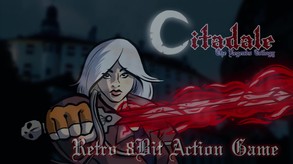
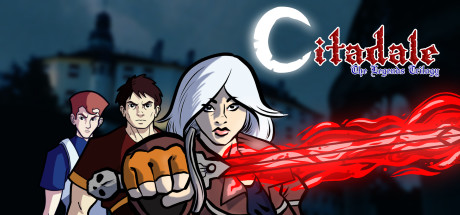
Citadale: The Legends Trilogy is a retro action-platformer filled to the brim with vampires, zombies and other creatures of the night. Hope you brought some holy water!
Modeled estimate, not a reported figure. How we estimate →
Media

About
Stats
All-time low is the lowest price we've recorded for this game since we started tracking it.
Languages: English
Engagement
Hours played at review time, across 29 reviews with recorded playtime.
Reviews
Game is unplayable hot garbage. The controls are trash and can't be changed. it has everything that you can possibly do wrong in the platformer genre (hitbox issues, badly designed jumps, input lag, cheap hits, poor controls) and rips off older castlevania games - its not just similar, you will hear exactly the same sound effects and recognize a lot of the artwork. Stay away. even on sale, you will regret your purchase. If you were looking for a solid retro or metroidvania experience, you won't get that here.
Se sto gioco fosse uscito nel 80 sarebbe stato un capolavoro. Citadale offre il gameplay dei vecchi castlevania arcade dove si va dritto e basta , quindi non come i symphony of the night , ma con una grafica più carina in stile snes. ha dei problemi tipo che in pochi minuti l'ho buggato tipo una decina di volte e non va bene. non è nemmeno troppo difficile se hai avuto a che fare con del vero retrò gaming o se giocavi nel periodo, se invece ti butti a minchia modalità skyrim perdi spesso ed è frustrante. principalmente perchè i livelli sono molto brevi e li puoi rashare, ma le boss fight ti tolgono tanta vita con un colpo e ti giustamente gli fai 1 di danno a botta. solo che appunto è molto facile buggarlo, inoltre c'è il panic botton che potevano non metterlo, ti permette di salvare e caricare in fretta quindi se vuoi cheattare nei boss lo puoi fare. detto ciò. sono 2 giochi sicuri in 1( forse 3 se li finisci tutti e due non lo so dato il nome la trilogia.. ) ma per quello che offre e come lo offre il prezzo pieno non vale la candela. lo consiglio perchè si vede che è fatto col cuore e mi piace dare supporto ai mini sviluppatori, ma è molto prematuro come gioco, e con cose chiaramente visibili, proprio le basi della programmazione platform. ma alla fine scontato a 2 , 2.50 sono 3 giochini e ci sta, o un gioco e 2 DLC.. direi che si finisce in un oretta. non è male lo consiglio se si vuole giocare a scazzo a qualcosa di non troppo impegnativo, per perdere il tempo così e se ti piace il vecchio genere castlevania, quelli belli.
Citadale: The Legends Trilogy ist ein Hommage an die alten 8 Bit Klassiker, allen voran die Castlevania Serie. Als Sonja Dorleac schnetzeln wir uns durch Horden Untoter und anderer Unholde. Mit drei Kapiteln bietet das Spiel einen großen Umfang - Preis/Leistung stimmen absolut. Wer Castlevania mochte, wird Citadale lieben. https://youtu.be/4yBmzMXvfQY
8비트시절 캐슬배니아 느낌은 잘 살렸는데 플탐이 너무짧은게 너무크다. 브금까지는 좋은데 볼륨조절도 안되고 세이브기능도 없다 그나마 플타임이 짧아서 체크포인트만 이용해도 깨는데는 큰문제가 없다 천천히 해서 4시간이지 열심히 하는사람은 3편합쳐서 두시간안에 깰듯 하고 그러다 보니 게임의 깊이도 얕아서 진짜 캐슬베니아에 미친사람아니면 이천원이상주고 하기 돈이 아까운한 게임이다
The gameplay is not so bad (but you NEED to play it using a KEYBOARD due a bug that makes the CONTROLLER MISS INPUTS!), but the diffilcuty can be very annoying in some bosses (SPECIALLY the last bosses of the third and the first games). The musics are good, and the graphics aren't SO BAD, but the cutscenes are VERY SLOW...! If you looking for a "easy" castlevania-like, try this on. but don't expect much. It's more than a demo but still don't look like a full released game - or collection of games.
Tl;dr - it is a collection of alright, short Castlevania clones. I am being extra nice because I see competent game design plagued by few instances of extremely punishment. These games are about 1 to 2 hours long if you progress steadily and in the case of Chapter 3 IF AND ONLY IF you use save states with the last double boss. Note that you can open the general menu with the game selection and the SAVE STATE FUNCTIONS by pressing H. It is not mentioned in the manual. It is useful because the Episode 1 ends up in a locked up main menu that you can only escape through the game select menu. The music overall is great and you get the soundtrack with the game Episode I Gate of Souls is about 1.0 hours long if you use save states. Due to the high boss damage and the unreliable whip, the Potion sub-weapon is useless. It features needlessly brutal and frustrating boss fights that make you fight Goliath with a sling that often whiffs even when it should not. This game takes some patience (or using the save states or taking advantage of the sub-weapons to make the bosses easier - throwing star is usually the GOAT) The game is alright except for two boss fights that are annoying. The blood worm one has an insane hit radius with its poison splashes and can apparently HIT YOU BY HITTING YOUR SWORD. The trick with it is to stop near the edges of the screen to make it appear there, hit it once from max range, back away (to avoid the splash) and hit the spawned minion. The eyeball boss near the end was impossible (because it kills you in two hits with touch damage) until I let it bounce around for a while NEVER HITTING IT WITH THE WHIP. Whipping it makes worsens its pattern and makes it undodgeable. Eventually it is going to bounce into the ceiling spikes and take huge damage and generally glitch up. I did hit it with Holy Water before it did that. The first episode is embodies of the early games by this developer and the common trait with CV derived works such as Lecarde Chronicles I and II that is: excessive difficulty. The later games in the series relent on this trait. The next game is much easier. Episode II Curse of Darkness is quite easy. There are no hard bosses (besides the eyeball one if it RNG-chooses an undodgeable movement pattern) and no significant instant death obstacles. The Potion sub-weapon is missing and the bosses are airborne, so Holy Water is dead worthless because it cannot land on bosses - it goes through them to the ground. There is no Dracula-like to fight this time around, though the last fight is easy just like in every other Citadale game. There is one comical bug at the start of E2 if you make save state while it is still starting the stage where when you start the game on Stage 1, the screen fails to scroll. It can be fixed by restarting the game. Episode III Legacy of Fate is as easy as E2 Curse of Darkness UNTIL THE FINAL BOSS TIMES TWO. You are tasked to defeat this familiar character with clunky controls and slow movement speed while he endlessly runs at you at the speed close to yours. It will be difficult to defeat this guy even if you save a state beforehand because you cannot load states and survive while he is after you without being instantly hit by him. It is the protagonist of the second game, so his attacks are the best in the series. You have to somehow score 20 hits while he can kill you in about five from max health and is incredibly difficult to get clean hits in. After you curse your life enough to beat the guy with the sword, you get to fight main guy again WITHOUT BEING HEALED. It is a floating dude with erratic pattern 9-directional fireballs (that cannot be destroyed with attacks) that you need to score another 20 hits or so with barely no life left after the first guy. Luckily the attack pattern of the guy is relatively slow, so you can save state through him by saving soon after he misses a fireball attack. This final double fight drags the enjoyment of the game down to nothingness. If the first guy was not such a nightmare to dodge attacks from (the timing window must be something like 50 ms), it would not be so bad. The first time you get to the guy You Have No Chance to Survive Make Your Time. It is essentially the game using its mechanics against you. Another possible fix would be to increase the speed of airborne movement to make it easier to dodge the long-ass attacks without white-knuckling and praying for success throughout the whole process (the guy won't give you the time to do any animal sacrifices). E3 has something unusual going on with the sub-weapons because: 1. The throwing knife is missing and apparently replaced with a Zelda style fire ball blade that you can shoot infinitely for free as long as you have full health and it ignores bosses invulnerability frames to a large extent. 2. Potion seems to not work. I had 50 units to spare and missed two blocks of health and it still would not activate - pressing UP + ATTACK did nothing. I tried various other inputs and holding the sub-weapon inputs to no avail. In short, with save states, the fireball blade is broken, though it will not help you with the final bosses because the first one WILL HIT YOU - the dodging window the positioning requirements are insanely narrow. Case to point, I spent 33 % of my playthrough time on that last double boss encounter. 30 minutes out of 90. For contrast, most other bosses in the franchise take about 2 to 3 minutes. The ones I cheesed with E3 fire balls took about 30 to 60 seconds. A casual player is not likely to beat E3 without save states and I'd say it is not worth it to pull off. The E1 bosses even at their hardest are much more doable by casual players - even I did not need to use save states to beat it. Keep in mind that if you lose during the fight of the last bosses, you need to restart boss from the beginning with even less resources than what you had before and most likely no fireball sub-weapon to find if you use the teleport to the end of the stage. - Overall the series is okay. I have to say I like Episode II AKA Chapter 2: Curse of Darkness the most even though it is super easy because it does not have the annoyances such as the AOE blood worm and the cryptic eye ball fights of E1 and the insanely difficult first part of the E3 final boss. I'd say the E3 is not even worth playing unless you are not going to use save states with the last boss. E1 is quite demanding, though unlike in E3 you generally have a better chance of defeating the bosses even if you die and lose your stack of sub-weapon ammo. Trying to do that in E3 is much more painful and you are forced to it because of the awful dodging mechanics of the first part of the last boss. For what I have seen, the overall game design is much more fair and vastly less punitive than what you see in other CV derivative works such as Lecarde Chronicles I & II. That guy's designs did not improve much for the IGA-approved Chronicles of the Wolf release. As much as you can criticize Citadale, there are no 'kill rooms' that people complain about CotW. Citadale the Ancestral Strain has a bit of that in the flip platforms over spikes.
Citadale: The Legends Trilogy is a retro-styled action platformer developed by ERMedia and published by Plug In Digital. The game compiles three related titles—Gate of Souls, Curse of Darkness, and Legacy of Fate—into a single experience that tells a generational story about a family devoted to fighting supernatural forces. Inspired heavily by classic side-scrolling action games from the 8-bit era, the trilogy embraces a deliberately nostalgic design philosophy. Its pixel art visuals, chiptune soundtrack, and straightforward stage-based gameplay aim to recreate the feeling of playing an old console platformer while offering a narrative that stretches across several decades of conflict between demon hunters and the forces of darkness. The trilogy’s story revolves around the Dorleac family, a lineage of warriors whose destiny is intertwined with the mysterious Citadale castle and the dark powers that reside within it. The first chapter introduces Sonja Dorleac, who ventures into the cursed fortress in search of her missing husband while confronting the supernatural horrors lurking inside. The second chapter shifts the focus to Gabriel, her son, who continues the struggle as the evil presence surrounding the Citadale begins to spread beyond the castle walls. In the final installment, Legacy of Fate, the story moves forward another generation to Christopher, Sonja’s grandson, who must face the ultimate manifestation of the darkness that has haunted his family for years. By telling the story across three generations, the game creates a sense of legacy and continuity, reinforcing the idea that the battle against evil is an inherited burden passed down through the family. Gameplay in Citadale follows a classic action platformer format where players progress through linear stages filled with enemies, hazards, and environmental challenges. Each level requires careful navigation across platforms, avoiding traps and defeating hostile creatures while making steady progress toward the end of the stage. The mechanics are intentionally simple, emphasizing precise movement and timing rather than complex systems. Jumping across gaps, avoiding spikes, and striking enemies at the right moment are the fundamental skills that players must master in order to survive the increasingly difficult levels. Combat revolves primarily around the use of the legendary Shadow Blade, a powerful melee weapon wielded by the protagonists of the trilogy. This weapon allows players to slash through enemies at close range while maintaining the rhythm of classic side-scrolling action gameplay. In addition to the primary weapon, players can collect a variety of secondary weapons scattered throughout the stages. These items include projectiles such as throwing axes and other ranged tools that allow players to attack enemies from a safer distance. These secondary weapons are limited by a resource system, encouraging players to use them strategically rather than relying on them constantly. The enemy roster draws heavily from gothic horror traditions, filling the game’s stages with creatures such as skeletons, bats, zombies, and armored warriors. Each enemy type behaves differently, requiring players to learn their attack patterns and respond accordingly. Some enemies move quickly and aggressively, while others remain stationary but pose a threat through projectiles or environmental hazards. This variety helps maintain the pacing of the game, as players must constantly adapt their approach depending on the type of enemy encountered. At the end of many stages, players encounter bosses that serve as major obstacles in the journey through the Citadale. These bosses are often large supernatural creatures or powerful guardians that test the player’s mastery of the game’s mechanics. Each boss has its own attack patterns and weaknesses, requiring players to observe their behavior carefully before attempting to strike. Successfully defeating these bosses provides a satisfying sense of progression and marks the completion of key sections of the story. Visually, the game is designed to replicate the look and feel of early console games. Character sprites, environments, and animations are created using pixel art that intentionally resembles the graphics of classic 8-bit titles. The color palette and visual effects are similarly limited in order to maintain the authentic retro aesthetic. This approach helps reinforce the nostalgic atmosphere, making the game feel like a lost classic from the early days of console gaming. The soundtrack plays an important role in supporting this retro presentation. Composed in a chiptune style, the music captures the energetic electronic sound that defined many classic action platformers. The tracks are fast-paced and dramatic, matching the intensity of the gameplay and enhancing the gothic atmosphere of the Citadale castle and its surrounding environments. Together with the pixel art visuals, the music creates an immersive throwback experience that pays homage to the era that inspired the game. Difficulty is a central part of the experience, reflecting the design philosophy of the games that influenced it. Levels often require careful timing and patience, as enemies and environmental hazards can quickly defeat players who act recklessly. However, the game balances this challenge with modern conveniences such as unlimited lives and checkpoint systems, allowing players to retry difficult sections without being forced to restart the entire game. This compromise maintains the demanding nature of classic platformers while making the experience more accessible to modern players. The trilogy also includes additional features designed to increase replay value. Hidden secrets are scattered throughout many stages, rewarding players who take the time to explore beyond the obvious paths. Certain objectives and achievements unlock alternate endings in the early chapters, encouraging players to revisit the game and attempt new strategies. Completing specific challenges may also unlock bonus modes such as boss rush encounters, where players can face the game’s most powerful enemies in quick succession. While the game successfully captures the spirit of retro platformers, its dedication to classic design can also be a limitation. The straightforward gameplay mechanics and linear stage structure may feel somewhat outdated compared to modern platformers that incorporate open exploration or deep upgrade systems. Some players may also find that the narrative remains relatively simple, serving mainly as a backdrop for the action rather than a fully developed storyline. Despite these limitations, Citadale: The Legends Trilogy offers a satisfying experience for fans of old-school action games. Its combination of challenging platforming, gothic themes, and nostalgic presentation creates a tribute to the golden age of side-scrolling adventures. The generational storyline adds an extra layer of continuity, giving players the sense that they are participating in a long-running battle between heroes and dark forces. In the end, Citadale: The Legends Trilogy stands as a love letter to classic 8-bit platformers, capturing the excitement and challenge of that era while presenting it in a cohesive trilogy format. Players who appreciate retro game design and the satisfaction of mastering demanding levels will likely find the experience rewarding. While it may not introduce many modern innovations, its dedication to recreating the spirit of early action platformers makes it an enjoyable journey through a nostalgic and gothic world. Rating: 7/10
--悪魔城ドラキュラへの愛と、デバッグ不足が共存する、骨太バグ・アクション!」 ■ 3行でわかる本作の魅力 納得のドラキュラ風味: 3人の主人公、3つのストーリー。三部作を一度に楽しめる、レトロアクション好きにはたまらないボリューム。 覚えゲーの楽しさ: 難易度は高めだが、ボスには明確なパターンがあり、実力でねじ伏せる達成感がしっかり味わえる。 スリル満点のバグ環境: 中ボスを飛ばすと進行不能、ジャンプしすぎるとマップ外へ。システム側の罠(バグ)を回避する慎重さが必要。 ■ ターゲット層 推奨: レトロな高難易度アクションを愛し、多少のバグや英語の壁を笑って流せる人。 非推奨: 進行不能バグや操作の粗さに敏感な人。日本語対応を必須とする人。 クイック評価 面白さ: ★★★★☆(アクションの核は良い) 懐かしさ: ★★★★★ 難易度: ★★★★★(バグ回避を含めると最高難易度) 筆者のつぶやき ジャンプで画面外へ飛び出してゲームオーバーになったのはチーターマン以来の経験でした。また、中ボスを無視して進むとボスと無言の見つめ合いになるなど、なかなか一筋縄ではいかない一作。手順を守って、一歩ずつ進むのがこの世界の絶対のルールになるゲームでした。 日本語非対応なので、シナリオを読むには翻訳機や英語の知識が必要
ステージ3で謎の死亡ばかりします、正直意味が分かりません。 バグなのでしょうか?仕様なのでしょうか? ステージ3の途中で次の足場へ飛び移ろうとすると、飛び移る途中に何故か死にます。 小ジャンプで謎の死亡ポイントを回避してボスへ辿り着くも、そのボス戦も放置していると再度登場しないようで。 追うのかなと思い下へ行けば足場みたいな所に乗った筈なのに、またもや謎の死亡。 正直意味が分かりません。(←大事な事なので2回言いました) ゲーム自体も異常にジャンプ力が高く、操作性があまり良いとは言えません。 ゲームは良い感じに見えますので、少しバランス調整をするだけで良いゲームになるのではと思いました。
Вдохновленный каслваниией экшн платформер на пару часов. В целом, норм, но некоторые сомнительные моменты, например, как ядовитый босс-червь.
Related
Related
Trends
Modeled estimate over time, reconstructed from Steam's monthly review histogram.
Audience
Estimated from the language of this game's reviews — a proxy for where players are, not official Steam demographics.
Related
| The Warrior Of Treasures | $545.8 | 50 | 62% | $0.54 |
| The Sheltered | $545 | 52 | 65% | $0.49 |
| Teacher Lady | $545 | 88 | 88% | $0.99 |
| Insert Paper | $544 | 52 | 44% | $0.69 |
| I got CUCKED by a FUTANARI | $543.8 | 53 | 75% | $0.66 |
| WhiTaers: Gongren Edition | $548.9 | 50 | 74% | $0.99 |