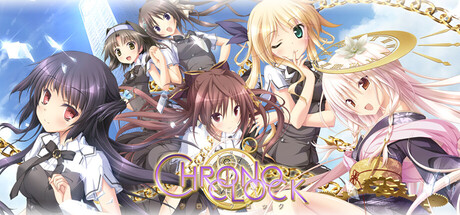
Next in line to manage a multi-million dollar corporation is our protagonist, Rei Sawatari. He inherited one very important heirloom from his late grandfather: a single pocket watch that grants him a mysterious power— The power to go five minutes back in time.
Modeled estimate, not a reported figure. How we estimate →
Media

About
Stats
All-time low is the lowest price we've recorded for this game since we started tracking it.
Languages: English
Engagement
Hours played at review time, across 40 reviews with recorded playtime.
Reviews
Themes across 40 recent reviews and how positive each mention is. A keyword signal, not full sentiment analysis.
positive critical· bar length = how often the theme comes up
Reviews
为什么没有克洛的徽章
A generally light-hearted romantic VN, very focused on actual romance development, with little to no "main story" and slice-of-life stuff. Main hero is surprisingly realistic - he feels like you actual socially active teenager - awkward and inexperienced but not ridiculous "baka-baka" or "japanese doormat" type. Heroines are all cliches - little sister, tsundere, younger girl ect. - but they are well written and all their routes were enjoyable to me. Quality of writing is consistent One _huge_ problem is very weird editing and translation choices - Foreigner Girl originally had a quirk where she incerted english words into her japanese, translators flipped that and now she incerts japanese words into english, which is a huge problem for those of us who doesnt know a lick of japanese; another girl uses _lots_ of vulgar speech, I dont know if it is a correct translation, but it feels inconsistent and weird; our own MC constantly makes references which felt like their meaning was lost in translation. Gotta do better Sekai Project. R18 scenes are removed and there is no patch. The only way to "restore" them is to download the whole game from alternative sources. However R18 are not part of a main story, they function as mini side-stories, so their absence doesnt hurt main game. They are actually quite good tho. ....I am a bit surprised Steam moderators allowed this game to be here - there is a very explicit blood-related sister route and a 14 years old girl route. Such stuff usually gives them heart attacks and nosebleeds. Ah, but I guess as long as there are no boobs in sight everything is decent and morally wholesome. Yeah xD
The story is incomplete without the adult content.
I’ve owned Chrono Clock since not long after it released in English on Steam, so around 2017 or 2018. That means I’ve had this game for almost 10 years, and I’m only just now finishing it. For a while, I had only finished one route (D.D.) and basically had it dropped. It was only after I came to really like some of Purple Software’s later titles, especially those by the same scenario writer Mikage, and with an upcoming time travel title by Purplesoft that looks a lot more interesting (aka Nandomeka/Nice to Meet You Again), that I decided to finally finish Chrono Clock. So why did it take me so long? And what are my final thoughts on this title? Well… I think “wasted potential” and “okay at best” describe my experience pretty well. Which sucks, because the start was actually pretty good. Purple Soft tends to have unique, engaging gimmicks in otherwise modern Japan settings. In this case, the main character has a clock he can break to turn back time by 5 minutes, limited by how often he can use it. The common route was also a surprisingly strong start, with a Toradora-like setup where the main character helps Miu confess to another guy, but over time they grow closer. I have no issues with this part of the common route, aside from the fact that, due to this being a typical harem VN, the main character Rei can’t actually end up with her without the plot coming to a halt. Unfortunately, once this arc ends, the game becomes much more hit-or-miss for me. The second half of the common route is more typical common route fare, where the other heroines join the fray as potential love interests. Outside of Michiru, who’s just a weird, yandere-ish sister I don’t find funny at all, the main heroines feel quickly introduced with, in my opinion, half-hearted reasons to like the protagonist (or in Cro's case, not at all?). Since half the common route was used for one heroine, the other heroines didn't have near enough time for you to learn about and get attached to them before their heroine routes started. It’s unfortunate, because the routes I did end up choosing to read had likable enough characters. Makoto, a tomboyish secret yakuza girl with a casual mindset similar to the MC, at least had amusing banter. D.D. is a typical foreigner character with lots of "Engrish" jokes but I thought they were funny, and she was consistently nice to the protagonist without being annoying. Cro, the time goddess connected to Rei’s clock and only visible to him, also had potential thanks to her snarky personality and how a theoretical romance would work someone like her. Unfortunately, the main issue is the execution of the heroine routes. In theory, they have good ideas: Makoto having her own secret power, DD having a surprise nakige-style ending, and Cro being the true route with an interesting setup where time resets to the beginning of the common route but the heroines actually remember up until they get together with the protag romantically, and Cro becomes human. However, all these routes suffer from a huge problem: lack of buildup. I usually complain about VNs being too slow, but that’s not typically an issue with Purple Soft titles. Here, though, Chrono Clock tends to have the opposite problem: trying to juggle five heroine routes in about 30 hours, along with comedy, slice-of-life, drama, the clock gimmick, and character development. It’s just too much, so the VN ends up not really having enough time for the main character and the main heroine of each route to really get to know each other well enough to make the romance feel believable. As a result, even though each heroine technically has an emotional climax, they fall flat because they did not have nearly the amount of proper buildup needed like in Miu’s arc during the common route. Each route should have had a few more hours of proper romantic and character development to make those moments land. I think if they had removed Michiru and/or Misaki’s routes, they could put more effort in making the other routes more focused and stronger instead of all feeling somewhat half-baked. Because as said above, I think the idea of each route is interesting enough on a conceptual level. Another complaint is how rarely the main character’s clock gimmick is actually used. The moments where he uses it like, fixing embarrassing mistakes or trying to alter serious emotional events, are entertaining, but they don’t happen nearly as often as expected, and there are basically no consequences. It ends up feeling pointless outside of its connection to Cro. This is especially disappointing since later Purple Software titles (and even Hapymaher before this) make much better use of their unique gimmicks, making Chrono Clock feel like a prototype for how Mikage would later refine his storytelling style. Remember how I said Miu had the most interesting romantic development in the common route? Turns out she does gets a “ heroine route”... that’s maybe 15 minutes long and only unlocks after the true/Cro route. It’s the ultimate example of half-baked content. It should feel like a big payoff, but after going through five routes just to get something so short, it feels like it was added at the last minute so fans wouldn’t be upset she was left out. Why didn't they give Miu a full route instead of Michiru and/or Misaki? There are plenty of ways that could have worked. I could easily elaborate more, but I think I’ve made my point. Chrono Clock had a lot real potential, with mostly likable characters, decent comedy, a fun time-rewinding gimmick, and a strong opening common route. But the execution of most of the VN just feels like a mix of trying too many things, but also playing things too safe while also rushing to reach emotional conclusions without proper buildup. If they had cut one or two heroines, spent more time developing the remaining routes, and made better use of the 5-minute rewind gimmick, Chrono Clock could have been a great game. As it stands, it’s a functional, “okay at best” moege/emotional drama hybrid that doesn’t excel at either. 6/10
可爱的克罗!整体看来高开平走,依然序章封神后续平淡,另外克总画风依旧顶中顶
ChronoClock is a character-driven romantic comedy visual novel that blends everyday school life with a light supernatural premise, delivering a warm and playful experience firmly rooted in classic moe storytelling. Developed by Purple Software and published internationally by Sekai Project, the game is less concerned with dramatic twists or high-stakes conflict and more focused on humor, charm, and the gradual development of relationships. It embraces a relaxed pacing and an upbeat tone, making it well suited for players who enjoy slice-of-life narratives punctuated by romance and quirky character interactions. The story follows Rei Sawatari, an otherwise ordinary high school student who comes into possession of a mysterious pocket watch left behind by his grandfather. This watch grants him the ability to rewind time by exactly five minutes whenever it breaks, a power that immediately shapes his outlook on daily life. Rather than using this ability for grand heroics, Rei approaches it with a mix of curiosity and self-interest, primarily as a tool to navigate awkward social situations and improve his romantic prospects. This grounded, almost casual approach to time manipulation sets the tone for the entire narrative, framing the supernatural element as a convenience and comedic device rather than a source of existential drama. While the concept of time reversal is central to the premise, ChronoClock uses it sparingly and mostly as narrative flavor. The power does not translate into a mechanical system where players actively choose when to rewind time; instead, it functions as a story catalyst that justifies certain events and character behaviors. This design choice keeps the focus squarely on interpersonal relationships rather than puzzle-solving or branching timelines. As a result, the game feels more like a traditional romance visual novel with a unique hook than a full exploration of time travel as a theme. Gameplay adheres closely to established visual novel conventions. Players read through dialogue-heavy scenes and make occasional choices that influence which heroine’s route they enter. Once a route is locked in, the narrative becomes more linear, concentrating on deepening the relationship with that character and resolving her personal storyline. ChronoClock offers multiple routes tied to its diverse cast, including several that only unlock after completing earlier paths, encouraging full completion for players who want to experience everything the game has to offer. The choices themselves are generally clear in intent, prioritizing accessibility over ambiguity. The cast is one of the game’s strongest elements. Each heroine embodies a recognizable archetype, but the writing gives them enough personality and screen time to feel distinct and memorable. Interactions are often playful and filled with banter, with humor driving much of the early and mid-game experience. As routes progress, the tone gradually shifts toward more sincere emotional beats, allowing relationships to feel earned rather than superficial. Even when story developments are predictable, the strength of character chemistry helps maintain engagement. Visually, ChronoClock delivers a bright and polished presentation typical of high-quality Japanese visual novels. Character sprites are expressive, with a wide range of poses and facial expressions that effectively convey mood and personality. Backgrounds depict familiar school and town settings with a clean, colorful aesthetic that reinforces the game’s lighthearted atmosphere. Japanese voice acting is included for the cast, adding warmth and energy to both comedic and emotional scenes, while the protagonist remains unvoiced, preserving player self-insertion. The soundtrack complements the overall experience without dominating it. Light, cheerful tracks underscore everyday scenes, while softer, more melodic pieces support romantic or reflective moments. The music rarely draws attention to itself, but it consistently reinforces the intended emotional tone. Interface customization options further enhance comfort, allowing players to adjust text speed, window appearance, and other settings to suit long reading sessions. Narratively, ChronoClock does not aim to surprise or challenge genre expectations. Its storylines follow familiar structures, and conflicts are generally resolved without heavy drama or moral complexity. For some players, this predictability may feel limiting, especially given the untapped potential of its time-rewind premise. For others, it is precisely this simplicity that makes the game appealing, offering a comforting and low-stress experience where the focus remains on character enjoyment rather than narrative tension. Overall, ChronoClock succeeds as a polished and charming romantic visual novel that understands its audience and plays to its strengths. It offers a pleasant blend of humor, romance, and supernatural flavor without overcomplicating its design or themes. While it may not stand out as a groundbreaking or ambitious title, it provides a consistently enjoyable journey through lighthearted relationships and everyday moments. For fans of moe visual novels and character-focused storytelling, ChronoClock delivers a satisfying and cozy experience that values warmth and personality above all else. Rating: 8/10
10/10 absolute cinema
It's a old game that's why I dislike the UI system and the text UI. Maybe the story is good but I don't want waste my time in this game cause the picture makes me uncomfortable. (Don't punish me guys at least I bought this game to support developers.)
平淡地讨论着简单而纯粹的心意,这样的日常也让人心醉
???为什么我没买这游戏也能评测啊
Related
Related
Trends
Modeled estimate over time, reconstructed from Steam's monthly review histogram.
Momentum
Pace estimated from the game's recent review growth (our daily snapshots) at its own sales-per-review ratio — a momentum signal, not booked sales.
Audience
Estimated from the language of this game's reviews — a proxy for where players are, not official Steam demographics.
Related
| Depth of Extinction | $81.7K | 208 | 75% | $14.99 |
| Dragon Eclipse | $81.7K | 249 | 65% | $12.99 |
| Circadian Dice | $81.7K | 600 | 94% | $5.99 |
| Demon Hunter 2: New Chapter | $81.7K | 306 | 74% | $14.99 |
| Next Up Hero | $81.7K | 182 | 54% | $19.99 |
| Lingo 2 | $81.7K | 458 | 93% | $9.99 |