CATACOMB by bananadev. is a tightly focused indie horror experience that builds its identity around immersion, confinement, and a strong sense of vulnerability. Set within a maze-like network of underground tunnels inspired by real-world catacombs, the game places players in the role of an urban explorer who has ventured too deep and is now struggling to find a way out. The premise is intentionally simple, but it proves effective as a foundation for a tense, atmosphere-driven experience where survival hinges less on skill and more on awareness and composure.
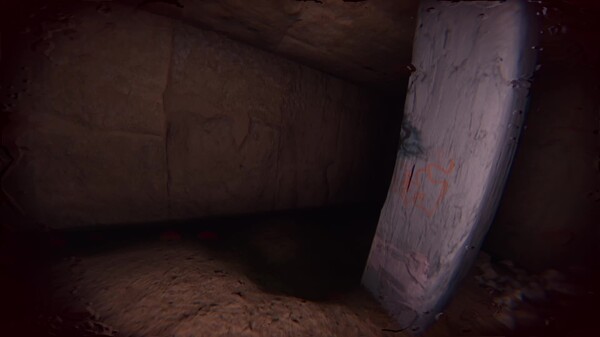
One of the most notable aspects of CATACOMB is its use of a body camera perspective. Instead of presenting a clean and stable first-person view, the game simulates the slightly distorted, limited framing of a wearable camera. This design choice does more than add visual flair; it fundamentally shapes how the player perceives the environment. The narrower field of vision, subtle motion sway, and imperfect clarity create a sense of realism that heightens tension. Movement feels more grounded and less controlled, reinforcing the idea that the player is not an all-powerful observer but a vulnerable individual navigating an unfamiliar and hostile space.
The environment itself plays a crucial role in sustaining the game’s psychological pressure. The tunnels are narrow, dimly lit, and often visually repetitive, creating a disorienting labyrinth where it is easy to lose one’s sense of direction. This lack of clear orientation is not accidental; it feeds into the game’s core tension by making even basic navigation feel uncertain. While the layout is structured enough to prevent players from becoming completely stuck, it still fosters the illusion of endless corridors and hidden paths. The result is a setting that feels oppressive and isolating, where every turn carries a degree of unease.
Gameplay is intentionally minimal, focusing on movement, observation, and occasional interaction with simple environmental elements. There are no complex systems to manage, no combat mechanics to master, and no elaborate puzzles to solve. Instead, the experience revolves around moving through the space while avoiding a persistent threat that stalks the player. This entity introduces moments of sudden panic, forcing quick reactions and heightening the overall sense of danger. The game relies more on anticipation and unpredictability than on mechanical difficulty, creating fear through uncertainty rather than challenge.
Sound design is a key component of the experience and arguably one of its strongest elements. The use of ambient audio, distant echoes, and subtle environmental cues adds depth to the otherwise sparse visuals. Footsteps, faint noises, and sudden shifts in sound all contribute to a heightened sense of awareness, making players constantly question what lies ahead or behind them. Silence is used just as effectively, creating moments where the absence of sound becomes unsettling in its own right. This careful balance ensures that tension is maintained even when the player is simply walking through empty corridors.
Despite its strengths, CATACOMB is limited by its scope. The experience is relatively short, often lasting around an hour, and it does not evolve significantly over that time. While this brevity helps maintain intensity and prevents the core concept from becoming repetitive, it also means that the game does not have the opportunity to expand on its ideas. There is little in the way of narrative development, with the story remaining largely implied rather than explicitly explored. Players looking for deeper storytelling or character context may find this aspect lacking.
Visually, the game achieves a convincing atmosphere within its constraints, but it does not offer a wide range of environments. The tunnels, while effective in creating tension, can begin to feel visually similar over time. This repetition reinforces the sense of being lost but also limits the game’s ability to surprise the player with new sights or distinct areas. The body camera effect helps mask some of these limitations by adding a layer of realism, but it does not fully compensate for the lack of variety.
Replay value is minimal, as the experience remains largely the same on subsequent playthroughs. Once players have completed the game and become familiar with its layout and pacing, much of the tension diminishes. The unpredictability of the stalking threat provides some variation, but not enough to significantly alter the overall experience. This positions CATACOMB as a one-time journey rather than a game designed for repeated sessions.
Taken as a whole, CATACOMB succeeds in delivering a concentrated and immersive horror experience that prioritizes atmosphere over complexity. It demonstrates a clear vision and executes it effectively within a limited framework. However, its short runtime, lack of depth, and minimal replayability prevent it from reaching a broader level of impact. It feels more like a focused experiment than a fully developed title, offering a glimpse of what its core concept can achieve without fully exploring its potential.
Rating: 6/10