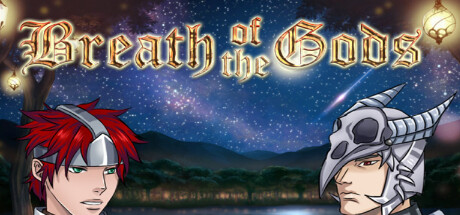
Breath of the Gods, developed by Valkyria Games and published by Aldorlea Games, is a traditional role-playing game that leans firmly into the conventions of classic, menu-driven RPG design. It presents itself as a straightforward fantasy adventure, clearly inspired by older titles that emphasize turn-based combat, linear storytelling, and gradual character progression. Rather than attempting to redefine the genre, it focuses on delivering a familiar experience that prioritizes accessibility and steady pacing.
The narrative revolves around a world shaped by divine influence, where ancient powers and mortal conflicts intertwine. Players follow a group of characters drawn into a larger struggle tied to the actions of gods and the consequences of their intervention. While the premise suggests a grand and mythological scale, the story unfolds in a relatively simple and predictable manner. Dialogue and character interactions provide context and motivation, but the writing remains functional rather than deeply engaging. It succeeds in guiding the player forward, though it rarely surprises or explores its themes in a meaningful way.
Gameplay is built around a classic turn-based system, where battles take place through menu selections and strategic use of abilities. Players manage a party, choosing attacks, skills, and items while responding to enemy actions in a measured pace. The mechanics are easy to understand and remain consistent throughout the experience, making the game approachable for newcomers to the genre. Progression comes through leveling up, acquiring new equipment, and unlocking abilities, creating a sense of growth that carries the player through the adventure. However, the system does not evolve significantly, and combat encounters can begin to feel routine as patterns become familiar.
Exploration follows a traditional structure, with players moving between towns, overworld areas, and dungeons. Towns serve as places to gather information, rest, and prepare for upcoming challenges, while dungeons provide more focused sequences of combat and item collection. This loop is dependable and easy to follow, reinforcing the game’s emphasis on familiarity. At the same time, the environments and objectives lack strong variation, which can make the journey feel repetitive over longer periods. The sense of discovery is present but limited, as new areas often resemble those that came before them in both design and function.
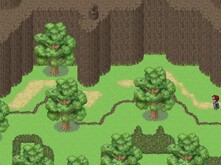
Visually, the game adopts a retro-inspired presentation that reflects its overall design philosophy. The graphics are simple and functional, prioritizing clarity over detail. Character sprites and environments are easy to read, but they do not offer much in terms of visual distinction or artistic flair. The soundtrack and atmosphere support the experience without standing out, contributing to a consistent but unremarkable presentation. For players seeking nostalgia, this approach can be appealing, though it may feel dated to those expecting more modern production values.
One of the more noticeable aspects of Breath of the Gods is its limited depth. While the systems are solid enough to support the gameplay, they do not introduce significant complexity or variation as the game progresses. Battles, exploration, and progression all follow predictable patterns, which can reduce the sense of engagement over time. The game relies heavily on its core loop to maintain interest, and without additional layers or surprises, that loop can begin to feel repetitive.
Even with these limitations, the game offers a consistent and approachable experience. Its straightforward mechanics and clear structure make it easy to pick up and play, and it avoids the frustration that can come with more complex systems. For players who appreciate traditional RPG design and are looking for something simple and familiar, it provides a comfortable and steady adventure.
In the end, Breath of the Gods delivers a competent but conventional role-playing experience that stays close to established genre norms. It does not aim for innovation, instead focusing on providing a reliable and easy-to-follow journey. While it lacks the depth and originality needed to stand out, it succeeds in offering a familiar and accessible experience for fans of classic RPGs.
Rating: 6/10