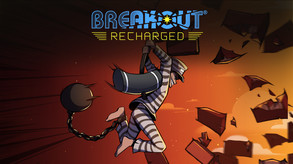
The original brick breaker returns with its toughest challenge yet. Survive as long as you can in arcade or take on one of 50 challenges picking up game-changing power-ups along the way.
Modeled estimate, not a reported figure. How we estimate →
About
Stats
All-time low is the lowest price we've recorded for this game since we started tracking it.
Languages: English, French, Italian, German, Spanish - Spain, Japanese, Korean, Portuguese - Brazil, Russian, Simplified Chinese, Traditional Chinese
Engagement
Hours played at review time, across 40 reviews with recorded playtime.
Reviews
Themes across 40 recent reviews and how positive each mention is. A keyword signal, not full sentiment analysis.
positive critical· bar length = how often the theme comes up
Reviews
This misses the mark in every way....ugh. I love Breakout games, but only if they're good. The sounds suck, the graphics are dull and boring and the music is bland. They added CONSTANT Arkanoid type powerups, they're literally falling down by the dozens so there's nothing special about collecting one. It's terrible, would not recommend. DX BALL still kills this. I'd honestly rather play Super Breakout on the 2600.
Absolutely awful. Not a single redeeming quality. The music is annoying. The controls are comically bad – depending on input method they are either too slow or hypersensitive. The physics are an absolute joke: The paddle has to be completely still for an eternity before the ball hits it, otherwise you'll get crazy spin – but even with complete stillness for seconds, the resulting angle often just makes no sense. The challenges are extremely unbalanced: Many are so easy that you almost fall asleep watching the ball bounce across an almost empty screen for dozens of seconds with nothing happening, and thanks to the terrible controls you have no serious ability to have detailed impact that isn't just luck. But then there's also challenges that are insanely hard in comparison, some definitely crossing over into unfair territory where – again – you only even stand a chance with some luck. The powerups sound like fun in theory, but they are not. They are spammed so much over many levels that you can't even see what's happening anymore due to all the effects. The powerup that shows you the direction of the ball's next few bounces should be an incredibly satisfying experience, but because of the awful controls and terrible UI it's just panic. No chance to meaningfully plan a targeted shot, instead you're scrambling in the hopes of at least not losing track of where the ball even is in the whole mess. The worst offense has to be the co-op mode challenges. It's so obvious that this mode has just been tacked on in order to tick the "co-op" checkbox for this game – some of the powerups simply can't even be used for the middle part of the field, because the barrier that keeps each player on their side doesn't allow you to move over far enough. That means that often times the co-op challenges will actually be [i]easier[/i] if one of the two players intentionally dies so that the other player gets to move across the entire field. What a fun co-op experience!
Finicky controls and a few ridiculous challenges that make the game more annoying than fun. Although the power ups are an interesting addition to traditional Breakout, it's not enough to make this version worthwhile.
Breakout: Recharged developed by Adamvision Studios, SneakyBox and published by Atari is a fine game with a nice revisit to an old classic arcade game, and while I have not gotten to thoroughly test this fully, I see a lot of depth in the same and value. One thing I would really like to see, control sensitivity adjust within the game, depending on the peripheral being used, the control of the on-screen paddle is really a gamble, not much else I can say, a keeper for any old Arcader's out there, may take a bit to get the handle, but it is quite fun! Cheers!
Breakout: Recharged revitalizes the timeless brick-breaking formula with a vibrant and modern twist, delivering a fresh yet familiar arcade experience. Developed by Adamvision Studios and SneakyBox and published by Atari, this game takes the core mechanics of the original Breakout and expands them with new features, challenges, and visuals designed to engage both longtime fans and newcomers to the genre. By blending nostalgia with contemporary design elements, Breakout: Recharged manages to stand out in a crowded field of arcade-style games. The gameplay remains centered around controlling a paddle to bounce a ball against an array of bricks, aiming to clear the screen without letting the ball slip past. However, the addition of numerous power-ups significantly enriches the strategy and excitement. Players can find enhancements like rail guns, homing missiles, and explosive balls that not only diversify how you clear bricks but also require quick thinking and adaptability. Beyond the traditional arcade mode, the game offers 50 carefully crafted challenge levels, each presenting unique brick patterns and obstacles that test precision and reflexes. For those who enjoy endless gameplay, an arcade mode offers continuous waves of bricks for an enduring test of skill. Visually, Breakout: Recharged embraces a neon-lit aesthetic that breathes new life into the classic design. The vibrant colors and smooth animations create an engaging atmosphere that honors the retro origins while feeling distinctly modern. This stylish presentation is further enhanced by an original soundtrack composed by Megan McDuffee, whose energetic and dynamic music adds a compelling rhythm to the gameplay. Together, the visuals and audio contribute to an immersive experience that keeps players hooked through each level. Multiplayer options add another layer of enjoyment, with local co-op play allowing friends to join forces and strategize together, making the challenge both social and competitive. The cooperative aspect enhances replayability and provides a fun way to share the experience. While the game’s learning curve is accessible, the increasing difficulty of later levels ensures that even skilled players find the gameplay engaging and rewarding. Although Breakout: Recharged received mixed reviews from critics, with some feeling it could push innovation further, the player community has embraced it warmly. Its appeal lies in its faithful yet refreshed approach to a classic formula, offering enough novelty through power-ups and level design to keep the gameplay fresh without losing the simplicity that makes Breakout so iconic. Ultimately, it’s a solid and entertaining game that offers a nostalgic trip through arcade history, enhanced with modern polish and creative twists that make it well worth trying. Rating: 8/10
It's OK overall, if you want a twist to breakout. A very big twist - the power-ups are not just an addition but they completely change the mechanics of the game, so much so that sometimes you have to rely almost exclusively on them and the purpose of hitting the ball is not to score as usual but just to keep the game going. If you plan to play this in co-op mode, please be aware that it is quite poorly designed. As another negative review mentioned, it feels like an afterthought. The challenges are the same as in single player, however, as you each share an half of the screen, there is a awkward gap in the middle where neither pad can hit the blocks. On top of this, some stages which rely on you to use a certain power up (i.e. the missiles) to get rid of all blocks in a single line, only allow you to hit half (well except the middle one that is) and there is a level in particular which I argue it's next to impossible to beat. I managed to complete it, but only making the other player die so I could play alone. A few challenges were truly painful and frustrating.
机翻
This is the second "Recharged" game I played (after Centipede), and I was surprised by how much both games follow the same formula, down to the game modes, UI, and even some power-ups. Like Centipede: Recharged, Breakout: Recharged adds a few modern amenities to temper the unforgiving and, frankly, not particularly fun nature of the original. However, unlike Centipede, the final result here still still leaves much to be desired. I really like the idea of "Challenge" mode, where the player is presented with a series of single-stage challenges (a TON of them, actually) with a specific goal (such as reaching a certain score or destroying a certain number of a specific brick type). In theory, this allows for imaginative level layouts that focus on learning the mechanics of specific power-ups, but in practice they either felt like all you had to do was keep the ball in play until the goal was reached, or they were [i]incredibly[/i] frustrating scenarios that depended heavily on trial and error until the player gets lucky. I'll describe the worst offender: In one challenge, the player must destroy 50 armored bricks. Simple, right? Well, the brick layout descends by one brick every two seconds, and the moment one brick crosses into paddle territory, you lose. In order to destroy the bricks quickly, you must make use of the rail gun power-up to destroy columns of bricks, ideally lining yourself between two columns to take them both out simultaneously, while also freeing another rail gun power-up to do the same thing again for the next two columns, continuing to chain these power-ups until everything is clear. However, you must of course be able to keep your ball in play while doing this, and if your ball draws your attention away from a power-up, your odds of beating the challenge just got much worse. If you have to waste a rail gun shot because your ball was falling far from block columns, your odds got worse. If you can't start the power-up cycle quickly enough, the blocks get dangerously low and can bounced the ball erratically without giving you time to react. If you bounce the ball at a shallow angle so it takes a LONG time to bounce all the way up to the ceiling and all the way back down, you lose a ton of valuable time during which the blocks continue to descend. Now, all those quirks and annoyances could be forgiven if you just had to get a smooth rhythm going and avoid any mistakes until you cleared the screen. Here's the thing, though: You need to destroy 50 armored bricks, and there are only 10 on the screen at once. Once you clear a set of blocks, another set descends from the top of the screen and you need to pull off another miracle... five times in total. This elevates the challenge from a frustrating quirk to borderline malicious game design, and I almost gave the game a bad review based on this challenge alone. But ultimately, even though some of the execution is clunky, even though it still seems incredibly difficult to actually aim where you want the ball to go, even though there is no way to adjust the analog stick's sensitivity and the paddle moves too jerkily, even though the power-up that shows the ball's trajectory seems to do more harm than good, even though the game is often frustrating to the point of being infuriating, I still kind of liked it. I enjoy seeing classic games get modernized, I enjoy funky color schemes and beat-heavy music, I enjoy challenges and achievements, and I enjoy re-visiting gaming history. This is far from a great game, but it is not without its charm and it did provide some fun between the frustration.
I don't know that I like this version of breakout for a few reasons: 1. Needs d Pad support and on steam deck trackpad support would be a nice variation to make the game different. 2. There needs to be a slider setting to program the sensitivity of the paddle on the stick. These little details are absent in this game. 3. Even in the "classic" setting the graphics are not at all vintage or classic, they are all the same futuristic one-note boring - it gets old fast. I wish they would make a Breakout game that combines the old and new and is the definitive version. It is especially annoying because the advertised launch video even shows the game in it's original 70's block coloring and then it transforms into the new aesthetic. So I got the idea that both are in there and merge based on game selection and progress. NOPE. I wanted a game with both nostalgia and new development, this is not it. I might have bought the wrong one and that is money down the drain.
it's breakout, the brick breaking game. you already know what you're getting from this. i was an arkanoid kid growing up, so i prefer the campaign-like level structure of that more than breakout's arcade-only gameplay, but that doesn't mean this isn't still fun. the challenges were fun (sometimes straight up frustrating) and kept me entertained for a while. i could definitely see myself going back to this every so often to play a few rounds.
Related
Related
Trends
Concurrent players on Steam, sampled daily since tracking started.
Audience
Estimated from the language of this game's reviews — a proxy for where players are, not official Steam demographics.
Related
| Lunar Nightmare | $4.5K | 54 | 81% | $3.99 |
| TERRACOTTA | $4.5K | 80 | 80% | $3.99 |
| 100 Pumpkins 2 | $4.5K | 60 | 97% | $3.99 |
| City Siege: Faction Island | $4.5K | 255 | 67% | $0.79 |
| Absorber | $4.5K | 85 | 80% | $3.00 |
| Party of Lust | $4.5K | 81 | 86% | $2.99 |