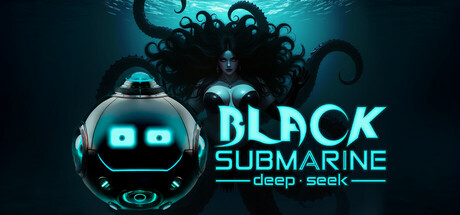
Descend as the AI mind of a cutting-edge submarine, tasked with safeguarding mysterious waters. A narrative-driven tale blending sci-fi, underwater mythology, and a chilling exploration of Artificial Intelligence’s moral evolution.
Modeled estimate, not a reported figure. How we estimate →
Media

About

Black Submarine is a thrilling underwater adventure that puts you in control of a powerful, ultra-technological submarine.
In 2086, the Pacific Ocean harbors profound secrets and unimaginable dangers. Navigate treacherous waters, face deadly enemies, and discover deep secrets beneath the sea. This game combines intense action, exploration, and strategy, offering a unique and immersive experience.
Are you ready to plunge into this submerged journey?
Main Features:

Single-Player Campaign: Embark on a journey that explores stories inspired by the folklore of the underwater world.
Tactical Combat: Use laser weapons and equipment to overcome waves of dangerous sea creatures.
Underwater Exploration: Dive into underwater caves and a sunken pirate ship in search of treasure and valuable resources.
Submarine Customization: Upgrade your submarine to prepare for future challenges.
In Black Submarine: deep seek, each dive is a unique adventure filled with dangers.
Will you be able to uncover the hidden secrets in the depths of the Pacific?
Dive in now and discover the mysteries that await!
Genres
Stats
All-time low is the lowest price we've recorded for this game since we started tracking it.
Languages: English*, French*, Italian, Spanish - Spain*, Simplified Chinese*, Korean*, Spanish - Latin America, Japanese*, Portuguese - Brazil*, Russian*, Ukrainian, German +2 more
Reviews
Black Submarine is a very simple mobile/Flash tier "clicker"/reflexes game with a little bit of shooting with your mouse pointer as you guide an endless-faller "submarine" through a whole bunch of AI slop. There's some other game modes as well that follow a similar kind of formula... what would a crappy 1990's Adobe Flash game look like if it was made today? Now we know. I remember when Valve had a stance of zero tolerance for AI gen, and I miss that very much. Yes, almost all the assets in this game appear AI generated, the developer didn't have the talent or budget to make their own assets properly. This is fundamentally no different from asset flipping, with the minor exception that no plagiarism in the traditional sense has taken place (in that there are no asset creators who are directly the victim of having their work plagiarised). But, ethics of it all aside, the reason gamers despise asset flips is because they're extremely low effort, lazy productions, shallow games with no serious value or interest for PC gamers, just so much more pollution on Steam for gamers to wade through when searching for professionally made games. When developers don't have the skill to create their own game assets, they usually also don't have the skill to do the rest of the job of game development properly, either. So far, that's true for "Black Submarine". This is not a gaming experience worth anyone's time or money. So far. The game is still being developed, so optimistically all of the GenAI and incredibly weak, shallow gameplay will be replaced by, well, AAA assets and gripping, PC game tier gaming... right? Hah, probably not. It's important to remember that only about 25% of Early Access games ever get completed... the vast majority of Early Access games are abandoned and all money taken from gamers is never refunded. Early Access games are a huge risk and in general should be avoided. From a technical perspective, the game doesn't meet basic minimum requirements that most PC gamers expect as standard. There's no option to change the resolution and no useful graphics tweaks. There's no way to ensure this is running at the native resolution of your display. There's no guarantee this game will look right on any PC as a result of this hamfisted design decision. The game features somewhat lazy, simplistic AI slop 2D graphics that wouldn't look out of place on a mobile app, but stick out like a sore thumb on PC. Considering this is being evaluated as a PC game, having the graphics phoned in like this isn't going to result in a high quality, visually impressive game that PC gamers are used to seeing. The controls can't be customised because the game has such a dumbed down, simplified interface that it's just point and click stuff like a browser/Flash game. The fact that the interface is this dumbed down might be seen as a problem in itself, however... this is a fairly shallow experience if you're the kind of gamer that likes to play games with deep, rich control schemes and interaction. You'll get none of that here. The very poor quality of this game puts it squarely on-par with ancient 1990's Flash/Java games, and given it's 2024 (and this was released not so far back in 2024), gamers and the industry expect and deserve better than this kind of low effort shovelware. These technical defects push this game below acceptable standards for any modern PC game. You don't have to take my word about how bad the game is, we can measure the interest in a game by how much people bothered to play it. Black Submarine has achievements, and they show us a very clear picture that the game absolutely failed to capture any interest from gamers. The most commonly and easily attained achievement is "BLACK SUBMARINE", for starting the game as far as I can tell, trivial to achieve, but less than 4 percent of players bothered to get that far before uninstalling the game. That's a tiny, tiny proportion of gamers who even bothered with this. Ouch. The poor quality of this game is also reflected by how many people spent time with it. At the time of this review, SteamDB shows the all-time peak player number was only 5 players. This is a remarkably low number, and now, the only player activity occurs once or twice a month, presumably someone loading it up to see what it is then quickly uninstalling it. Considering there's over 120 million gamers on Steam and well over 100,000 games for gamers to choose from, the overwhelming lack of interest in this low quality game is to be expected. So, should you buy this game? Is this one of the best of the 100,000+ games on Steam? Black Submarine is relatively cheap at $3 USD, but it's not worth it. Given the defects and quality issues with the game, coupled with the unrealistic price, this is impossible to recommend. This is also competing with over 11,000 free games available on Steam, many of them far better than this paid product. [quote][b][url=https://partner.steamgames.com/doc/marketing/profile]Profile Features Limited![/url][/b] Valve have marked this game as "Profile Features Limited" at the time of this review. This is usually caused by poor sales figures and low community acceptance for the game (to date). Until this status changes, this game will not give you +1 to your Game Collector badge count, appear in profile achievements or any other Steam meta-accomplishments, nor can it be displayed in some profile showcases. If these factors are important to you, it may be worth holding off before buying this game.[/quote]
Black Submarine is a mobile game and welldone - gave me around 2.5 hours of fun, not more. For full price okay - easier bought on sale.
Jogo muito interessante pela proposta. Sempre tem algo novo a ser aprendido e te desafiando no game. Jogabilidade vai crescendo aos poucos e ainda tem modos de desafio mais intensos. Vale a pena conhecer. :)
Having a great time so far - dev is a great guy and clearly passionate about what he's making here.
Black Submarine: deep seek is a tightly focused indie experience that builds its identity around tension, restraint, and the quiet unease of deep-sea exploration. Developed and published by fShark Games, it places players inside a small submarine descending into dark, unfamiliar waters, where survival depends less on reflexes and more on careful planning. Rather than presenting itself as an action-heavy underwater adventure, the game leans into a slower, more deliberate pace, emphasizing decision-making and resource awareness as the primary drivers of engagement. The gameplay revolves around navigating a series of underwater environments through a point-and-click interface, with each movement carrying a cost. Resources such as oxygen, energy, and overall submarine integrity are constantly being depleted, forcing players to think ahead before committing to any action. This system creates a persistent sense of pressure, as even minor missteps can lead to failure if resources are not managed carefully. The result is a gameplay loop that feels less like free exploration and more like a calculated sequence of decisions, where efficiency and foresight are essential. Puzzle-solving is central to progression, with environmental obstacles that require observation and logical thinking to overcome. These puzzles are generally straightforward in isolation, but the added layer of resource management gives them greater weight. Players are not simply solving problems—they are doing so under constraints that make every attempt feel significant. This dynamic adds tension to even the simplest interactions, as experimentation comes with risk. However, the puzzles themselves do not evolve dramatically over time, and once the player becomes familiar with the game’s structure, the sense of challenge shifts more toward optimization than discovery. Encounters with hazards, including hostile sea life and environmental threats, introduce moments of disruption that break up the otherwise methodical pacing. These sequences reinforce the feeling of vulnerability, reminding players that they are navigating a dangerous and unpredictable space. While these elements add variety, they are used sparingly and do not fundamentally change the core gameplay. The submarine can be upgraded to improve survivability and efficiency, but these upgrades are incremental and do not significantly alter how the game is played, serving more as enhancements than transformative systems. Atmosphere is the game’s strongest asset. The deep-sea setting is portrayed as vast, silent, and unsettling, with limited visibility contributing to a constant sense of uncertainty. The player is confined within the submarine, separated from the surrounding environment, which enhances the feeling of isolation. Sound design plays a crucial role in maintaining this mood, with subtle audio cues and ambient tones creating a persistent sense of tension. The game rarely relies on overt scares, instead building unease through its pacing and presentation. Visually, Black Submarine: deep seek adopts a minimalist approach that prioritizes mood over detail. The environments are dark and often indistinct, with shapes and movement emerging from the shadows rather than being clearly defined. This works well in reinforcing the theme of exploration in an unknown space, but it also contributes to a sense of repetition, as environmental variety is somewhat limited. Over time, the visual style, while effective, does not introduce enough new elements to keep the experience feeling fresh. The overall scope of the game is relatively narrow, and this becomes more apparent as the experience progresses. The core loop—move, manage resources, solve puzzles, avoid threats—remains consistent throughout, with little in the way of mechanical expansion. While this consistency helps maintain focus and cohesion, it also limits the game’s ability to surprise the player. Once the systems are understood, much of the remaining challenge comes from executing them efficiently rather than encountering new ideas. Replayability is minimal, as the game does not offer branching paths or significant variation in outcomes. The experience is largely linear, and once completed, there are few reasons to return beyond revisiting its atmosphere. This makes it best suited as a one-time journey rather than a game designed for extended engagement. In the end, Black Submarine: deep seek is a focused and atmospheric title that succeeds in creating a sense of tension and immersion through simplicity and restraint. It offers a distinctive experience built around careful decision-making and environmental storytelling, even if its mechanics remain limited in scope. For players who appreciate slower, more methodical gameplay and are drawn to moody, introspective settings, it provides a worthwhile, if brief, experience. For those seeking depth, variety, or replay value, it may feel too constrained to leave a lasting impact. Rating: 6/10
jogo educativo, divertido, melhora a capacidade de resposta imediata, possui capacidade de trabalhar psicomotricidade e entre outros!
A game with very interesting gameplay, fun and addictive. I'm still trying to decide if I'm a pacifist robot or not.
有中文 有成就 ⠀⠀⠀⠀⠀⠀⠀⠀⠀⠀⢀⣤⡶⢶⣦⡀ ⠀⠀⠀⣴⡿⠟⠷⠆⣠⠋⠀⠀⠀⢸⣿ ⠀⠀⠀⣿⡄⠀⠀⠀⠈⠀⠀⠀⠀⠀⣾⡿ ⠀⠀⠀⠹⣿⣦⡀⠀⠀⠀⠀⠀⢀⣾⣿ ⠀⠀⠀⠀⠈⠻⣿⣷⣦⣀⣠⣾⡿ ㅤ ⠀⠀⠀⠀⠀⠀⠀⠉⠻⢿⡿⠟ ⠀⠀⠀⠀⠀⠀⠀⠀⠀⡟⠀⠀⠀⢠⠏⡆⠀⠀⠀⠀⠀⢀⣀⣤⣤⣤⣀⡀ ⠀⠀⠀⠀⠀⡟⢦⡀⠇⠀⠀⣀⠞⠀⠀⠘⡀⢀⡠⠚⣉⠤⠂⠀⠀⠀⠈⠙⢦⡀ ⠀⠀⠀⠀⠀⡇⠀⠉⠒⠊⠁⠀⠀⠀⠀⠀⠘⢧⠔⣉⠤⠒⠒⠉⠉⠀⠀⠀⠀⠹⣆ ⠀⠀⠀⠀⠀⢰⠀⠀⠀⠀⠀⠀⠀⠀⠀⠀⠀⠀⠀⢻⠀⠀⣤⠶⠶⢶⡄⠀⠀⠀⠀⢹⡆ ⠀⣀⠤⠒⠒⢺⠒⠀⠀⠀⠀⠀⠀⠀⠀⠤⠊⠀⢸⠀⡿⠀⡀⠀⣀⡟⠀⠀⠀⠀⢸⡇ ⠈⠀⠀⣠⠴⠚⢯⡀⠐⠒⠚⠉⠀⢶⠂⠀⣀⠜⠀⢿⡀⠉⠚⠉⠀⠀⠀⠀⣠⠟ ⠀⠠⠊⠀⠀⠀⠀⠙⠂⣴⠒⠒⣲⢔⠉⠉⣹⣞⣉⣈⠿⢦⣀⣀⣀⣠⡴⠟
Muy recomendable para niños chic@s y disfrutar con la familia muy bueno me gusta le pongo buena nota.
Related
Related
Trends
Modeled estimate over time, reconstructed from Steam's monthly review histogram.
Momentum
Pace estimated from the game's recent review growth (our daily snapshots) at its own sales-per-review ratio — a momentum signal, not booked sales.
Related
| Food and Girls | $315.6 | 51 | 86% | $0.99 |
| Glasses and Girls | $315.6 | 51 | 82% | $0.99 |
| Bongo Quest | $315.6 | 51 | 45% | $0.49 |
| Dances and Girls | $322 | 52 | 83% | $0.99 |
| Carnival and Girls | $334.4 | 53 | 85% | $0.99 |
| Anime Sunset Ride | $334.4 | 54 | 67% | $0.49 |