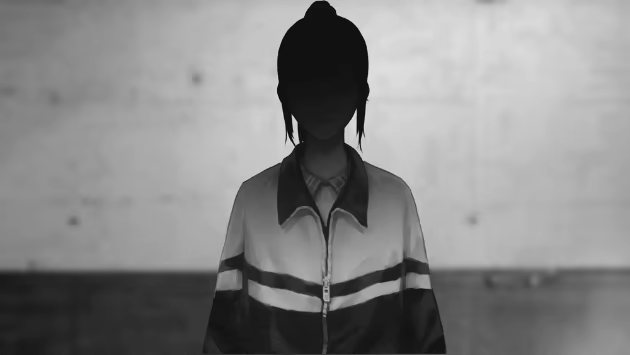
Black Sheep" is a 2D story-driven adventure game, you will play a high school student who explores the flooded school ruins, trace the shadow of the past, and unveil the evil those buried in the bottom of the river to see the light of day.
Modeled estimate, not a reported figure. How we estimate →
Media

About


Stats
All-time low is the lowest price we've recorded for this game since we started tracking it.
Languages: Simplified Chinese
Engagement
Hours played at review time, across 42 reviews with recorded playtime.
Reviews
Themes across 42 recent reviews and how positive each mention is. A keyword signal, not full sentiment analysis.
positive critical· bar length = how often the theme comes up
Reviews
游戏是我喜欢的类型所以玩起来很有趣,准备以后有空重玩完成全收集,不过还是建议调整一下音效,感觉怪物和音乐比人声和广播声大很多,外放很不方便,需要戴耳机仔细听
好评,美术封神,剧情有点谜语,不过看攻略缕一缕好多了
他们不像白羊,更像是豺狼,看见人类尸体便一起扑了上去。这群豺狼不爱吃新鲜肉,专门盯着腐烂的伤口处啃食。对于这个种族,我们人类要抱有宽容之心,毕竟他们可以帮我们处理那些有害的,毫无营养的尸体。但同时,在必要时刻也要及时驱赶他们,因为他们是分辨不了肉类的质量的。
Black Sheep is a 2D psychological adventure game developed by 完蛋了的国王 and published by Gamirror Games that leans heavily into atmosphere, symbolism, and fragmented storytelling rather than traditional horror spectacle or action-driven gameplay. Set within the haunting remains of a partially flooded school campus, the game invites players into a slow-burning mystery shaped by memory, guilt, and the quiet terror of unresolved past events. It is a deliberately restrained experience that prioritizes mood and interpretation over clarity, asking players to engage thoughtfully with its world rather than simply react to it. The narrative unfolds through implication rather than exposition. You assume the role of a student returning to a school that has long since been abandoned, where corridors are submerged, classrooms lie in decay, and the echoes of past tragedies linger beneath the surface. The title “Black Sheep” functions both literally and metaphorically, referencing a figure ostracized within the school’s social structure while also reflecting broader themes of alienation and blame. Rather than presenting a linear plot, the game scatters fragments of story across notes, environmental details, and surreal encounters, encouraging players to piece together what happened through observation and inference. Exploration forms the backbone of the experience. The school is designed as a series of interconnected spaces that gradually open as new areas are unlocked and previously inaccessible paths become reachable. Movement is deliberately paced, reinforcing a sense of vulnerability and isolation. Waterlogged hallways, dimly lit classrooms, and submerged stairwells all contribute to a feeling that the environment itself is hostile, even before any overt threats appear. The world feels abandoned yet watchful, as though it is holding onto secrets it is reluctant to release. Puzzle-solving is woven naturally into exploration, often requiring players to interpret visual cues, symbolic imagery, or textual hints rather than relying on overt instructions. Some puzzles are straightforward, while others demand patience and careful reading of the environment, occasionally asking players to revisit earlier areas with new understanding. This design reinforces the game’s introspective tone but can also feel uneven, as puzzle difficulty and clarity fluctuate. Players who enjoy deciphering abstract logic and thematic riddles will likely find satisfaction here, while those preferring tightly structured puzzle design may encounter moments of frustration. Threats and monsters appear sparingly, and when they do, they feel more symbolic than purely mechanical. Encounters are less about combat and more about evasion, tension, and emotional resonance. These entities often seem tied to specific memories or narrative themes, blurring the line between physical danger and psychological manifestation. Rather than relying on jump scares, the game builds unease through anticipation, sound design, and the unsettling realization that the environment itself is shaped by trauma. Visually, Black Sheep employs a subdued 2D art style that emphasizes mood over detail. Muted color palettes, heavy shadows, and water effects create a consistent sense of decay and melancholy. While the visuals are not technically elaborate, they are purposeful, supporting the game’s themes without distracting from them. Animation is minimal, but this restraint contributes to the overall stillness and tension of the setting. The presentation may feel modest compared to more polished indie horror titles, yet it remains cohesive and thematically aligned. Sound design plays a critical role in sustaining immersion. Ambient audio, distant echoes, and subtle environmental noises fill the silence, reinforcing the feeling that the school is never entirely at rest. Music is used sparingly, allowing quiet moments to linger and discomfort to grow naturally. When audio cues do appear, they often signal emotional shifts rather than immediate danger, underscoring the game’s psychological focus rather than pushing players toward reflexive responses. One of the most divisive aspects of Black Sheep is its narrative opacity. The story resists clear answers, often leaving interpretation in the hands of the player. For some, this ambiguity is a strength, encouraging reflection and discussion long after the game ends. For others, the lack of explicit resolution or clearly defined plot beats can feel unsatisfying, especially when combined with the game’s slow pacing. The experience demands attentiveness and emotional engagement, and it offers little guidance to those unwilling to meet it on its own terms. Taken as a whole, Black Sheep is a quiet, unsettling psychological adventure that values atmosphere, symbolism, and introspection over mechanical complexity or conventional horror thrills. Its flooded school setting and fragmented narrative create a distinctive sense of place, and its willingness to leave questions unanswered gives it a lingering emotional weight. While its pacing, puzzle consistency, and presentation may not appeal to all players, it offers a thoughtful and memorable journey for those drawn to slow, story-driven experiences that explore discomfort, isolation, and the darker corners of memory. Rating: 5/10
文案不太行,美术和音乐填补了这一点。
史 逻辑崩坏 引导混乱 我居然还是原价买的
好玩
立意不错
请问是结局不够“正确”就不让发布吗? WSSB
通关
Related
Related
Trends
Modeled estimate over time, reconstructed from Steam's monthly review histogram.
Momentum
Pace estimated from the game's recent review growth (our daily snapshots) at its own sales-per-review ratio — a momentum signal, not booked sales.
Audience
Estimated from the language of this game's reviews — a proxy for where players are, not official Steam demographics.
Related
| SKETCHY MASSAGE | $174.8K | 445 | 86% | $10.99 |
| Spikair Volleyball | $174.8K | 300 | 94% | $19.99 |
| Twilight Monk | $174.8K | 367 | 77% | $19.99 |
| Shantae Advance: Risky Revolution | $174.8K | 276 | 85% | $24.99 |
| Wizdom Academy | $174.7K | 209 | 59% | $21.99 |
| Intergalactic Fishing | $174.7K | 377 | 95% | $14.99 |
Related
| 7 Days to Die | $425.3M | 403.6K | 87% | $44.99 |
| Euro Truck Simulator 2 | $421.6M | 932.3K | 97% | $19.99 |
| Mount & Blade II: Bannerlord | $309.8M | 294K | 88% | $49.99 |
| Palworld | $279.6M | 447.5K | 94% | $20.99 |
| The Forest | $254.8M | 678.6K | 96% | $19.99 |
| Project Zomboid | $239.1M | 461K | 94% | $19.99 |