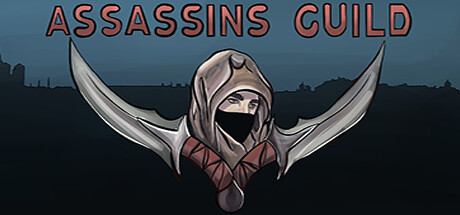
Assassins Guild is a compact indie adventure developed by KuKo in collaboration with Mustella Games, and published by KuKo. It presents a retro-inspired top-down experience that blends stealth, light action, environmental puzzles, and narrative progression into a deliberately modest but focused journey. Rather than attempting to deliver a sprawling open world or a complex systems-driven sandbox, the game frames itself as a contained story about identity, consequence, and escape from a life defined by violence, using classic design sensibilities to support that theme.
The story follows Jonathan, a seasoned assassin who has spent years working under the shadowy umbrella of a professional guild. Having grown weary of killing and the moral weight that comes with it, he seeks a way out, only to be tasked with one final mission before earning his freedom. This setup establishes a familiar but effective narrative motivation, grounding the gameplay in a sense of purpose rather than simple mission hopping. The plot unfolds gradually through exploration, NPC dialogue, and contextual clues, favoring implication over exposition. While the narrative is not deeply branching or choice-driven, it provides enough emotional framing to give weight to Jonathan’s journey and the environments he traverses.
Gameplay in Assassins Guild emphasizes cautious movement and observation over aggressive confrontation. Levels are designed to reward patience, with enemy placements, sightlines, and environmental obstacles encouraging players to think before acting. Stealth plays a central role, though it is implemented in a relatively straightforward manner, relying on positioning and timing rather than elaborate systems. When combat does occur, it is simple and functional, serving more as a consequence of failed stealth or a last resort rather than the primary focus. This balance reinforces the game’s tone, positioning Jonathan as a professional who survives through planning rather than brute force.
Puzzle elements are woven throughout the experience, often tied to progression through guarded areas, ruins, or dungeon-like spaces. These puzzles typically involve switches, keys, or environmental interactions that require players to read the space carefully and backtrack when necessary. While not especially complex, they add variety to the pacing and help prevent the experience from becoming monotonous. The puzzles also encourage exploration, subtly nudging players to engage more deeply with the game’s environments rather than rushing from objective to objective.
Visually, the game adopts a clean and readable pixel art style that pays homage to classic top-down adventure games. Characters, enemies, and environments are clearly defined, prioritizing clarity during stealth and navigation. Villages, camps, and interior spaces each have a distinct visual identity, even if the overall presentation remains modest in scope. The art does not aim for lavish detail, but it succeeds in establishing atmosphere and supporting gameplay readability. Accompanying sound design and music reinforce this atmosphere, with subdued tracks during exploration and more tense tones during hostile encounters, helping to guide player emotion without overpowering the experience.
Pacing is one of the game’s more divisive aspects. For some players, the measured progression and limited scale feel appropriate, allowing the narrative and mechanics to unfold without unnecessary padding. For others, the relatively brief length and restrained variety can make the experience feel underdeveloped, particularly if expectations lean toward deeper stealth systems or more complex combat. The game’s learning curve is gentle, but certain sections may require trial and error, especially when stealth routes are not immediately obvious or feedback is minimal.
Technically, Assassins Guild reflects its indie origins. While generally stable, some mechanics feel basic, and interactions can occasionally lack the polish seen in larger productions. That said, these limitations rarely break the experience and instead frame it as a focused, low-budget project driven by intent rather than spectacle. The interface and controls are simple and serviceable, keeping the emphasis on exploration and decision-making rather than mechanical complexity.
Ultimately, Assassins Guild succeeds as a small-scale, earnest adventure that knows its boundaries. It does not attempt to reinvent stealth gameplay or deliver a sweeping narrative epic, but instead offers a cohesive experience centered on atmosphere, intention, and gradual progression. For players who appreciate retro-inspired design, understated storytelling, and a slower, more deliberate approach to stealth and exploration, it provides a satisfying journey that, while limited in scope, delivers a clear vision and a sense of closure.
Rating: 6/10