Art of War: Red Tides
Art of War: Red Tides is a fair multiplayer strategy game that allows different teams on the same platform (e.g. smartphones, PC, etc.) to battle against each other. You will encounter players around the world!
Estimated lifetime revenue
Free-to-play
Revenue comes from in-game items and microtransactions, which our price-based model doesn't estimate. The player count below is how many people own it, not what they spent.
Est. players
30.1K
people who own it
Reviews
706
Review score
94%
9.4/10
Concurrent players
20
read Sep 18, 2026, 15:00 UTC
Followers
About
About the game
Game mechanics:
It is as simple as follows
Game features:
Monetization:
Art of War: Red Tides will adopt “free download + in-game purchase” pattern, and the in-game store will sell neither exclusive items that could influence the match, nor in-game currencies.
Our heartfelt gratitude goes to:
The developer of the map Desert Strike of StarCraft 2. Without the enlightenment of the Desert Strike, Art of War: Red Tides could never be possible.
The test this time will have no wipe of progress. We will continue to optimize the units balance and other features, so you may find a lot of adjustments in a period. But never ever hesitate to share your opinions and advice with us, as you can help us make the game better.
Look forward to your advice and opinions.
Let’s start our journey, commanders!
It is as simple as follows
- Set troop: select a race, choose ten units under this race to set up your troop and then join the battle.
- Send troop: you have 12 seconds to prepare during each wave, and you need to observe the battle, speculate enemy’s intention and then send appropriate types and number of units to the battlefield.
- Destroy enemy turrets and base: continually overwhelm each enemy, unleash Commander Skills, cooperate with your teammates, pull down their three turrets one by one, and destroy their base.
Game features:
- Emphasize teamwork in confronting the enemy
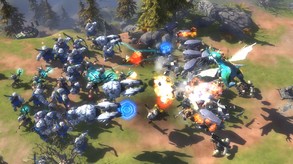
- Support over 300 units that can fight smart in the fiery battle at the same time
- Command concisely, play smart, and operate conveniently on different devices
- With over 120 kinds of units in three races, the game emphasizes Strategic Thinking, the core element reflected in the classic strategy games. It is easy to learn but hard to master.
Monetization:
Art of War: Red Tides will adopt “free download + in-game purchase” pattern, and the in-game store will sell neither exclusive items that could influence the match, nor in-game currencies.
Our heartfelt gratitude goes to:
The developer of the map Desert Strike of StarCraft 2. Without the enlightenment of the Desert Strike, Art of War: Red Tides could never be possible.
The test this time will have no wipe of progress. We will continue to optimize the units balance and other features, so you may find a lot of adjustments in a period. But never ever hesitate to share your opinions and advice with us, as you can help us make the game better.
Look forward to your advice and opinions.
Let’s start our journey, commanders!
Genres