Argumentum ad culpam is a gothic visual novel about the world of eternal agony. A capricious dance of principles and death. Take part in twisted battles of wits, where morality is only a tool for survival, and decide what future that world will have.
Revenue comes from in-game items and microtransactions, which our price-based model doesn't estimate. Copies below reflect the player base, not paid sales.
Media

About

Genres
Stats
All-time low is the lowest price we've recorded for this game since we started tracking it.
Languages: English, Ukrainian**languages with full audio support
Reviews
[table] [tr] [th] [url=https://store.steampowered.com/curator/42281474/]Куратор[/url] [/th] [th] [url=https://www.youtube.com/@emps1009]YouTube[/url] [/th] [th] [url=https://www.twitch.tv/emp1009]Twitch[/url] [/th] [th] [url=https://steamcommunity.com/groups/oldandforgotten]Група[/url] [/th] [/tr] [/table] На жаль, не зміг відчути я цю гру. Ознайомлення почалося ще з демки, через згадку від одного з розробників ([i]TellerySpyro_GTX[/i]). До демки уже були питання щодо тексту/озвучки, щось сказали "стилістика", щось наче мали б виправити. А ось гемплей, візуал, уже сіяли деякі сумніви. Проте, все ж, вирішив зачекати і релізу. На релізі ж - одразу здивувала ціна, хоч нічого до того в "претензії" не мав. Пішли ми в гемплей. З демки тут мало що змінилось. Враховуючи, знайомий багатьом, рушій гри - могли виникати помилки з записом та/або просто помилки (але не критично). Візуально (що оцінюю не так часто) - доволі сюреалістично, через що важко асоціювати якось "себе" з тими подіями (хоч і сюжетно ми розуміємо чому зображено десь так). Перепади звуку (у т.ч через, начебто, "зрозумілі емоції" в озвучці) особисто мені теж досить заважали вникнути в гру. Ну добре, припустимо ми прийшли сюди суто задля сюжету та виборів (які тут є, але досить не явні і "фіналів" аж 12) та якось себе "вникаємо". Чи отримаємо ми дійсно різні "варіанти"? Як і у багатьох подібних іграх, вони такі лиш десь "зверху". Не останнє тут те, що ти до кінця не можеш "відійти" від персонажів. А їх тут по суті тільки два (що нам дадуть зрозуміти доволі швидко). Вважаю що тут варто пояснити моє "відійти" - окрім ГГ, який викликає одразу ж "неоднозначні" відчуття, ми матимемо його "співрозмовників", але вони (не зважаючи на "переемоційну" озвучку) відчуваються просто фоном, те що ми могли просто побачити "текстом" (чого, до речі, ближче до фіналу - буде ще більше). Не зважаючи на те що гра відносно коротка (~2-3 години), і ти не встигаєш ознайомитися зі "світом" - ці перепади "настрою" та тонни тексту, по суті безрезультативність вибору (крім знову ж таки певного тексту) - зовсім не спонукають до продовження "дослідження". Та по суті і ні до чого, бо уже фінал. Для мене це було 4/12, оцінка ж... [b][u]~5,35/10[/u][/b], просто через певну повагу до зусиль. Оновлень, на жаль, також ніяких не видно. [i]Запис серій додам, однак (навіть по моїм міркам) це вийшло напрочуд погано. Коментарів від мене, чату - як і в усьому що було раніше, нема.[/i] https://steamcommunity.com/sharedfiles/filedetails/?id=3290121421 Усі відео: https://www.youtube.com/playlist?list=PLcgRnxepCAUDkZzddh9R4p3pOQQtLuIaz або https://steamcommunity.com/groups/oldandforgotten/discussions/2/4415299330249839509/
Related
Related
Trends
Modeled estimate over time.
Цікаво
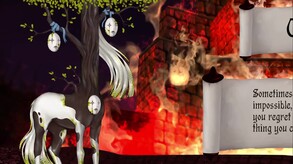
Argumentum ad culpam is a narrative-driven visual novel developed by Tagetes Team in collaboration with TellerySpyro_GTX and published by Tagetes Team. The game presents itself as a dark philosophical drama set in a surreal world where ideological conflict and moral reasoning take center stage. Instead of traditional gameplay elements such as combat systems, puzzles, or exploration mechanics, the experience focuses almost entirely on storytelling and dialogue. Through branching conversations and meaningful player decisions, the game explores questions of morality, power, and responsibility in a mysterious universe inhabited by supernatural beings. The title itself hints at the intellectual themes running through the story. “Argumentum ad culpam,” a phrase referencing blame-based reasoning in logic, reflects the game’s central idea: characters attempt to justify their beliefs, actions, and ambitions through arguments that challenge both the protagonist and the player. Much of the gameplay revolves around navigating these ideological debates, deciding which arguments to trust, and determining how the fate of the world should unfold. In many ways, the game resembles an interactive philosophical discussion wrapped inside a dark fantasy narrative. The world of Argumentum ad culpam is intentionally strange and oppressive. It is a place where powerful entities known as transcendents exist beyond ordinary human understanding. These beings possess immense influence over reality, yet they are driven by different ideologies and personal motives. Some seek control over the world, others pursue justice according to their own moral systems, and a few simply want to survive the chaos surrounding them. Rather than presenting a clear division between heroes and villains, the story introduces characters whose motivations often conflict but remain understandable from their own perspectives. The player becomes caught in the middle of these ideological struggles. Throughout the story, the protagonist interacts with several transcendents and other mysterious figures, each attempting to persuade the player to support their vision for the future. These interactions often take the form of intense dialogue exchanges where arguments, counterarguments, and philosophical reasoning replace physical battles. Choosing how to respond during these moments becomes the primary way players influence the narrative. Because the game is heavily choice-driven, every decision carries significant weight. Certain dialogue responses can strengthen relationships with specific characters, while others may create hostility or close off potential story paths. The consequences of these choices are not always immediately clear, which adds tension to the decision-making process. Players must evaluate the intentions of each character and decide whose ideology aligns with their own interpretation of justice or survival. One of the most compelling aspects of the game is its branching narrative structure. Instead of leading to a single predetermined ending, the story can unfold in several different ways depending on the player’s decisions. There are multiple possible outcomes, each reflecting the consequences of the alliances and arguments the player supports. Some endings offer glimpses of hope for the world, while others portray darker futures where power struggles lead to destruction or domination. The characters themselves are central to the story’s appeal. Each transcendent has a distinct personality, worldview, and agenda that influences how they interact with the player. Some characters appear manipulative and calculating, using logic and persuasion to gain influence. Others act more emotionally, expressing frustration, fear, or determination as they pursue their goals. This variety of perspectives makes the narrative feel more complex, as players must constantly question whether any character’s ideology truly represents the best path forward. Visually, Argumentum ad culpam uses a stylized art direction that blends anime-inspired character design with darker gothic elements. Characters are depicted with dramatic expressions and striking visual details that emphasize their supernatural nature. Background environments often feature dim lighting, abstract structures, and surreal imagery that reinforce the unsettling tone of the story. The art style may appear unusual at first, but it contributes to the sense that the player is exploring a reality that operates according to unfamiliar rules. The presentation also benefits from strong atmospheric elements. Background music plays an important role in establishing the game’s tone, often shifting between melancholic and ominous compositions depending on the scene. Quiet, reflective tracks accompany slower dialogue sequences, while more dramatic music appears during moments of intense ideological conflict. These audio cues help maintain immersion and emphasize the emotional stakes of the story. Another notable feature is the inclusion of voice acting in Ukrainian, which adds authenticity and personality to many of the game’s characters. Hearing the characters speak during important moments enhances the emotional impact of their arguments and reactions. Combined with the expressive artwork and atmospheric soundtrack, the voice acting helps bring the narrative to life and gives each character a stronger presence. However, the game’s strong focus on dialogue and philosophy may not appeal to every player. Those expecting traditional gameplay mechanics may find the experience slow-paced, as large portions of the game consist of reading conversations and considering complex arguments. The philosophical nature of many discussions can also make the story feel dense at times, requiring players to pay close attention in order to fully understand the motivations behind each character’s actions. The pacing can occasionally feel uneven as well. Some scenes unfold slowly with extended dialogue exchanges, while others move quickly toward major decisions that shape the story’s outcome. Players who enjoy narrative-heavy experiences will likely appreciate the depth of these conversations, but those seeking more interactive gameplay elements may find the structure somewhat limited. Despite these challenges, Argumentum ad culpam stands out as an ambitious and intellectually focused visual novel. Its willingness to explore themes such as moral responsibility, ideological conflict, and the consequences of belief gives the story a distinctive identity. Rather than offering simple answers, the narrative invites players to reflect on their own reasoning and question the motivations of every character they encounter. The multiple endings also add significant replay value. After completing one story path, players may feel encouraged to revisit the game and make different choices to see how the narrative changes. Each alternate route reveals new aspects of the characters and the world, gradually building a more complete understanding of the story’s complex themes. Ultimately, Argumentum ad culpam succeeds as a thought-provoking narrative experience that blends philosophical debate with dark fantasy storytelling. Its unusual premise, morally ambiguous characters, and branching narrative create an experience that feels distinct within the visual novel genre. While its heavy emphasis on dialogue may not appeal to players seeking fast-paced gameplay, those who appreciate introspective storytelling and ideological drama will likely find the journey both engaging and memorable. Rating: 7/10
👍
Можу з впевненістю сказати, що це гра не для всіх. І я не називатиму її надміру інтелектуальною чи заскладною для розуміння. Проте мені здається, що вона призначена саме для самовідданих фанатиків істини й моральних дилем, які готові проникнутися атмосферою догми та ідеї. І я, самопроголошений фанатик, можу зі щирістю зізнатися в любові до цієї гри. Водночас, я не оминатиму й тих речей, які мені видалися невдалими. Що ж, почнемо :) Щодо технічного виконання: Є багато речей, які прийшлися мені до вподоби. Загалом дуже сподобався дизайн персонажів та їхні креативні образи. Музика, як на мене, також зуміла створити підходящу атмосферу. А деякі мелодії навіть змусили мене на кілька хвилин призупинити своє проходження. Додатково мушу відзначити оформлення меню і надважливе дерево фіналів, яке врятувало мене від необхідності шукати гайд по проходженню. Для тих, хто не помітив: достатньо всліпу відкрити будь-який ендинг, і після цього зліва в меню з’явиться вкладка з написом Argumentum, на якій ви зможете відслідковувати свій прогрес. Дуже зручно. Окремо похвалю і застосування нового правопису. Використання слів «любови», «смерти», «візуялізація» і т.д. віддає чимось з літературної класики і загалом додає тексту свій шарм. Так тримати) Однак, мушу згадати і про недоліки: - одруки та незначні лексичні помилки в тексті; - рівень гучності музики не відповідає гучності озвучення, тому доводилося часто його коригувати; - спірні моменти в озвучці. Взагалі її наявність порадувала, як і різноманіття голосів акторів. Але часом вимовлені слова в озвученні не повністю збігалися з тим, що написано на екрані. Іноді актори ставили сумнівні наголоси і змінювали типовий плин речень. В цілому я не вважаю це критичним, але принаймні мушу згадати як один із пунктів; - деякі репліки акторів з’являлися не в тих місцях, де потрібно, хоча тут вже до програмування питання. Підсумовуючи, це лише small nitpicks за свою ціну, тому з чистою совістю рухаємось далі. Сюжетне наповнення: Моє проходження почалося з гілки Кандіда, але зараз мені здається, що кращим варіантом буде починати з Авруса. По-перше, саме в цій гілці містяться сувої з поясненнями ігрового лору, які сприятимуть кращому розумінню шляху Кандіда. А по-друге, істинний ендинг [spoiler]фінал Надії[/spoiler], як натякає сама гра, міститься в руті останнього. Тому його раджу залишити наостанок. Хоча мені фінал Руїни прийшовся більше до смаку і залишив глибший слід, але то вже справа індивідуальна :) І він теж в цій гілці, до речі. Загалом ендинги в цій грі дуже різноманітні, що справді радує. Щоправда, мені справді бракувало [spoiler]фіналу, в якому Лютедор воскрес би в початковій формі, бодай і з якимись змінами. Попри те, що ця перспектива може бути неідеальною, вона все ще має право на існування… Жаль, що не в цій грі. Як-не-як, а в її центрі стоїть трансформація, що не допускає старих зашкарублих форм[/spoiler]. В Аргументумі розкриваються дуже багато різноманітних ідей та логічних концептів, які варті уваги. Однак, якщо описати суть всієї гри коротко, вийде щось на кшталт цього: Пройшовши через пекло безлічі аргументів, кожен може знайти свій підходящий фінал. Померти і народитися знову. Перетворитися на кращу версію себе. Звільнитися від ілюзій минулого. Стати на шлях істинного переродження. І ось це переродження, на мою думку, пронизує максимально різні за змістом гілки сюжету і тримає їх докупи. Звісно, не менш важливу роль займає і вина, враховуючи, що назва гри перекладається як «Аргумент до вини» або «Аргумент на користь вини». І вину тут можна знайти будь-де. У тому, що головний герой змушений битися з трансцендентами на смерть. У брудних трюках, які кожен використовував хоча б раз. У минулому персонажів. В результаті цього всього напрошується висновок, що саме життя не може обійтися без вини. Якщо ти рухаєшся далі, ти змушений зіткнутися з чужими інтересами, і хтось неодмінно зазнає втрат. А якщо зупинишся, то тут теж не обійтись без вини – тільки вже перед самим собою. Також гра містить в собі важливі проблеми особистості, істини та моралі, які розкриваються протягом сюжету. Що ж до персонажів, то їхня мотивація на початку може видаватися дуже незрозумілою. Проте при проходженні різних гілок вона стає яснішою. Мушу відзначити і те, що автор чудово впорався з відображенням «нелюдськості» їх характерів. Як би там не було, але ми маємо справу не з людьми, а з демонами і трансцендентами, чиєю зброєю є догма. І коли читаєш, то справді відчувається, ніби вони концепти, втілення переконань, ідеологічні істоти, але не люди. Для кращого розуміння битв я також раджу проходити їх в різних варіаціях і перечитувати раніше не обрані варіанти вибору за можливості. В побічних опціях може критися купа цікавих ідей, які здатні вразити і здивувати новою перспективою. Та й повна картина гри, звісно ж, розкривається при проходженні усіх фіналів. І на завершення. Хоч в Аргументумі є недоліки, включаючи прогалини в логіці та деякі технічні недогляди, я зі спокійною душею можу закрити на них очі. А все через те, що цей нестандартний проєкт зумів запасти мені в душу завдяки своїй унікальності. Навіть тепер, коли згадую про цю VN-ку, відчуваю лише теплі почуття. І це парадоксально, бо гра напрочуд «холодна». Але сам факт того, що вона настільки близька до моїх старих нездійснених мрій, насправді зігріває душу. Дякую сценаристу і всій команді за роботу над цією чудовою грою. Сподіваюсь, з-під пера автора вийдуть і інші прекрасні історії.
The game's world is immersive and full of intriguing characters. The backstory gets unraveled in battles of logic fought by the aspects of one's personality and you need to reach all endings to understand the full story.
Цікава, багата на лор та сюжет гра, з українським озвученням. Також мені сподобалася атмосфера і те, що в грі наявний маршрутизатор кінцівок, це прям дуже великий плюс, оскільки їх тут аж 13, а ходити-лазати інтернетом у пошуках як отримати кожну з них - не дуже хотілося. Ще щодо озвучки, то трішки сумно, що вона місцями то тиха дуже, то голосна, нема уніфікованості. Ну і пропуск трішки незручний, було б круто, якщо б можна було пропускати тільки прочитане.
Доволі екстравагантна історія, мені сподобалось. Дякую за цікаву гру)
Nice
Momentum
Pace estimated from the game's recent review growth (our daily snapshots) at its own sales-per-review ratio — a momentum signal, not booked sales.