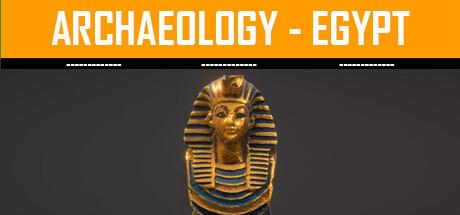
Archaeology – Egypt is a casual excavation puzzle game developed and published by ArchaeologyGames that centers on the slow and methodical process of uncovering ancient artifacts buried beneath the desert sands. Rather than presenting a complex narrative or a detailed simulation of real archaeological work, the game focuses on a single relaxing gameplay loop: exploring dig sites, clearing away layers of sand, and discovering hidden relics scattered across the environment. The concept is intentionally simple, allowing players to enjoy a calm and steady pace of play while engaging in a digital treasure hunt inspired by the mysteries of ancient Egypt.
The premise places players in the role of an archaeologist examining excavation sites somewhere in the Egyptian desert. Beneath the sandy terrain lie fragments of the past—artifacts that have been hidden for centuries and are now waiting to be uncovered. The game’s objective is straightforward: carefully dig through the terrain and reveal the objects buried beneath the surface. Each site becomes a miniature excavation field where the player gradually removes sand while searching for shapes or textures that hint at something hidden underneath. The sense of discovery is central to the experience, as each revealed artifact feels like a small piece of history emerging from the desert.
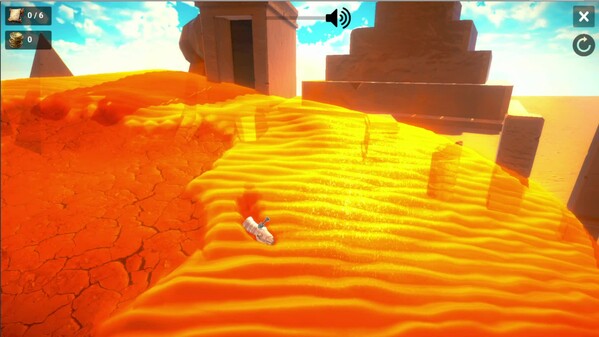
Gameplay revolves around the careful removal of sand across a grid-like excavation area. Players control the camera and excavation tools with simple inputs, gradually clearing sections of terrain to reveal what lies beneath. The digging process requires a certain degree of patience because artifacts must be uncovered gently. Moving too quickly or carelessly may damage fragile relics, which reduces the score awarded for each discovery. This mechanic encourages players to proceed slowly and thoughtfully, mirroring the careful attention required during real archaeological digs.
As players progress through each excavation site, they begin to recognize the shapes of buried items hidden within the sand. Some relics may only partially appear at first, forcing players to dig around the surrounding area in order to reveal the full object. This creates a satisfying moment of anticipation when a faint outline gradually becomes a recognizable artifact. The game rewards players for uncovering objects completely and preserving them in good condition, reinforcing the idea that careful exploration is more important than speed.
Although the core gameplay remains simple, the act of gradually revealing objects creates a calming and almost meditative rhythm. Players spend most of their time slowly sweeping across the landscape, adjusting their view and searching for signs of buried relics. Unlike many puzzle or strategy games that demand quick reactions or time management, Archaeology – Egypt allows players to move at their own pace. This relaxed structure makes it particularly appealing for those looking for a quiet gaming experience rather than an intense challenge.
The Egyptian theme adds an element of adventure to the otherwise minimal gameplay. Ancient Egypt has long been associated with hidden tombs, buried treasures, and mysterious relics, making it an ideal setting for a game about excavation and discovery. Although the game does not attempt to present historically accurate archaeological locations or detailed historical context, the setting still evokes the excitement of uncovering forgotten artifacts beneath desert sands.
Visually, the game uses a straightforward presentation designed to keep the focus on the excavation process. The environments consist primarily of sandy surfaces where objects slowly emerge as the player digs deeper. The graphics are relatively simple, but they remain clear enough to make the discovery process satisfying. Artifacts become more visible as more sand is removed, creating a visual sense of progress that encourages players to continue exploring each dig site.
Sound design is minimal but appropriate for the game’s relaxed pace. Soft ambient sounds accompany the digging actions, creating a quiet background atmosphere that allows players to focus on the process of uncovering objects. The absence of intense music or dramatic sound effects reinforces the calm and methodical nature of the gameplay. This understated audio design complements the slow pace of excavation and helps maintain the tranquil tone of the experience.
The game also includes achievements and leaderboard features that add a light competitive element. Players earn points for discovering artifacts and completing excavation areas efficiently, and their results can be compared with those of other players. While these features do not drastically change the gameplay, they provide an additional incentive for players who enjoy improving their performance and revisiting dig sites to achieve better results.
Despite its relaxing concept, Archaeology – Egypt is ultimately a very focused experience built around a single gameplay mechanic. The excavation process remains largely unchanged from beginning to end, which may lead to repetition for players seeking deeper puzzle systems or narrative progression. The game does not introduce many new mechanics as it progresses, and the lack of variety in objectives may limit long-term engagement for some players.
However, this simplicity is also part of the game’s appeal. It is designed as a calm and accessible experience rather than a complex strategy title. Players who enjoy hidden-object games or relaxing puzzle mechanics may appreciate the straightforward design and the quiet satisfaction that comes from revealing buried treasures one layer at a time. The game does not attempt to overwhelm the player with mechanics, instead focusing on delivering a peaceful and steady exploration experience.
In the end, Archaeology – Egypt offers a modest but enjoyable casual puzzle experience centered on the joy of discovery. While it lacks the depth and variety of larger simulation or adventure games, it succeeds in creating a relaxing atmosphere where players can enjoy the simple pleasure of uncovering hidden artifacts. For those who appreciate slow-paced exploration and casual puzzle gameplay, the game provides a small but satisfying excavation adventure.
Rating: 6/10