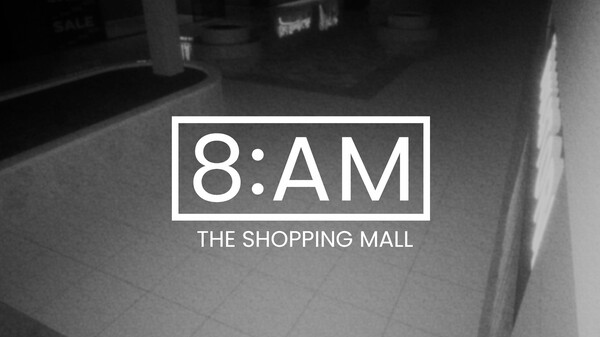
"8AM: The Shopping Mall" is a suspense game set in an empty mall after closing. Watch through security cameras as strange movements unfold and decide if it’s a glitch, exhaustion, or something sinister until 8:00 a.m.
Modeled estimate, not a reported figure. How we estimate →
Media

About
"8AM: The Shopping Mall" traps the player inside a vast and desolate mall, long after closing time. The neon signs have gone dark, the shutters are down, and only the echo of your footsteps drifts through the empty corridors. Security cameras hum quietly, capturing what little movement remains within — mannequins, flickering lights, and something else that shouldn’t be there.
You sit in the surveillance booth, surrounded by screens that reveal the mall’s deserted interior: the food court frozen in silence, the escalators still running though no one rides them, the reflection of a figure that disappears when you turn the camera. Your duty is simple — observe, record, and report. But as the night deepens, the routine shifts into something far more unsettling.
Shadows linger behind storefronts, shapes move between aisles where no one should be, and the soft music of the PA system begins to distort into whispers. Security alerts trigger without reason. Some cameras show footage from minutes ago — or from a future that hasn’t happened yet.
You start to notice patterns. The mannequins seem to have changed position. A figure keeps walking past the same camera at the same time, over and over again. Are these glitches in the system, tricks of exhaustion — or is something inside the mall refusing to stay still?
Your task remains the same: decide what is real. Each moment tests your judgment and your sanity as you try to distinguish between malfunction and malevolence. You cannot leave the booth. You can only watch, and decide what the system will record as truth.
As dawn nears, the mall grows silent once more — but the cameras continue to roll. And just before 8:00 a.m., one of the monitors shows something impossible: someone sitting exactly where you are, staring back at you.
"8AM: The Shopping Mall" is a psychological surveillance mystery about routine, isolation, and the fear of the ordinary turning strange. In the lifeless corridors of consumerism, it challenges you to question not just what you see — but why you’re the one watching.

Stats
All-time low is the lowest price we've recorded for this game since we started tracking it.
Languages: English**languages with full audio support
Engagement
Hours played at review time, across 23 reviews with recorded playtime.
Reviews
I still struggle to see this series as actually worthwhile. Most of the anomalies fail to create the kind of feeling you would expect from a horror game. I mean, how is a flickering sign supposed to scare me? At most, it makes me think someone should call an electrician, not an exorcist. I also do not understand the choice of making certain elements so hard to spot, especially in an environment that, compared to the other chapters, is practically empty. Personally, I would have preferred fewer differences to find, but ones that were more carefully designed and genuinely unsettling, making the experience feel more engaging. As it is, the game feels more like one of those “spot the difference” activities from a children’s magazine, except with the ambition of being scary without actually managing to do so. Even after this chapter, I can confirm that the developer still has not managed to deliver what I would expect from a game like this. Today, there are alternatives in the same price range, or even cheaper, that achieve this goal much better.
jumpscare
Developed by David Gallardo and published by HeadArrow, 8AM: The Shopping Mall delivers a tense psychological horror experience that proves an ordinary commercial center can become an unsettling nightmare after closing time. The game places players in the role of a night security guard assigned to monitor surveillance cameras from midnight until 8:00 a.m., transforming a routine shift into a relentless battle against unexplained events. Instead of relying on action or combat, the game embraces slow-building suspense, challenging players to remain alert while determining whether the strange occurrences unfolding across the monitors are genuine supernatural phenomena or the result of exhaustion and deteriorating sanity. The game's greatest strength lies in its atmosphere. Shopping malls are normally associated with crowds, bright lights, and constant activity, but this title strips away all signs of life. Empty hallways, silent food courts, dark storefronts, and abandoned escalators create an overwhelming feeling of loneliness. Every camera feed appears harmless at first, yet the longer players observe, the more unsettling the environment becomes. Minor environmental changes gradually evolve into disturbing anomalies, making players question every shadow, reflection, and object visible on screen. This slow escalation keeps tension consistently high without depending on frequent jump scares. The surveillance gameplay is simple in concept but surprisingly engaging. Players must carefully compare camera feeds, recognize abnormalities, and respond before situations spiral out of control. Since movement is limited to observing security monitors, success depends entirely on concentration and memory rather than reflexes. Every room gradually becomes familiar, allowing subtle differences to stand out over time. This design encourages players to stay attentive, rewarding those who notice tiny environmental changes while punishing careless observation. The repetitive routine also mirrors the isolation of overnight security work, making each unexpected event feel even more alarming. One of the most compelling aspects of the experience is how it manipulates perception. The game constantly introduces situations that blur the line between reality and illusion. Familiar locations begin changing in impossible ways, mysterious figures briefly appear before disappearing, and certain events challenge the player's confidence in what they previously observed. Rather than revealing every mystery outright, the narrative allows uncertainty to remain at the center of the experience. The psychological horror grows stronger with each passing hour as players become increasingly suspicious of every camera feed, unsure whether the danger exists within the mall or inside their own mind. Visually, the game succeeds through environmental design instead of technical spectacle. The surveillance camera presentation naturally limits visibility, using dim lighting, grainy video feeds, and restricted viewing angles to create suspense. Small visual details become critically important because players spend much of the game searching for inconsistencies. The restrained presentation allows the imagination to fill in the gaps, making ordinary retail displays, empty corridors, and motionless mannequins feel far more threatening than they otherwise would. Sound design plays an equally important role in maintaining the oppressive atmosphere. Long periods of silence are interrupted by distant mechanical noises, distorted announcements, electrical humming, and other unexplained sounds that constantly keep players on edge. Rather than overwhelming the experience with dramatic music, the audio reinforces isolation and uncertainty, ensuring that even the smallest noise can instantly raise tension. The careful balance between silence and environmental effects complements the surveillance mechanics remarkably well. The game's mature themes further support its psychological horror approach. Disturbing imagery, scenes involving violence, blood, death, mutilation, and emotional distress are used to strengthen the unsettling tone instead of existing purely for shock value. These darker elements contribute to an experience intended for players who appreciate suspense driven by atmosphere and psychological discomfort rather than nonstop action. Overall, 8AM: The Shopping Mall offers an effective blend of anomaly detection, environmental storytelling, and psychological horror. Its strongest qualities come from its oppressive atmosphere, intelligent use of observation-based gameplay, and its ability to make an everyday location feel genuinely unsettling. Although its deliberately slow pace and stationary mechanics may not appeal to players looking for action-heavy horror, those who enjoy methodical suspense and carefully crafted psychological tension will likely find the experience rewarding. By turning a familiar shopping mall into a place filled with uncertainty and paranoia, the game delivers a memorable late-night horror experience that lingers long after the final shift ends. Rating: 7/10
As always, the 8AM family is really entertaining—but be careful if you set it to "scare" mode
me encanta, muy inmersivo, parece que estas vigilando un centro comercial de verdad hasta que aparecen cosas raras, menos mal que no hay que ir a revisarlo sino me cago
бу
Muy entretenido, dificil pero muy bueno, 10/10
I had so much fun playing this game. I will say that it froze on my a couple times while leaving the computer to select my answer, but I uninstalled and reinstalled to fix it. Chat had a lot of fun watching me play this game while I was streaming and loved helping me find the anomalies. I would definitely recommend checking out this game.
啥坑钱游戏,玩过的所有恐游中唯一一个需要跳吓来提神的,恐怖元素也一坨甚至让人觉得好笑,一堆面条人拉长身体堪比淘宝上的玩具人偶老鼠干,就这还要我钱,纯纯圈钱圈疯了
Fine little anomaly game. I beat this one the quickest of the 8am games so far, but I still like it, the large amounts of anomalies make these games replayable, but I wish a lot of the Jumpscares weren't repeats from other games.
Related
Related
Trends
Concurrent players on Steam, sampled daily since tracking started.
Audience
Estimated from the language of this game's reviews — a proxy for where players are, not official Steam demographics.
Related
| TOK 2 | $2.1K | 164 | 93% | $0.99 |
| Brutal Runner | $2.1K | 106 | 60% | $0.99 |
| Introvert Quest | $2.1K | 148 | 74% | $0.71 |
| Trianga's Project: Battle Splash 2.0 | $2.1K | 115 | 86% | $0.99 |
| The Demon Within Me | $2.1K | 61 | 66% | $2.49 |
| TOK HARDCORE | $2.1K | 154 | 95% | $0.72 |