Go to the 11th floor of a building that doesn't have an 11th floor.
Modeled estimate, not a reported figure. How we estimate →
About


Genres
Stats
All-time low is the lowest price we've recorded for this game since we started tracking it.
Languages: English, Japanese, Korean, German, Russian, Simplified Chinese
Engagement
Reviews
Themes across 43 recent reviews and how positive each mention is. A keyword signal, not full sentiment analysis.
Reviews
Прикольная игруля
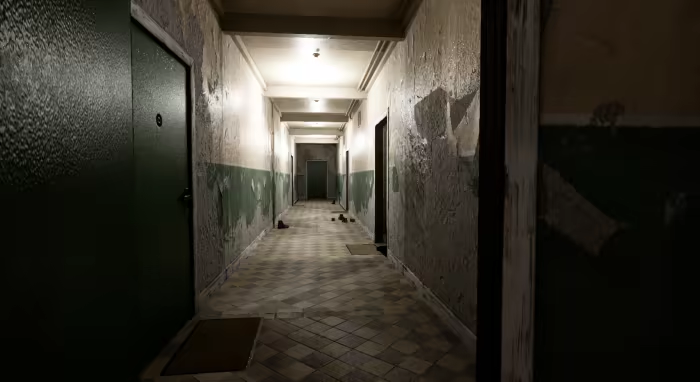
11F ist ziemlich skurril und abstrakt. Viele Bilder und Sequenzen sehen ziemlich verstörend aus. Das Spiel hat, wie ich finde, eine sehr schaudervolle aber dennoch tolle Atmosphäre. Es gab ein paar Momente beim spielen die bei mir ein ziemlich hohes Unbehagen ausgelöst haben. Fans von Horrorspielen werden mit Sicherheit Gefallen an 11F finden.
퍼즐 100만개 공포 게임 보다, 처음부터 끝까지 귀신이랑 술래잡기 하는 게임 보다 훨씬 짧게 굵게 무서운 부분만 떠먹여줘서 좋았습니다 [spoiler] 주인공은 진짜 아무것도 모르고 아빠 사생아한테 고통 받고 뒷통수 맞고 죽어서 불쌍해... 그거랑 별개로 아파트 주민들은 11층 아들과 별개로 그냥 사이비 때문에 다들 죽은 건가요? [/spoiler]
Media

Related
Related
Price dynamics, follower growth, revenue and sales trajectories with interactive tooltips
This and every other Pro feature is free until October 20, 2026. A free account is all it takes.
Hours played at review time, across 43 reviews with recorded playtime.
positive critical· bar length = how often the theme comes up
weird ass lsd trip horror game
3.5점
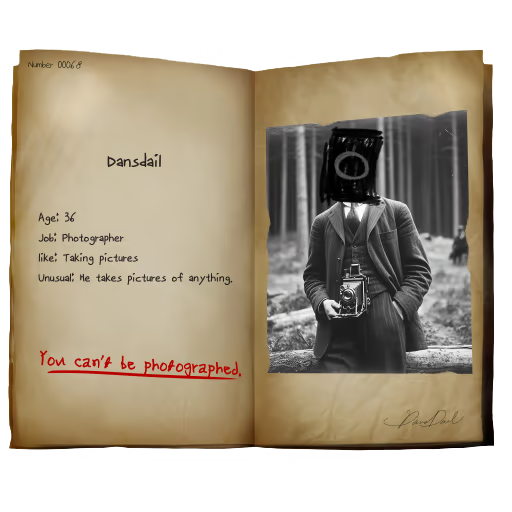
11F, developed and published by PUMPKIM, is a psychological horror and exploration game that relies on atmosphere, symbolism, and fragmented storytelling to create a deeply unsettling experience. Rather than guiding the player through a clear narrative path, the game drops you into a mysterious location known as The Origin, a building that should not logically contain an eleventh floor. This central contradiction immediately establishes the game’s tone, inviting curiosity while quietly suggesting that the rules of reality may not apply within its walls. From the beginning, 11F makes it clear that fear here is rooted in uncertainty and interpretation rather than direct threats. The story is presented indirectly and unfolds through exploration. After the death of the protagonist’s father, ownership of The Origin is unexpectedly transferred, accompanied by cryptic references to an individual named Adam and the forbidden 11th floor. This setup provides just enough motivation to push the player forward, but the game deliberately avoids explicit explanations. As you move through the building, each floor reveals rooms that feel disconnected on the surface yet thematically linked by trauma, obsession, and emotional decay. The narrative is not something you are told, but something you piece together by observing environments, objects, and the unsettling implications behind them. Gameplay focuses almost entirely on exploration and discovery. There is no combat system and very little in the way of traditional puzzles. Instead, progression is achieved by navigating the building, finding keys or access points, and choosing which paths to explore next. The non-linear structure allows players to approach the experience at their own pace, reinforcing the feeling of being lost inside a space that resists understanding. This freedom also enhances immersion, as the building feels less like a level-based game environment and more like a distorted place that exists for its own unsettling purposes. What truly defines 11F is its environmental storytelling. Each room feels like a self-contained psychological vignette, often tied to the unseen or implied lives of former residents. Some spaces are overtly disturbing, filled with grotesque imagery or oppressive layouts, while others are more subtle, using small details to suggest something deeply wrong beneath the surface. These environments often linger in the mind long after you leave them, not because of sudden scares, but because of the questions they raise about what happened there and why. The horror is cumulative, building as patterns begin to emerge across different rooms and floors. Visually, the game leans into a grounded yet surreal style. The environments feel realistic enough to be familiar, but they are twisted in ways that create constant unease. Lighting is used sparingly, often leaving areas shrouded in shadow and forcing players to move cautiously. Audio design plays an equally important role, with ambient sounds, distant noises, and unsettling silences reinforcing the sense that the building is alive in some intangible way. The absence of constant music allows tension to breathe, making every sound feel significant. Pacing in 11F is slow and deliberate, which will not appeal to every player. The game asks for patience and attentiveness, rewarding those who take the time to absorb their surroundings and reflect on what they encounter. There are moments where progress can feel unclear, and the lack of explicit direction may frustrate players who prefer structured objectives. However, this ambiguity is intentional and central to the experience, reinforcing the feeling of being trapped in a place governed by its own logic. Ultimately, 11F is a psychological horror experience that prioritizes atmosphere, symbolism, and personal interpretation over traditional gameplay mechanics. It is less concerned with frightening the player through shock and more focused on creating a lingering sense of unease that grows with understanding. For fans of slow-burn horror, surreal environments, and narrative ambiguity, it offers a haunting and memorable journey. While it may not satisfy players looking for action or clear storytelling, it stands out as a thoughtful and evocative exploration of fear rooted in space, memory, and the unknown. Rating: 6/10
전세사기네요
楽しかった~!
バックストーリーがしっかりしていて、クリア後の考察が楽しかった。 プレイ時間も長すぎず、サクッとクリアできたし、ジャンプスケアも少なめで雰囲気が好みのホラーだった。
진짜 공포에 떨면서 했는데, 정작 무서운게 없었음;;
Selling now
See how fast this game is selling right now — estimated copies and revenue per day from recent review growth.
Players by region
Where this game's players are, estimated from review languages.
Related
| Game | Estimated lifetime revenue | Reviews | Review score | Price |
|---|---|---|---|---|
| $2.7K | 14 | 50% | $9.99 | |
| $414 | 5 | 40% | $4.79 | |
| — | 0 | — | — | |
| — | 0 | — | — | |
| $254.3K | 1.7K | 83% | $4.79 | |
| $98.9K | 459 | 93% | $5.99 |
Related
| Game | Estimated lifetime revenue | Reviews | Review score | Price |
|---|---|---|---|---|
| $56.3K | 237 | 60% | $14.99 | |
| $56.3K | 213 | 83% | $12.99 | |
| $56.3K | 518 | 88% | $8.99 | |
| $56.3K | 214 | 90% | $8.99 | |
| $56.3K | 241 | 66% | $5.99 | |
| $56.2K | 430 | 88% | $4.99 |