[h1]11:11 — A Photograph of the Other[/h1]
I had enlisted in the war because of Barrett; he said a photographer would be useful there. Unlike painting, where a canvas requires time to hold the impact of a moment, photography makes the impact of a bullet finer — or so I believed.
Only later did I understand: it is not the bullet one captures, but the wound upon the human soul.
I enlisted and went to the front. I sought moments of action, though at times I found myself consumed by boredom.
When I reached the trenches — thoughtlessly believing that action was constant — I realised that waiting is what occurs most frequently. The soldiers, their uniforms filthy and riddled with lice, were not truly seeking action, nor did they care to know when they would move. Many of them wondered instead when the war would end, or how much they missed their wives. They had ceased fighting for a national ideal; but conversely, when they saw a 'Fritz', a German, they felt prouder of where they were from.
Tick, tock—I hear the clock.
Is it within me? And what clock is it?
The end of the war?
Many went to the front convinced that this Great War would be the war to end all wars. Yet in the field — thick with mud that slows my steps, my exhaustion heavy with hunger and sleeplessness — in that long state of waiting, I wonder: what is truly being brought to an end?
I cannot imagine the Great Wars to come, which by definition involve the collaboration of soldiers from diverse nations. They pursue an end, even if they do not know it; yet for what purpose, and why work together? A war is not merely, in administrative terms, the management of weaponry, but also a transfer of culture. I learned fragments of German and French. I met men from India. I passed through France.
Logistics and administration are not war. A world war implies knowing the other's culture through horror. And yet — how is a world war possible when we are already absorbed by English culture, the same technologies, the same global economy?
Barrett was very obsessed with the war; he wished to become the hero, to unleashes his wrath upon the enemy.
To him, the enemy was clear — the Germans. He cannot consider an ally or friend beyond himself. How different am I from him? War transforms people. It reveals a ruthless hunger, yet also shows how the soul itself may starve — become impoverished, aching. Most of them wish only to return home — as bodies, or as ghosts.
I lift my camera.
What do I photograph?
The images that might turn me into a celebrity? Those of power? Or those that reveal the human condition to me?
I photograph faces. I photograph daily gestures: men sleeping, resting. Their tears weigh more than artillery shells. At times they cannot even cry — stranded, rigid, as though some inner limb had been severed in the trench.
During one of his reckless expeditions under a rain of shrapnel, Barrett dragged me forward. I fell. And there I found three companions: Kurt — a German soldier — a cat, and a pigeon.
He carried a weapon. He dropped it.
When the rockface began to give way, I leapt and saved him. Is this man, who tells me through gestures that his name is Kurt, my friend or my enemy? Why are we driven, by fear, to define the person standing before us?
It is a wondrous moment — I am a hostage of the other. My Canadian “I” dissolves within the coat of the one who, by all definitions of belonging, is my enemy: Kurt.
Are the cat and the pigeon enemies? Must they always be hunter and hunted, like the wolf and the lamb? I watch them play. One guides the other. I do not know what “friend” or “enemy” might mean to them, nor how their ends compare to ours — to win, to subdue.
I am subdued instead by the hunger of the other.
Tears fall. I keep silent. My stomach growls — hunger, thirst. Kurt and I, through gestures, arrange what is necessary to survive upon that broken ground. I do not speak German; yet his hands tell me: do not fear — I am afraid too.
The bravest act, full of kindness, is when we exchange names. Our documents are no longer credentials or tokens. There is a new reading. I reveal him my name, I touch my chest: My name is Harry. He mirrors me: Kurt.
Gestures, sounds, expressions — all that reveals who we are beneath the soil, far from the light that turns a natural field into machinery for war.
He seeks his son. I understand this without words. When the war began, I sent my photographs to Julia, so she might be proud of me. Yet is it not pride that dragged us here? Seeing Kurt — feeling myself once hostage and now something else — I sense sacrifice being born.
We are hungry. I am no longer a hostage, but a friend to one who starves as I do.
Germans feel. They think. This is not what Barrett says. As with the small animals beside us, there is an instinctive peace. Man is not evil by nature, nor solely shaped by society. Who am I, suspended between worlds, where fertile fields become contaminated earth?
What true photograph am I seeking? The one kept in the memory of the soul. Not to prevent history from repeating itself — nor to preserve a scene — but to show the soul as it presses through the face.
We ate.
We drank.
We rested.
War is exhausting — a butchery, a drainer of the soul.
When we emerged, time had shifted. Later, I learned that Kurt lay in a cemetery. I was in Paris. When I heard the story of the poppies, I wept.
They grew where the men had fallen.
Poppies: a red carpet.
A vast crimson canvas spread across the earth, releasing a scent carried by the wind. It settled in Kurt’s nostrils — for him, pain; for me, anguish. Beautiful still, though they rise among silent bodies and broken machines.
We belong to the earth, regardless of victory or defeat, of nationality.
We belong to the flowers.
At last I understood: I had come to war to capture human decency and dignity — when the “other” is not the one who holds me hostage, but the one who bears the same scars, even if at first we cannot understand or hear one another. The flowers bear witness to our presence.
If the pigeon and the cat can coexist, why have we not done the same? Why do we choose more gardens of poppies across the world?
War may reduce us to ashes. To rubble. To the ruins of ourselves.
Kurt learned news of his son. He departed. I felt guilt. Photography became a form of presence — proof that we existed outside time. A testimony, a witness. Yet words in letters — they too are presence — and sometimes their impact exceeds the photograph.
Kurt, with whom I shared salvation — from trenches to clouds of mustard gas — saw my photograph. I had eaten his bread; it no longer tasted the same.
He returned to the front. War may alter his face, as gas masks alter men.
I know what must be done. Sacrifice is necessary — to reach Kurt before he becomes another cog in systematised vengeance, in administered war. He did not enlist to represent Germany, but to search for his son, Max.
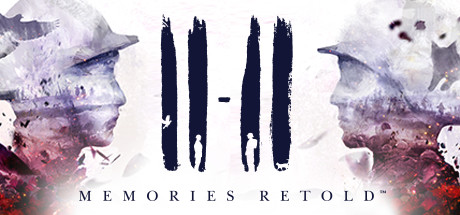
As I too am responsible — for capturing souls with my camera — approaching that final tick-tock, 11:11. More than a date: an encounter like a mirror, face to face. The closing of a war. Or of wounds.
I go to him. Vengeful. I tell him to lower his weapon — as I tell Barrett. No one truly hears; no one understands.
My sacrifice is to seek the encounter where both may express what war steals from them: dignity, being, personhood — the possibility of understanding the other while coexisting. Not collaborating, for collaboration demands a worthy end.
I return home.
A traitor.
And relieved — not because I prevented a death, but because, within war, I found the human soul.