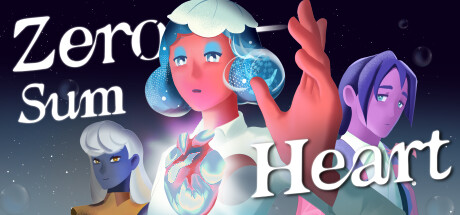
"I" make a deal with the witch to give up my heart, in exchange for love— from everyone. ——————————————————————————Is it worth it if losing my heart means gaining *his*? In this short visual novel, make choices and answer the question: is love a zero-sum game?
Modeled estimate, not a reported figure. How we estimate →
Media

About
Romantic, fantastical, and eerie, Zero-Sum Heart is a coming-of-age story about love.

Enter a magical boarding school on our protagonist's eighteenth birthday as she makes a monumental decision and derails her life.
A ritual sacrifice got her everything she ever wanted: an adoring crowd (faceless), a newfound power (dangerous), and a whirlwind romance (one-sided). But without a heart in her chest, how could she love anyone back? Does she even need to?

A short 2-hour story with multiple endings, blending genres of romance, teen drama, thriller/horror, and magical realism.
Vibrant and psychedelic hand-drawn illustrations that blur the lines between reality and fantasy.
A witchy, sinister, and groovy original soundtrack.

Zero-Sum Heart contains visual depictions of self-mutilation, violence, and gore, although not particularly graphic due to the non-realistic art style.
The story also contains limited depictions of stalking, harrassment, abuse, toxic familial and romantic relationships, murder, and suicide. Please note that due to the premise of the story, any romantic interaction the protagonist initiates with characters under the influence of magic might involve dubious consent.
If any of the above might be triggering for you, caution is advised while playing the game.
Genres
Stats
All-time low is the lowest price we've recorded for this game since we started tracking it.
Languages: English, Simplified Chinese, Traditional Chinese, Japanese, French, Spanish - Latin America
Engagement
Hours played at review time, across 40 reviews with recorded playtime.
Reviews
Themes across 40 recent reviews and how positive each mention is. A keyword signal, not full sentiment analysis.
positive critical· bar length = how often the theme comes up
Reviews
一般,一个从来没有被爱过的人,抛弃一切换取世俗假爱,却在这之后遇到真爱的故事。一定是我口味太重,居然很期待读到亏损最大化、把女主疼到万箭穿心的最惨结局。事实上,正是直面最惨的勇气才给予了女主那丁点人格成长的魅力。制作组还是太心慈手软,坏结局们果然也是偏简陋的包饺子。我唯一喜欢本作的点在于对父亲出轨隐晦的表达,一举完成了女主童年ptsd、家庭背景、扭曲爱情观和懦弱受欺性格的塑造,很高明。 零和,即加起来等于零,指总量不变、输赢对立的博弈,一方受益必然意味着另一方损失,不存在双赢/双输。前期我一直不懂标题和内容的关系,通关后唯一能想到的点是男女主在这场恋爱里的得失。不管女主是否情愿,她在这段恋情里就是纯粹的受益方,而男主则是无私折损、奉献价值的那个。这种长期单向吸血式的不健康关系,到底能维持多久,是经不起推敲、不忍卒读的,也成为最令人揪心的部分——我们不敢想象女主在失去最后这针麻醉剂、坐实被嫌弃的一生后会走向何种境地,我们也担心男主的所有情感付出在对峙那个叫做“不配得感”的巨物时,终将变成竹篮打水。 我不喜欢这个故事,因为它对于自卑情结、原生创伤的解答依然是外源性的,女主是被施舍方,是匮乏者,这段恋爱关系是非常不平等的。即你需要一场入室抢劫的爱情好彻底扔掉自身的主体性,你需要一个像男主这样完美和纯情到无以复加的对象来填补内心空洞。运气好遇到的是男主,运气不好呢?岂不是下一个深坑?唯一慰藉就是女主还能作出主动撤销魔法之决定,这挽回了一定主体性(但前提还是男主的陪伴鼓励,自发的优先级依然低于外源),相濡以沫结局也能看到关系向双赢局面转变了。难怪我想看到最惨结局,只有在那种情况下的自愈才算是创伤的真正解药,外源无非是暂时转移注意力的麻醉剂罢了。 不过抱着轻松的心态本作倒也不失一读,《海的女儿》里歌喉换腿变成了真心换爱,美工配乐独树一帜,再加点巫术世界观的想象力,美味的黑暗童话。 补:好吧,全成就后发现化为泡影结局算是把最惨做出来了,触发条件有点苛刻。(我认为无需这么苛刻,不需要女主刻意“作恶”也是该触发的,因为换取假爱的初衷就大错特错)但还是没能给女主一个惨痛过后自我和解的机会,这样依然在印证“没人拯救就无法痊愈”的观点。可惜,建议作者去看看那部正好叫做《万箭穿心》的电影。
爱与被爱,究竟是不是一场零和博弈? 只要交出自己的一颗心就能收获所有人的“心”,看似一本万利。女主在仪式过后的困扰很真实,会因为他人的过度关注而产生不适,当一束视线长久地附着在你的身上,但凡是正常人都会产生一种粘稠的恶心感。有些人所谓的爱并不以你为核心,而是以自己为核心,将自己的行为逻辑投射于你,是将你物化之后产生的占有欲。 我玩这个游戏的时候会经常想是不是得到的社交货币越多,个人自由就会越少。 男主的人设太梦幻了, [strike] 这是能说的吗? [/strike]他有极强的共情力、会提供情绪价值,有天赋有能力,付出不求回报,且无条件包容你的一切好与不好。所以在我看来,性缘关系上获得圆满的结局反而不如主动选择独身后和猫猫一起生活来得真实。最好的最令人舒服的爱也可以是朋友之间的爱。 谢谢这个游戏在我被ddl追杀的时候出现,体量不大但对我来说正合适。很喜欢画面的色彩搭配,文字风格也细腻,期待下一部作品!
很棒的美术和音乐,但剧情真的挺一般。我不明白为什么只有把仪式的事情告诉男主之后,主人公才能逆转仪式。这个主题很有趣,可详细刻画的只有和男主的这一条线。明明有很多可以讨论的人物线,可游戏中做出的大部分选择影响的都是和男主的感情线,有点太单薄了。
烂爆了我靠打得我恶心死了(叠甲已全结局全成就) 小资自我中心矫情病弱智的无病呻吟 说是要谈论爱结果只有谈恋爱,对父母就是原生家庭多么多么痛苦爸爸出轨妈妈宫斗,对同学就是虽然我伤害了你但是我不会好好道歉不会想着弥补,而且你要在我亲亲老公面前诋毁我再让他说他爱我成为我们play的一环 爸根的玩家也成了play的一环!!!! 没有防护栏的天文台摔死了人而且都知道是女主干的但是毫无波澜 因为一切的一切就是要和那个文艺傻屌男谈恋爱 所有的结局一半是死局一半是男主 蘑菇和熊的处理就是要么成为调情的一个步骤要么就去死 姐姐只有被需要的时候才会出现,我还以为她会是家庭之爱的缩影结果还是个工具人 滚!!!!!!!!!!!
画风很独特结局走向也合理的一个游戏,不推荐是因为觉得恋爱方面有些剧情莫名其妙。游戏本身流程短不应该是描写不细致的借口,总感觉有些东西可以写得更深入或者至少有更多解释。本来以为女主通过和女巫的交易可以变得更加独立和大女主之类的倾向,没想到最后还是起承转折落在恋爱脑上。不是说这样不行而是期待可能更高一些,总的来说感觉像看了一个知乎爱情故事,落于俗套让这部作品的世界观有些浪费
[h1]当被爱变成一种器官衰竭。[/h1] 一个关于很多人青春期最隐秘的愿望:如果所有人都爱我就好了。这就是关于一个少女把心脏献给女巫后,获得所有人喜爱的故事;一个少女为了得到被爱的资格,最终把自己卖掉的故事。零和之心,爱没有增加,而是被交换、掠夺、消耗。交出自我、情感能力、对痛苦的感知、真正爱人的能力,有人得到,就有人失去。 很多女性从小被灌输的情感关系就是要可爱、要温柔、要被喜欢、要有价值、要让别人开心、要成为被选择的人。如果你终于变成了一个所有人都喜欢的人,那你自己还真正存在吗?真正的爱允许分离、边界、独立、不占有和不完美。只是太想被爱,所以把一切关系都变成了请不要离开我,于是最后面成了一场集体性的感情自毁。 鱼离不开氧气,人也依赖别人的爱活着,别人给予关注才能呼吸,别人移开视线就会窒息。被爱不像幸福,更像维生系统。把自我价值完全建立在外界反馈,鱼会把鱼缸当成整个世界,因为它没见过海,人也会因为缺氧,而主动回到这里被圈养。 安徒生童话《海的女儿》中,小美人鱼为了进入人的世界不断进行着交换,她放弃尾巴放弃声音,忍受剧痛改变身体,切断过去放弃家人与故乡,她相信只要足够爱就能得到被爱的资格。现代人的感情空间已经不再辽阔,大家都活在赞赏、凝视、人设和他人评价构成的玻璃鱼缸里,变成一条观赏鱼。两个故事拥有着同样的核心,为了被爱,主动把自己改造成别人会喜欢的样子。 很喜欢这种美术风格,糖果色的梦核感。不错的游戏,立意深刻,推荐,也希望大家都能认识到自我。
What is love? Is it my own? 文笔硬但不晦涩,非常棒的音乐和美工,玩着玩着让玩家感觉自己已经超出三界之外不在五行之中了。 以及,偶们缺爱比的人生游戏,7.5/10。
呜呜呜玩的哭哭哭大哭特哭呜呜呜。T T 去爱生命才有意义. 打通的HE线,收手,绝对不敢打别的线叻
Zero-Sum Heart is a psychological visual novel that blends romance, magical realism, and emotional horror into a surprisingly intimate and unsettling experience. Developed and published by Citreat Studio, the game tells the story of a lonely student attending a magical boarding school who willingly sacrifices her own heart in exchange for the ability to make others love her. What initially sounds like a dark fantasy romance quickly develops into something far more emotionally layered and psychologically uncomfortable. Rather than focusing on traditional romance tropes or straightforward horror, the game explores loneliness, emotional dependency, self-worth, obsession, and the terrifying consequences of forcing affection through supernatural means. The story centers around a protagonist referred to simply as “I,” an isolated eighteen-year-old girl who has spent most of her life feeling unwanted and emotionally disconnected from the people around her. Her older sister, a mysterious witch figure, offers her a forbidden ritual capable of solving that loneliness forever. By giving up her heart, she gains the supernatural ability to make others admire and adore her without question. However, the ritual comes with a devastating cost. As more people become emotionally attached to her, her own ability to genuinely feel emotions slowly fades away. The game immediately establishes a tragic contradiction where the protagonist finally receives the love she has always wanted at the exact moment she becomes incapable of truly experiencing it herself. One of the game’s greatest strengths is its writing. Zero-Sum Heart handles its themes with far more emotional maturity than many visual novels dealing with similar subject matter. Conversations feel personal, awkward, emotionally vulnerable, and sometimes deeply manipulative in ways that make the characters feel painfully human despite the supernatural setting. Relationships throughout the story constantly blur the line between genuine affection and magical coercion. The game repeatedly asks difficult questions about whether forced love still carries emotional meaning and whether emotional emptiness can truly be solved through validation from others. The branching narrative structure also works remarkably well. Player choices shape relationships, alter emotional outcomes, and lead to multiple endings that reveal different sides of both the protagonist and the supporting cast. Some endings lean more heavily into tragedy and psychological collapse, while others provide fragile moments of emotional understanding or bittersweet hope. The branching routes never feel unnecessary because each one adds new insight into the characters and themes. Replayability becomes rewarding not because of hidden gameplay systems, but because every route exposes additional emotional layers beneath the surface of the story. Atmosphere is another area where the game excels. The magical boarding school initially appears dreamy and almost comforting, but there is a constant sense of emotional decay underneath its fantasy aesthetic. The world feels unstable in a way that perfectly matches the protagonist’s deteriorating emotional state. Scenes can shift from warm and romantic to deeply unsettling with very little warning, creating a lingering sense of discomfort throughout the experience. The game does an excellent job of making even its most beautiful moments feel emotionally dangerous. Visually, Zero-Sum Heart is striking. The hand-drawn art style uses vibrant colors, surreal imagery, distorted visual effects, and expressive character portraits to create an atmosphere that constantly shifts between fantasy and psychological horror. Certain scenes almost resemble emotional hallucinations rather than ordinary conversations, especially during moments where the protagonist’s identity and emotions begin breaking apart. The visual symbolism throughout the game is particularly effective because it communicates emotional instability without relying entirely on direct exposition. The soundtrack contributes heavily to the emotional impact as well. Soft ambient tracks, eerie melodies, and experimental sound design combine to create a dreamlike atmosphere that perfectly supports the game’s themes. Some scenes feel emotionally intimate because of how quiet and restrained the music becomes, while others use unsettling audio to reinforce moments of psychological tension. The soundtrack never overwhelms the dialogue but instead quietly amplifies the emotional tone of every major scene. One of the most impressive aspects of Zero-Sum Heart is how unafraid it is to explore morally uncomfortable subject matter. Toxic relationships, manipulation, emotional abuse, obsession, and unhealthy dependency are treated seriously rather than simplified into obvious moral lessons. Many of the characters are emotionally damaged or selfish in believable ways, which helps the relationships feel authentic even when they become disturbing. The game refuses to provide easy emotional answers, allowing players to sit with discomfort rather than constantly reassuring them. The pacing also deserves praise. At only a few hours long, the game remains tightly focused and emotionally intense throughout its entire runtime. There is very little filler, and nearly every scene contributes something important to either the protagonist’s emotional decline or the game’s larger themes. The shorter structure actually strengthens the experience because the emotional momentum never slows down long enough for the atmosphere to weaken. However, the game is not without flaws. Its short length means some side characters and relationship dynamics feel slightly underexplored compared to the protagonist’s central storyline. Certain emotional revelations happen quickly, and a few endings may leave players wishing for additional scenes or deeper resolution regarding long-term consequences. The magical world itself is intriguing, but some aspects of the lore and supernatural systems remain intentionally vague. The abstract storytelling may also frustrate players expecting more direct narrative explanations. Some scenes rely heavily on symbolism, fragmented emotions, and surreal imagery rather than straightforward storytelling. While this style fits the psychological themes well, it occasionally makes the narrative feel intentionally ambiguous in ways that not every player will appreciate. The subject matter itself will also not appeal to everyone. The game includes themes involving emotional manipulation, coercion, self-harm, toxic dependency, violence, and psychological instability. Although these topics are handled thoughtfully, the emotional intensity can become genuinely uncomfortable. Players expecting a simple fantasy romance may be surprised by how dark and emotionally heavy the story becomes. Despite these issues, Zero-Sum Heart succeeds because it fully commits to its emotional vision. It uses magical fantasy and psychological horror not simply for atmosphere, but as tools for exploring loneliness, emotional emptiness, and the desperate human need for connection. The story feels emotionally raw in ways that many visual novels never attempt, and its willingness to embrace emotional discomfort gives it a unique identity. For players who enjoy narrative-driven visual novels, psychological drama, surreal horror, and emotionally complicated character writing, Zero-Sum Heart delivers an unforgettable experience. Its combination of haunting atmosphere, strong writing, striking visuals, and morally complex themes creates a deeply personal story that lingers long after the final ending. Rating: 9/10
“可是我的自卑胜过了一切爱我的,于是我把爱人们都杀死了。” “可是你的悲伤胜过了一切爱你的,于是你把我也杀死了。” 我知道对于敏感脆弱的回避型依恋人格来说,坦然地接受与去爱一个人很难,但也请勇敢的去回应本就独属于你的“爱人”。
Related
Related
Trends
Modeled estimate over time, reconstructed from Steam's monthly review histogram.
Momentum
Pace estimated from the game's recent review growth (our daily snapshots) at its own sales-per-review ratio — a momentum signal, not booked sales.
Audience
Estimated from the language of this game's reviews — a proxy for where players are, not official Steam demographics.
Related
| Jim Power -The Lost Dimension | $33.2K | 73 | 64% | $17.99 |
| Abalone | $33.2K | 161 | 61% | $6.99 |
| Akash: Path of the Five | $33.2K | 143 | 90% | $7.99 |
| Sea Walker Saga | $33.2K | 81 | 93% | $9.99 |
| Big Day | $33.2K | 148 | 57% | $9.99 |
| Isles of Etherion | $33.2K | 80 | 65% | $19.99 |
Related
| DAVE THE DIVER | $90.8M | 139.6K | 97% | $19.99 |
| The Scroll of Taiwu : Beyond The Dome | $51M | 56K | 66% | $29.99 |
| My Time at Sandrock | $29.4M | 28.8K | 88% | $39.99 |
| Creativerse | $24.3M | 30.7K | 78% | $24.99 |
| Forager | $23.8M | 43.8K | 90% | $19.99 |
| Coral Island | $20.8M | 27.2K | 89% | $29.99 |