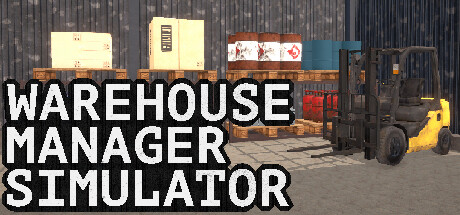
Warehouse Manager Simulator is a slow-paced business simulation game that focuses on the everyday logistics of operating and expanding a warehouse operation. Developed by CaliCosDev Studio, the game places players in charge of handling shipments, organizing inventory, managing storage space, and gradually improving warehouse efficiency through upgrades and expansion. Like many modern simulator games inspired by titles such as Supermarket Simulator and Gas Station Simulator, the experience turns routine work into a surprisingly satisfying gameplay loop built around optimization, organization, and incremental progress.
The gameplay centers around manually handling warehouse responsibilities from the ground up. Players receive deliveries, transport pallets, organize inventory shelves, and process outgoing orders while attempting to keep operations running efficiently. The game places a strong emphasis on direct interaction rather than abstract menu management, which helps create a more immersive and hands-on feeling. Instead of simply clicking through spreadsheets or automated systems, players physically move products around the warehouse using forklifts and pallet systems, making daily operations feel more engaging than expected.
One of the most enjoyable aspects of the game is the forklift gameplay itself. Maneuvering large pallets through narrow warehouse aisles and carefully placing shipments onto storage shelves creates a surprisingly satisfying rhythm once the controls begin to feel familiar. There is something genuinely rewarding about transforming a cluttered and inefficient warehouse into a well-organized operation where inventory flows smoothly from delivery to storage and shipment. The forklift mechanics are not overly realistic, but they strike a good balance between accessibility and physical interaction.
Inventory management also becomes increasingly important as the business expands. Different product types require different handling methods, and players gradually begin optimizing storage layouts to maximize efficiency and reduce wasted movement. Some items require refrigeration, while others demand careful placement due to fragility or size. These small logistical considerations help prevent the gameplay from becoming completely repetitive during the early and middle portions of progression.
Progression systems are handled reasonably well. As players earn money from successful operations, they can upgrade equipment, purchase larger warehouse sections, and unlock tools designed to improve workflow management. Additional systems such as warehouse tracking applications and storage monitoring tools add more structure to the management side of the experience, giving players better control over inventory and logistics as operations become larger. Watching the warehouse gradually evolve into a more advanced and efficient business creates the addictive sense of progression that management simulator fans usually look for.
The pacing is another surprisingly effective part of the experience. Warehouse Manager Simulator embraces the repetitive nature of logistics work rather than trying to artificially speed everything up. Organizing shipments, driving forklifts, and managing storage systems eventually develops into a relaxing routine that works especially well for players who enjoy slower and methodical gameplay loops. Small improvements to efficiency become satisfying because players directly feel the impact of better organization and smarter warehouse layouts.
Visually, the game uses a simple 3D presentation that prioritizes functionality over realism. Warehouse interiors are clean and easy to navigate, important objects remain visually distinct, and the interface stays readable during longer sessions. While the graphics are not technically impressive, they suit the management-focused gameplay reasonably well. The environments can become somewhat repetitive after extended play, but the simplicity also helps maintain clarity while managing large amounts of inventory and storage equipment.
The sound design is fairly basic but functional. Forklift engines, pallet movement, and warehouse ambience help reinforce the industrial atmosphere without becoming overly distracting. Background audio remains fairly subdued throughout most sessions, which actually fits the slower pacing of the game well. The overall presentation is clearly limited by the game’s smaller indie budget, but it succeeds at creating a believable warehouse environment.
However, Warehouse Manager Simulator does have several weaknesses that become more noticeable over time. The biggest issue is the lack of long-term gameplay depth. While the initial progression feels satisfying, later stages introduce fewer meaningful gameplay changes, causing many tasks to eventually feel repetitive. Organizing pallets and managing shipments remain enjoyable for a while, but the core gameplay loop does not evolve enough mechanically to maintain endless engagement.
Technical roughness is another problem. Some interactions feel stiff, animations occasionally lack polish, and certain systems can behave inconsistently during longer sessions. Forklift handling sometimes feels awkward in tighter warehouse areas, and small bugs occasionally interrupt workflow management. While updates from the developer have improved stability over time, the game still feels somewhat rough around the edges compared to larger simulation titles.
Balance issues also affect progression in certain ways. Some systems and money-making methods allow players to accumulate profits too quickly, reducing the challenge associated with warehouse expansion and financial management. This can make later progression feel less rewarding because players are able to bypass intended limitations through overly efficient exploits or unbalanced systems.
The amount of content is also relatively limited compared to more ambitious management simulators. Players who spend large amounts of time with logistics and business simulation games may eventually notice repetition in warehouse design, task variety, and progression systems. While the core concept remains enjoyable, the game would benefit greatly from additional operational complexity, larger management systems, and more environmental variety.
Despite these shortcomings, Warehouse Manager Simulator succeeds because it captures the oddly satisfying appeal of routine-focused management gameplay. Organizing inventory, optimizing storage layouts, and gradually improving efficiency taps into the same rewarding progression loop that makes many simulator games difficult to stop playing. The game understands that even repetitive tasks can become engaging when paired with visible progress and constant incremental improvement.
For players who enjoy warehouse logistics, organization-focused simulators, and slower management experiences built around optimization and routine, Warehouse Manager Simulator offers a relaxing and reasonably entertaining experience. While its limited depth and technical roughness prevent it from reaching the level of larger business simulators, the hands-on forklift gameplay and satisfying warehouse progression make it an enjoyable option for fans of casual management simulation games.
Rating: 6/10