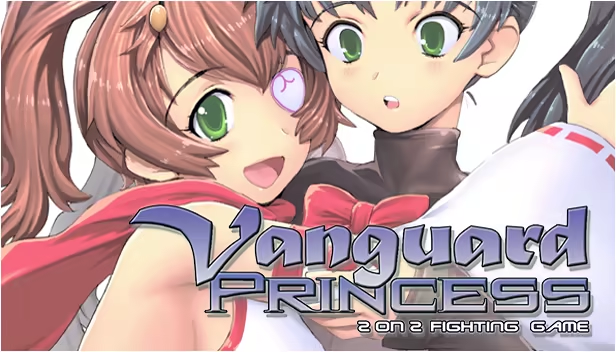
Vanguard Princess is a classic 2D fighting game that features an all-female cast each with its own unique fighting style. Choose from ten girls and pair them with a powerful partner to form an unstoppable team. Navigate their journeys in Story Mode or engage in head-to-head battles in Versus Mode.
Modeled estimate, not a reported figure. How we estimate →
Media

About

Genres
Stats
All-time low is the lowest price we've recorded for this game since we started tracking it.
Languages: English**languages with full audio support
Engagement
Hours played at review time, across 40 reviews with recorded playtime.
Reviews
Themes across 40 recent reviews and how positive each mention is. A keyword signal, not full sentiment analysis.
positive critical· bar length = how often the theme comes up
Reviews
A Game that I have owed for years but just now reviewing. I liked the game
Tristemente este port es practicamente injugable
its a fighting game find on sale honestly single player use only
Прикольный файтинг но больше подходить анимешниками и девченкам
I played a lot of the original, i always have space in my hearth for 2d fighters at their very basic. This ain't it, the perfectly functional original game was destroyed into a DLC pumping machine breaking stuff so essential as controller support, resolution and whatever else a "fix" happens to also break. the publisher egoManga is shady as ♥♥♥♥ and won't be surprised if one day the game decides to come packed with a virus or makes your computer into a crypto miner.
Было сложно, но я справился. (подрочил)
Máxima diversión.
Vanguard Princess is a 2D anime fighting game developed by Tomoaki Sugeno and later published on Steam by eigoMANGA. What makes the title particularly notable is its origin story: largely created by a single developer using the Fighter Maker engine, it began as a doujin project before eventually reaching a broader audience through its commercial release. That independent spirit is evident throughout the game, from its hand-drawn character sprites to its unapologetically niche design philosophy. While it does not attempt to compete directly with large-budget fighting franchises, it carves out its own identity through a focused roster, assist-based mechanics, and a distinctly anime aesthetic that embraces both stylization and fanservice. At its core, the gameplay is rooted in traditional 2D fighting principles. Players choose from a roster of all-female fighters, each possessing unique special moves, combo strings, and playstyles that range from rushdown aggression to zoning and technical control. What distinguishes the system from more straightforward one-on-one fighters is the inclusion of assist characters. After selecting a main combatant, players also pick a support partner who can be summoned during battle to extend combos, apply pressure, interrupt opponents, or create defensive breathing room. This mechanic adds an additional layer of strategy, encouraging experimentation with different pairings and rewarding players who learn how to optimize synergy between fighter and support. Matches can become surprisingly dynamic as assists shift momentum in an instant. The combat system emphasizes fluid aerial exchanges and juggle combos, echoing the design sensibilities of classic arcade fighters. Timing, spacing, and execution all matter, particularly at higher skill levels where understanding frame advantage and assist cooldown management becomes crucial. While the controls are accessible enough for newcomers to grasp the basics, the game offers depth for players willing to invest time in mastering character-specific techniques. However, balance inconsistencies occasionally surface, and certain characters may feel stronger or more versatile than others depending on matchup knowledge. These quirks reflect the project’s independent origins but also give it a raw, arcade-like unpredictability that some players find charming. Visually, the game leans heavily into anime influences. Character designs are vibrant and expressive, featuring exaggerated proportions and flashy outfits that reflect both stylistic enthusiasm and clear fanservice intent. The sprite work has a crisp, hand-crafted quality, and special attacks are punctuated with energetic effects that enhance their impact. Stages provide colorful backdrops that complement the fighters without overwhelming the action. Voice acting in both English and Japanese helps reinforce personality, giving each combatant a distinctive presence even if narrative depth remains secondary to gameplay. Story Mode exists primarily as a framing device rather than a fully fleshed-out cinematic campaign. The premise centers around young women who possess mysterious powers, drawn into conflict under shifting alliances and rivalries. Each character’s route offers brief dialogue segments that flesh out motivations and rival dynamics before leading into a series of battles. The storytelling is functional rather than elaborate, serving to provide context for the fights rather than emotional complexity. Still, for players invested in character archetypes and anime-style rivalries, these narrative snippets add flavor and encourage exploring multiple routes. One area where the game shows its limitations is in overall feature set and modern polish. Compared to contemporary fighting games with robust online infrastructure, training modes, and cinematic presentation, this title feels modest. Its origins in a smaller development environment are apparent in interface simplicity and occasional technical rough edges. Online functionality and long-term competitive support have historically been points of contention among players seeking a more fully featured experience. Yet despite these shortcomings, the fundamental mechanics remain solid enough to sustain local multiplayer sessions and dedicated practice. Ultimately, the game stands as an example of passion-driven development within the fighting genre. It may not redefine 2D combat systems, nor does it attempt to overshadow established franchises, but it succeeds in delivering tight, assist-oriented battles wrapped in bold anime flair. For enthusiasts of retro-style fighters who appreciate handcrafted sprite work and are willing to accept a few rough edges in exchange for personality and depth, it offers an experience that feels authentic to its doujin roots. Its legacy lies not in blockbuster spectacle but in proving that even a small-scale project can contribute something distinctive to the enduring appeal of competitive 2D fighting games. Rating: 7/10
最新更新后无法选择最终BOSS Hilda Rize 新版本还要到游戏目录自己找启动
good
Related
Related
Trends
Modeled estimate over time, reconstructed from Steam's monthly review histogram.
Momentum
Pace estimated from the game's recent review growth (our daily snapshots) at its own sales-per-review ratio — a momentum signal, not booked sales.
Audience
Estimated from the language of this game's reviews — a proxy for where players are, not official Steam demographics.
Related
| Desktop Raid | $151.6K | 666 | 76% | $8.99 |
| Unexplored | $151.5K | 718 | 85% | $9.99 |
| 1998: The Toll Keeper Story | $151.7K | 355 | 92% | $11.99 |
| Codename: Panzers, Phase Two | $151.7K | 284 | 92% | $14.99 |
| Willy Morgan and the Curse of Bone Town | $151.4K | 574 | 88% | $19.99 |
| Elroy and the Aliens | $151.7K | 472 | 97% | $9.89 |