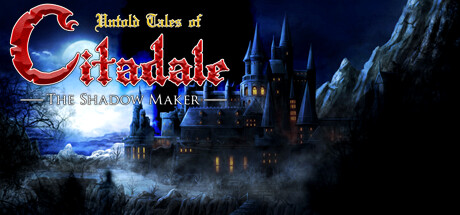
As Gabriel Gorleac enter Citadale Castle and rid the lands from evil in this old-school, top down 2D RPG. Structured like a metroidvania with turn based combat, this adventure is filled to the brim with the undead, beautiful pixel-art locations to explore and eerie melodies to listen to.
Modeled estimate, not a reported figure. How we estimate →
Media

About
Stats
All-time low is the lowest price we've recorded for this game since we started tracking it.
Languages: English
Reviews
Untold Tales of Citadale: The Shadow Maker, developed by Plug In Digital and published by ERMedia, is a retro-inspired indie role-playing adventure that attempts to recapture the spirit of classic 16-bit fantasy RPGs while blending elements of exploration, action, and traditional turn-based combat. The game is set within the grim world of Citadale, a land long plagued by supernatural threats, where the seasoned monster hunter Gabriel Gorleac returns to face a new and mysterious evil known as the Shadow Maker. The narrative follows Gabriel as he investigates the sudden resurgence of undead creatures and dark forces that have begun spreading across the kingdom, gradually uncovering the origin of the shadowy entity responsible for the chaos. The story unfolds in a familiar gothic fantasy framework filled with vampires, demons, zombies, and cursed landscapes. Gabriel is not a novice hero but a hardened veteran who has spent much of his life battling supernatural creatures. This perspective gives the narrative a slightly different tone compared to many fantasy RPGs, as the protagonist approaches danger with a mixture of experience, sarcasm, and grim determination. As players explore the game’s world, they encounter survivors affected by the Shadow Maker’s influence, learning fragments of the larger mystery behind the spreading darkness. While the plot follows a relatively traditional structure of confronting an ancient evil, the atmosphere and character interactions help give the story a sense of personality and charm. One of the most distinctive aspects of the game is its world design. Rather than presenting a strictly linear sequence of levels, the environment is structured more like an interconnected map similar to a Metroidvania. Players explore the sprawling Citadale Castle and surrounding regions while unlocking new pathways and hidden areas as they acquire special abilities and key items. This design encourages curiosity and rewards players who carefully examine their surroundings. Many areas initially appear inaccessible, but later discoveries allow players to return and explore sections that were previously out of reach. This gradual expansion of exploration gives the game a sense of discovery and progression that extends beyond the core storyline. Combat is handled through a hybrid system that combines turn-based RPG mechanics with timed decision making. During battles, players select actions such as attacking, defending, or using items, but these choices must be made within a limited time window. This system adds a sense of urgency to combat encounters, preventing battles from feeling overly slow or predictable. Players must quickly evaluate enemy behavior while deciding which actions will provide the best advantage. While the system remains rooted in traditional RPG mechanics, the added time pressure introduces a layer of tension that makes encounters feel more dynamic. Enemy variety also contributes to the gameplay experience. Throughout the adventure, players encounter a wide range of creatures drawn from gothic horror traditions. Skeleton warriors, demonic beasts, cursed spirits, and vampiric enemies populate the dark halls of Citadale and its surrounding lands. Each enemy type requires slightly different tactics, forcing players to adapt their approach depending on the situation. Boss encounters serve as major milestones within the game, often guarding key abilities or items needed to progress deeper into the world. The visual presentation embraces a nostalgic pixel-art aesthetic reminiscent of classic role-playing games from the 1990s. The environments feature richly colored tiles and atmospheric lighting that highlight the eerie tone of the setting. Dark castles, haunted forests, and ruined villages all contribute to the gothic atmosphere that defines the game’s identity. Character sprites are expressive despite their retro style, and the animation gives life to both heroes and monsters. The developers clearly intended to evoke the look and feel of older console RPGs while maintaining a level of visual clarity suitable for modern players. Sound design further strengthens the game’s atmosphere. The soundtrack features melancholic and mysterious compositions that accompany exploration through shadowy corridors and dangerous landscapes. Music shifts during combat encounters to create a sense of urgency and excitement, reinforcing the tension of battle. While the audio presentation remains relatively simple, it complements the visual design well and helps immerse players in the dark fantasy setting. Another appealing aspect of the game is its focus on exploration and hidden secrets. The interconnected map structure encourages players to revisit earlier areas in search of newly accessible passages, hidden treasures, and optional encounters. This design approach rewards careful exploration and adds replay value, as players may discover new routes or secrets during subsequent playthroughs. The satisfaction of uncovering hidden areas within the castle contributes to the game’s sense of adventure. Despite its strengths, Untold Tales of Citadale: The Shadow Maker does have a few limitations that may affect some players’ enjoyment. The pacing can occasionally feel slow due to the amount of backtracking required within the interconnected map. While exploration is a key part of the game’s design, repeatedly traveling through familiar areas may become tedious for players who prefer a more streamlined progression system. Additionally, the timed combat mechanic, although creative, may not appeal to players who prefer the slower strategic pace of traditional turn-based RPG battles. Even with these minor drawbacks, the game remains an enjoyable experience for fans of retro-inspired role-playing games. Its combination of gothic storytelling, exploratory world design, and hybrid combat mechanics gives it a unique identity within the indie RPG landscape. The developers clearly crafted the game as a tribute to classic adventure titles while adding small innovations to keep the gameplay engaging. Overall, Untold Tales of Citadale: The Shadow Maker is a charming and atmospheric indie RPG that successfully captures the spirit of classic fantasy adventures. While it may not reach the scale or complexity of larger role-playing games, its nostalgic style, engaging exploration, and distinctive combat system make it a worthwhile experience for players who appreciate retro game design. For fans of gothic fantasy and old-school RPG mechanics, the journey through the haunted halls of Citadale offers a memorable and satisfying adventure. Rating: 7/10
Related
Related
Trends
Concurrent players on Steam, sampled daily since tracking started.
Momentum
Pace estimated from the game's recent review growth (our daily snapshots) at its own sales-per-review ratio — a momentum signal, not booked sales.
Related
| Food and Girls | $315.6 | 51 | 86% | $0.99 |
| Glasses and Girls | $315.6 | 51 | 82% | $0.99 |
| Dances and Girls | $322 | 52 | 83% | $0.99 |
| Anime Sunset Ride | $334.4 | 54 | 67% | $0.49 |
| Carnival and Girls | $334.4 | 53 | 85% | $0.99 |
| Cosmic Journey PC Live Wallpaper | $336.3 | 52 | 71% | $0.49 |
Related
| 7 Days to Die | $425.3M | 403.5K | 87% | $44.99 |
| Mount & Blade II: Bannerlord | $309.8M | 293.9K | 88% | $49.99 |
| Palworld | $279.6M | 445.8K | 94% | $20.99 |
| Clair Obscur: Expedition 33 | $263.7M | 178K | 95% | $47.99 |
| Project Zomboid | $239.1M | 460.8K | 94% | $19.99 |
| Terraria | $187.5M | 1.5M | 97% | $9.99 |