Ukraine War Stories
Ukraine War Stories is a set of visual novels about the 2022 Russian invasion of Ukraine. Set in the early months of the war, it tells the stories of civilians trapped on Russian-occupied territory. All stories are based on real events and eyewitness accounts.
Estimated lifetime revenue
Free-to-play
Revenue comes from in-game items and microtransactions, which our price-based model doesn't estimate. The player count below is how many people own it, not what they spent.
Est. players
43.9K
people who own it
Reviews
1.1K
Review score
87%
8.7/10
Concurrent players
0
read Sep 18, 2026, 15:00 UTC
Followers
About
About the game
Ukraine War Stories is a set of visual novels about the 2022 Russian invasion of Ukraine. Set in the early months of the war, it tells the stories of civilians trapped on Russian-occupied territory. In their shoes, you will not be a fighter, only a survivor.
The novels will take you from the first volleys of the war in Hostomel, to the terror in Bucha, to the defiant resistance in Mariupol. You will have to keep yourself and your loved ones safe, and eventually escape to safety. This will take courage and resourcefulness — and sometimes, sacrifices.
Based on real events
Every novel is a dramatization of eyewitness accounts and real events recorded in the area, condensed into one story.
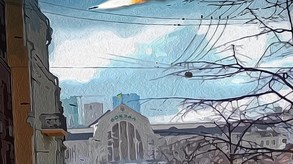
The gameplay is text-based and accompanied by music and illustrations. The game's art comes from authentic war photographs taken in the areas where the stories take place.
Truly free — no catch
The full game is completely free (no in-app purchases, etc) + a free Demo is available until the full game is released. We do not try to profit from this project. Our goal is to share the recent experiences of the people of Ukraine with a worldwide audience.
Devs are from Ukraine
Developed by a small team located in Kyiv, Ukraine, working from our office despite the wartime conditions. As a Ukraine-based company, we could not sit idly by as the war rages in our country, with enemy forces stopping 3 km short of Kyiv itself, and a large portion of Ukraine being occupied.
One of the guys from our team was caught by the Russian invading forces in Bucha (where one of our stories takes place) and had to hide in a garage basement for a week with his family until they managed to evacuate. His house was plundered and looted by the Russians along with many other houses in the town. He told us his eyewitness account, which we used along with other public sources. A lot of our relatives' or friends' lives were also affected. Fortunately, everyone on our team survived so far, but the war continues…
THREE STORIES
The game includes three interactive novels about some of the first towns that were hit during the invasion: Hostomel, Bucha, and Mariupol. In each story you will play a civilian, completely outmatched against the invading Russians. Your only task is to keep yourself and your loved ones safe, and escape with your lives. But remember: as a civilian, you can only do so much.
Hostomel
Available in Free Demo
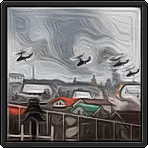
On Feb 24, 2022 Ukrainians woke up to the sound of air raid sirens and rocket strikes. A massive Russian airborne attack upon the outskirts of Kyiv followed. The town of Hostomel was among the first targets.
This is where it all began.
As a retired aviation engineer, Oleksiy Borisov is not equipped to handle the challenges of the war. In this role, you will have to manage your survival resources, and take care of your group's emotional needs. It's not about winning the war — it's about seeing your loved ones to safety.
Bucha
Available in Full Game for free
After a week of intense fighting, the North-Western outskirts of Kyiv fell to the Russians on Mar 5, 2022. Like many other small towns in the area, Bucha was under a month-long occupation. This occupation was among the most brutal in the history of warfare.
Yarik Kravchenko and his sister Vika came to Bucha to wait out the assault on Kyiv, the capital of Ukraine. Their mother Yana is a medic defending the capital, while Yarik and Vika are stuck in Bucha, unable to escape on their own. And the occupation is becoming more brutal by the day.
In this story, you will be the most vulnerable in the face of the war. You will face tough choices, and a happy outcome will not be assured.
Mariupol
Available in Full Game for free
In the 8 years of the war, the city of Mariupol had already fallen under attack before. Back then it was over quickly. Now, it's about to become one of the biggest and bloodiest sieges of the Russian invasion of Ukraine.
Dima Kornienko is a talented surgeon and a native of Mariupol. When the war comes to his city once more, he finds himself on the frontline along with other medics. Your staff is well-trained and motivated, but the situation in the city is growing desperate, and supplies are quickly running out.
In this story, hard choices will have to be made — choices nobody can make for you. To save as many as you can, you must keep track of your hospital's readiness and your own mental state. You'll help no one if the hospital collapses… or you do.
Support the project!
The project is fully free, so if you liked our free Demo, please, support us by pressing Add to your wishlist and Follow.
Spread the word
You could offer us extra support by spreading the word about the project. Your support and feedback are very important to us.
Talk directly with the devs
Join our Discord channel and talk directly with the Devs:
The novels will take you from the first volleys of the war in Hostomel, to the terror in Bucha, to the defiant resistance in Mariupol. You will have to keep yourself and your loved ones safe, and eventually escape to safety. This will take courage and resourcefulness — and sometimes, sacrifices.
Based on real events
Every novel is a dramatization of eyewitness accounts and real events recorded in the area, condensed into one story.
The gameplay is text-based and accompanied by music and illustrations. The game's art comes from authentic war photographs taken in the areas where the stories take place.
Truly free — no catch
The full game is completely free (no in-app purchases, etc) + a free Demo is available until the full game is released. We do not try to profit from this project. Our goal is to share the recent experiences of the people of Ukraine with a worldwide audience.
Devs are from Ukraine
Developed by a small team located in Kyiv, Ukraine, working from our office despite the wartime conditions. As a Ukraine-based company, we could not sit idly by as the war rages in our country, with enemy forces stopping 3 km short of Kyiv itself, and a large portion of Ukraine being occupied.
One of the guys from our team was caught by the Russian invading forces in Bucha (where one of our stories takes place) and had to hide in a garage basement for a week with his family until they managed to evacuate. His house was plundered and looted by the Russians along with many other houses in the town. He told us his eyewitness account, which we used along with other public sources. A lot of our relatives' or friends' lives were also affected. Fortunately, everyone on our team survived so far, but the war continues…
THREE STORIES
The game includes three interactive novels about some of the first towns that were hit during the invasion: Hostomel, Bucha, and Mariupol. In each story you will play a civilian, completely outmatched against the invading Russians. Your only task is to keep yourself and your loved ones safe, and escape with your lives. But remember: as a civilian, you can only do so much.
Hostomel
Available in Free Demo
On Feb 24, 2022 Ukrainians woke up to the sound of air raid sirens and rocket strikes. A massive Russian airborne attack upon the outskirts of Kyiv followed. The town of Hostomel was among the first targets.
This is where it all began.
As a retired aviation engineer, Oleksiy Borisov is not equipped to handle the challenges of the war. In this role, you will have to manage your survival resources, and take care of your group's emotional needs. It's not about winning the war — it's about seeing your loved ones to safety.
Bucha
Available in Full Game for free
After a week of intense fighting, the North-Western outskirts of Kyiv fell to the Russians on Mar 5, 2022. Like many other small towns in the area, Bucha was under a month-long occupation. This occupation was among the most brutal in the history of warfare.
Yarik Kravchenko and his sister Vika came to Bucha to wait out the assault on Kyiv, the capital of Ukraine. Their mother Yana is a medic defending the capital, while Yarik and Vika are stuck in Bucha, unable to escape on their own. And the occupation is becoming more brutal by the day.
In this story, you will be the most vulnerable in the face of the war. You will face tough choices, and a happy outcome will not be assured.
Mariupol
Available in Full Game for free
In the 8 years of the war, the city of Mariupol had already fallen under attack before. Back then it was over quickly. Now, it's about to become one of the biggest and bloodiest sieges of the Russian invasion of Ukraine.
Dima Kornienko is a talented surgeon and a native of Mariupol. When the war comes to his city once more, he finds himself on the frontline along with other medics. Your staff is well-trained and motivated, but the situation in the city is growing desperate, and supplies are quickly running out.
In this story, hard choices will have to be made — choices nobody can make for you. To save as many as you can, you must keep track of your hospital's readiness and your own mental state. You'll help no one if the hospital collapses… or you do.
Support the project!
The project is fully free, so if you liked our free Demo, please, support us by pressing Add to your wishlist and Follow.
Spread the word
You could offer us extra support by spreading the word about the project. Your support and feedback are very important to us.
Talk directly with the devs
Join our Discord channel and talk directly with the Devs: