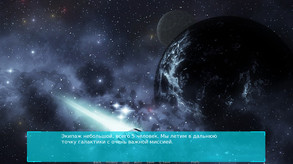
Truth: Disorder II, developed by JustE A and published by JustE Publishing, is a small-scale indie visual novel that attempts to deliver a science-fiction mystery wrapped in psychological themes and experimental storytelling. As the sequel to the original Truth: Disorder, the game expands on the narrative framework introduced in its predecessor while exploring new characters, locations, and simulated scenarios. Although its presentation and mechanics remain relatively simple, the title clearly aims to present an ambitious narrative that explores questions about reality, artificial environments, and human perception. The result is a game that feels like a passion project—one driven more by its ideas and story ambitions than by technical polish or complex gameplay systems.
The story places players in the role of a spaceship captain who becomes involved in a series of mysterious simulations conducted through advanced technology. Rather than unfolding in a straightforward timeline, the narrative jumps between different simulated worlds and storylines that initially appear unrelated. Some scenarios resemble school life mysteries, others resemble detective stories or surreal investigations, and each scenario gradually reveals fragments of a larger overarching mystery. The player’s role is to observe these events, interact with characters, and piece together the deeper truth hidden behind the various simulations. The central idea revolves around the concept that reality itself may be layered or manipulated, and the game repeatedly blurs the line between what is genuine and what is artificially constructed.
Much of the experience follows the traditional structure of a visual novel. Players progress through the story primarily by reading dialogue and narrative text while occasionally making decisions that influence certain scenes or character interactions. These choices do not dramatically alter the gameplay mechanics but instead shape how certain story elements unfold and how the player interprets the events occurring within the simulations. The game also includes light RPG-style elements, though they are fairly minimal and mostly serve as small narrative devices rather than full gameplay systems. As a result, the focus remains firmly on storytelling rather than mechanical challenge.
The narrative itself attempts to combine science fiction with psychological mystery. Characters appear in multiple simulated environments, sometimes playing entirely different roles depending on the scenario. This shifting structure is meant to create a sense of uncertainty and intrigue, encouraging players to question the authenticity of each scene. The game gradually hints that these different realities are connected by a larger experiment involving human consciousness and simulated experiences. While the concept is interesting and carries philosophical undertones about perception and identity, the storytelling can occasionally feel disjointed due to the rapid transitions between scenarios and the limited time spent developing individual characters.
Visually, the game adopts a fairly standard visual novel presentation with anime-inspired character portraits and static background illustrations. Characters are drawn with expressive designs that help convey emotions during dialogue sequences, though the art quality remains modest compared to larger visual novel productions. Background environments represent various locations within the simulated worlds, such as classrooms, interior rooms, or futuristic settings. The presentation is functional rather than elaborate, but it succeeds in supporting the narrative structure and helping players distinguish between the different scenarios that appear throughout the story.
The soundtrack plays a supporting role in maintaining the atmosphere of the game. Music tracks shift between calm, mysterious, and occasionally dramatic tones depending on the scene. These audio cues help reinforce the emotional tone of the story and provide variety during long reading segments. While the soundtrack itself is not extensive, it serves its purpose by enhancing moments of tension or reflection during key parts of the narrative.
One of the more unusual aspects of Truth: Disorder II is the way it attempts to experiment with storytelling structure. By moving between multiple simulated realities and introducing characters in different contexts, the game tries to build a layered mystery that gradually reveals itself. However, the ambition behind this idea sometimes exceeds the execution. Because scenes can be relatively short and transitions occur quickly, some players may find it difficult to fully engage with the characters or become invested in individual storylines before the narrative shifts again.
Another factor affecting the experience is the limited amount of interactive gameplay. Visual novels typically rely on strong writing and character development to maintain engagement, and when those elements feel inconsistent or underdeveloped, the experience can begin to feel repetitive. Players expecting significant gameplay mechanics or complex branching paths may find the overall structure somewhat simple. The game remains primarily a reading-focused experience with only occasional decision points.
Despite these shortcomings, the game still demonstrates an interesting creative vision. The developer clearly aimed to explore philosophical ideas about consciousness, reality, and simulated worlds. The narrative attempts to ask questions about how humans perceive truth and whether memories or experiences within artificial environments can carry the same weight as real ones. For players who enjoy experimental storytelling or indie visual novels that attempt unusual narrative structures, these ideas may still hold some appeal.
Truth: Disorder II ultimately feels like a project driven by imagination rather than production scale. Its ambition to present a complex science-fiction narrative within a small indie visual novel framework is admirable, even if the final result does not fully achieve the depth it aims for. The game may struggle with pacing, narrative clarity, and limited gameplay variety, but it still reflects the creativity of a developer attempting to craft a layered mystery within a niche genre.
For players who enjoy indie visual novels and are curious about unconventional storytelling approaches, Truth: Disorder II offers a modest but intriguing experience. While it may not stand out among more polished entries in the genre, its experimental structure and science-fiction themes provide moments of curiosity for those willing to explore its unusual narrative design.
Rating: 5/10