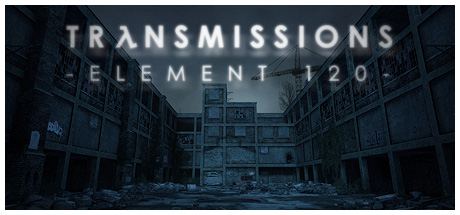
Transmissions: Element 120 is a compact first-person action experience that demonstrates how effectively the atmosphere and physics-driven gameplay of Half-Life can be expanded without simply copying what came before. Developed by Shokunin, Thomas M. Visser, and Vincent Thiele and published independently under Self Published, the game was released in 2016 as a free experience set within the Half-Life universe. Although it is not an official Valve production, it uses the established setting and technology with permission, creating an adventure that feels surprisingly authentic while introducing a distinctive gameplay concept of its own.
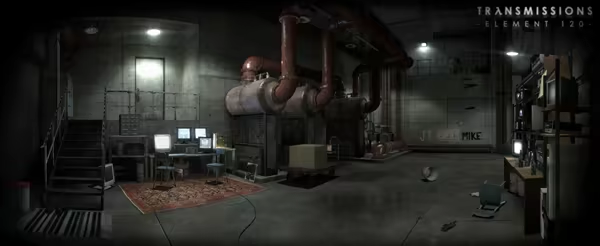
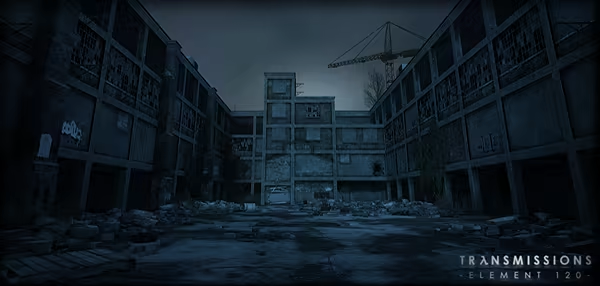
The story intentionally begins with uncertainty. The player awakens in an unfamiliar location without a clear understanding of when events are taking place or why they have been brought there. Instead of delivering lengthy explanations, the game encourages players to interpret their surroundings. Abandoned environments, hostile encounters, machinery, lighting, and environmental details gradually establish the mood. This approach works particularly well because mystery has always been an important part of Half-Life's identity. Transmissions: Element 120 understands that unanswered questions can make exploration more engaging when the environment itself provides clues.
Its most memorable addition is a specialized gravity-defying weapon that serves purposes far beyond ordinary combat. The weapon can launch the player across substantial distances, making it possible to leap over structures and survive otherwise devastating falls. This fundamentally changes how environments can be approached. Verticality becomes a major component of traversal, while momentum and positioning become useful considerations during confrontations. Learning how to combine movement with the weapon's capabilities produces some of the game's most entertaining moments.
The mechanic also fits naturally into the physics-focused design associated with the Source Engine. Rather than feeling like an unrelated modification attached to Half-Life gameplay, it resembles an extension of concepts that already existed within that universe. Environmental objects and physical interactions contribute to both action and exploration, while the ability to propel yourself around spaces gives familiar Source-style environments a fresh dimension. The game consequently succeeds at offering nostalgia without relying exclusively on familiar weapons and enemies.
Considerable effort was also devoted to updating the presentation and technical capabilities of the Source Engine. The game incorporates enhanced dynamic lighting and improved post-processing, along with better support for complicated physics structures and exceptionally large physics objects. Artificial intelligence and situational awareness were also improved across multiple AI types. These enhancements are not merely technical curiosities because they support the actual experience. Lighting strengthens the darker atmosphere, expanded physics complement the central gameplay mechanic, and improved enemy awareness helps accommodate the player's unusual mobility.
Atmosphere is another major strength. Transmissions: Element 120 frequently moves between lonely exploration, unsettling environmental storytelling and sudden action. Its mysterious location produces a feeling of isolation that works especially well when combined with recognizable Half-Life imagery. The player may understand the broader universe but remains uncertain about the immediate circumstances. This creates tension without requiring elaborate cinematic sequences. Elements of science fiction, horror and survival blend together naturally, resulting in environments that can feel threatening even before enemies appear.
The pacing benefits enormously from the game's limited scale. Exploration and environmental observation are regularly interrupted by combat, puzzles and movement challenges, preventing any single element from dominating for too long. There is a pleasing escalation as the capabilities of the gravity weapon become clearer and the environments provide more opportunities to exploit them. The campaign rarely feels padded, and most areas appear designed around a specific encounter, atmosphere or mechanical idea.
That compact structure is simultaneously the game's greatest limitation. Transmissions: Element 120 is deliberately short, and the adventure can end just when its unusual mechanics begin to suggest much larger possibilities. The gravity-based movement system could easily support more complicated puzzles, larger environments and increasingly elaborate combat scenarios. Likewise, the mysterious narrative leaves room for significantly more development. Players approaching it as a full Half-Life-sized campaign are therefore likely to find its scope restrictive.
Visually, the game inevitably carries the appearance of an older Source Engine production, but thoughtful lighting and environmental design prevent that from becoming a serious disadvantage. The aesthetic actually reinforces its connection to Half-Life while the additional visual effects give individual locations their own character. The soundscape is similarly important, helping establish tension during quieter sections and providing appropriate intensity when combat begins. The combination creates a convincing atmosphere despite the project's relatively modest scale.
The overall package is also remarkably complete considering that it is available free of charge. It provides a dedicated single-player campaign alongside Steam achievements, captions and Steam Cloud functionality. Rather than functioning as a basic technical demonstration, it feels like a carefully constructed miniature adventure with a beginning, progression and conclusion. Its free availability makes the amount of craftsmanship particularly impressive, since there is enough original design here to distinguish the project from a simple collection of fan-made levels.
Transmissions: Element 120 ultimately succeeds because it understands the qualities that made physics-driven Source Engine games memorable while still contributing an idea of its own. The mysterious storytelling, carefully controlled atmosphere, environmental interaction, improved technical effects and gravity-powered movement complement each other extremely well. Its strongest feature is not merely that it resembles Half-Life, but that it explores a gameplay concept that feels as though it could comfortably exist within that universe.
The short duration prevents the mechanics and narrative from reaching their full potential, but it also results in an experience with very little wasted time. Transmissions: Element 120 is focused, atmospheric and inventive, making it particularly worthwhile for players who appreciate single-player shooters built around environmental interaction rather than nonstop gunfire. It leaves a strong impression precisely because its central ideas are good enough to make the player wish there were substantially more of them.
Transmissions: Element 120 is an excellent short-form Half-Life experience that combines familiar Source Engine foundations with inventive gravity-based traversal, strong physics interactions, atmospheric environments and meaningful technical improvements. Its limited length is the primary drawback, but the quality and creativity packed into that brief campaign make it an unusually memorable free single-player experience.
Rating: 9/10