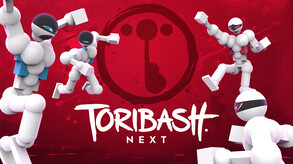
Toribash Next is the sequel to Toribash, the award-winning turn-based sandbox fighting game, developed by Nabi Studios. More players and fighting, weapons and blood, and ultimately - more fun.
Revenue comes from in-game items and microtransactions, which our price-based model doesn't estimate. The player count below is how many people own it, not what they spent.
Prices
The United States storefront in every case, so this compares stores and not countries.
About
Genres
Stats
English
Sums Steam only; Epic publishes no volume signal, so the true total is higher by an unknown amount.
| Store | Price | Audience | Score | Chart | Est. revenue |
|---|---|---|---|---|---|
SteamYou are here | Free | 381reviews | 38% | — | $0 |
| Free | — | — | — | not modelled |
Engagement
Reviews
Themes across 46 recent reviews and how positive each mention is. A keyword signal, not full sentiment analysis.
Reviews
mmmmmmmmmmmmmmmmmmmmmmmmmmm
Dih
Пошаговый файтинг с элементами песочницы и физикой движений. Плюсы: Инновационный геймплей — уникальные механики боя и движений; Многопользовательский режим — до 4 игроков; Редактор повторов — возможность редактировать бои после их завершения. Минусы: Проблемы с физикой — нестабильное поведение персонажей; Технические баги — частые сбои и вылеты; Ограниченные настройки — мало опций для кастомизации управления. Итог: Toribash Next — для фанатов пошаговых файтингов и экспериментов с физикой. Привлекает новыми возможностями и многопользовательским режимом, но может разочаровать нестабильностью и техническими недочётами.
Media

Related
Related
Price dynamics, follower growth, revenue and sales trajectories with interactive tooltips
This and every other Pro feature is free until October 20, 2026. A free account is all it takes.
Matched by title — a reused name can pair the wrong games. * is a critic aggregate. Prices and positions are each store's United States storefront; Epic charts worldwide. Audience and Score too, except Steam's, which is worldwide.
Hours played at review time, across 46 reviews with recorded playtime.
positive critical· bar length = how often the theme comes up
Toribash Next is a really unusual fighting game because I am not controlling a fighter in the normal way. Instead of pressing buttons for punches and kicks, I control individual joints and decide how my body moves before letting the physics play out. That idea was already what made the original Toribash interesting, and Next keeps that turn based system while adding weapons, larger fights and more ways to mess around with the physics. It takes a little while to understand, but once I start getting the hang of it, there is something very satisfying about planning a movement and watching it actually work. The combat gives me a lot of freedom. I can control 20 different articulation points during a turn, or 21 when I am using a weapon, so even a basic attack can involve quite a bit of planning. There are modes like Classic, Samurai Fight, Aikido and Gun Duel, and the weapons include guns, swords and staves. I particularly like the fact that Gun Duel does not suddenly turn the game into a normal shooter. I still have to control my fighter's body and work out how to aim properly, which makes something as simple as taking a shot much more complicated than it first sounds. The four player options are another nice addition. I can take part in free for alls or team fights, and there are also options for freestyle tricking and parkour. I like that because Toribash has always been capable of producing ridiculous moments that I could not really plan in advance. The ability to change rules, spawn objects and alter parts of the environment during a match adds even more freedom. It feels less like a traditional fighting game and more like a physics sandbox where fighting happens to be the main activity. The replay editor is probably one of the smartest additions for me. After finishing a fight, I can go back to earlier points and change what happened, which lets me experiment with different movements without having to start an entirely new match every time. That works particularly well with a game like this because sometimes I can see that an attack almost worked and I just need to change one movement. I can also create and share custom content, with character, environment and rule customisation giving me plenty of room to experiment. Workshop support was added after launch as well, so custom mods can be shared directly through Steam. The biggest problem for me is the learning curve. Toribash Next looks simple when I first see it, but actually understanding what all the joints do and predicting how the physics will react takes a lot of patience. I can easily make a movement that looks good in my head and then watch my character completely lose balance or expose themselves to an attack. That can be funny, but it can also be frustrating when I know what I wanted to do and cannot quite translate that into the controls. The game rewards experimentation, but it does not always make that learning process feel easy. I also think the game depends heavily on having enough content and activity around its unusual systems. The customisation and modding tools are useful, but the experience can feel quite empty when I am not actively finding something interesting to experiment with. The free to play model is fair enough for giving me access to the core game, but there are in app purchases and an economy built around custom characters and mods. I would rather see the focus stay on the actual fighting and physics because that is where the game has its strongest idea. Overall, Toribash Next is a game I respect more than I enjoy every minute of. The physics based combat is genuinely different, the weapon modes add variety, four player battles give it more possibilities and the replay editor is a great fit for the whole concept. At the same time, the controls take a lot of time to understand and the experience can feel rough when I am trying to learn everything. I also think the original Toribash had such a distinctive identity that making a sequel stand out was always going to be difficult. Still, when I pull off a movement exactly how I wanted and see the physics turn it into a successful attack, there is not much else quite like it. Rating: 6.7/10
Игра Toribash Next — это уникальный файтинг, основанный на физике и позволяющий игрокам полностью контролировать каждое движение своего виртуального бойца. Вместо стандартных комбо и заученных приемов, здесь царит абсолютная свобода действий. Настройка силы, угла и времени сокращения мышц позволяет создавать невероятные и порой непредсказуемые движения. Новичкам игра может показаться сложной и даже хаотичной. Кривая обучения довольно крутая, и потребуется время, чтобы освоить базовые принципы управления и научиться координировать движения своего Тори. Однако, как только вы поймете механику, откроется огромный простор для творчества и экспериментов. Игра предлагает различные режимы, от классических дуэлей до более комплексных заданий, требующих стратегического мышления и планирования. Сообщество Toribash Next очень активное, игроки охотно делятся своими наработками, модами и техниками. Главным минусом, пожалуй, является устаревшая графика и интерфейс. Игра выглядит несколько архаично, что может отпугнуть некоторых игроков. Тем не менее, если вы ищете уникальный файтинг с глубокой механикой и бесконечными возможностями, то Toribash Next определенно стоит попробовать. Это игра не для всех, но для тех, кто готов потратить время на ее освоение, она подарит незабываемые впечатления.
Toribash Next takes an unconventional approach to fighting games by replacing traditional combos and rapid button inputs with deliberate manipulation of a character’s individual joints. Developed by Nabi Studios and published by Nicalis, it builds its entire identity around turn-based physics combat, giving players direct influence over how their fighter bends, rotates, extends, contracts, and ultimately interacts with an opponent. It is an unusual system that can initially feel awkward, but it also provides a level of freedom rarely found in conventional fighting games. The central mechanic allows players to manipulate 20 articulation points during normal combat, increasing to 21 when weapons are involved. Instead of pressing a button to perform a predefined kick or punch, players effectively construct the movement themselves. A successful attack requires understanding balance, momentum, positioning, and the relationship between different joints. Beginners will frequently create accidental falls, ineffective attacks, or bizarre contortions, but these failures are part of the learning process. Once the physics become familiar, producing an effective throw, strike, or acrobatic maneuver can be surprisingly satisfying because the resulting technique feels genuinely created by the player. Turn-based combat gives players time to consider these movements rather than demanding fast reflexes. Every adjustment can influence what happens when the simulation advances, making fights resemble a combination of martial arts, strategy, and physics experimentation. The downside is a substantial learning curve. Understanding what an individual joint does is relatively simple, but coordinating numerous joints into smooth movement requires considerable practice. Players expecting the immediate accessibility of a traditional fighter may therefore find the controls frustrating. Several modes provide different ways to explore the physics system. Classic combat represents the familiar foundation, while Samurai Fight, Aikido, and Gun Duel introduce different situations and tactical requirements. Weapons such as swords, firearms, and staves add another dimension because their position and momentum must be considered alongside the fighter’s body. Gun Duel is particularly unusual because even aiming a weapon remains dependent on physically positioning the character correctly rather than simply pointing a conventional crosshair at an opponent. Three-player and four-player battles are among the sequel’s more significant additions. Matches can involve team battles or free-for-all encounters, producing increasingly unpredictable situations as additional physics-driven characters interact. Multiplayer supports competitive and cooperative possibilities, while cross-platform functionality and player-hosted servers expand the social side of the experience. Four-player matches can become chaotic, but that chaos fits naturally with a game where unexpected physical interactions frequently produce some of the most entertaining moments. Combat is only one part of the package. Freestyle tricking and parkour allow players to treat the movement system as an acrobatic sandbox, encouraging experimentation without making victory over another fighter the primary objective. Rules can be modified, objects can be introduced, and environmental elements can be changed. These options give creative players considerable freedom to construct unusual scenarios rather than repeatedly playing standardized matches. The Replay Editor is another worthwhile addition. Completed fights can be revisited, allowing players to return to earlier moments and alter movements to create different outcomes. This makes replay editing more than a simple viewing feature. Players can effectively refine choreography, correct unsuccessful movements, or create elaborate martial-arts sequences. Combined with character, environment, and rule customization, it strengthens the game’s appeal as a creative physics playground. There is also an in-game economy centered around custom characters and modifications. Players can buy and sell creations, adding a community-driven component to customization. Steam achievements and Steam Cloud functionality complement the package, while the free-to-play structure makes experimenting with the game relatively accessible. The challenge is that having numerous creative systems does not necessarily make them immediately enjoyable. Much of the entertainment depends on whether the player is willing to invest enough time to understand the unusual controls. Visually, the game prioritizes readable physics and movement over elaborate cinematic presentation. The simplified characters work effectively for showing joint positions and physical interactions, while weapon impacts, dismemberment, and exaggerated collisions give battles a distinctive personality. It is not a showcase for cutting-edge graphics, but visual complexity would arguably interfere with the mechanical clarity required by its articulation-based combat. Steam Deck compatibility is officially categorized as Playable rather than fully Verified. Performance with the default graphics configuration is considered suitable, and the game can run successfully on SteamOS. However, handheld players should expect compromises. Some functionality is not fully accessible through the default controller configuration, touchscreen interaction or a community controller layout may occasionally be useful, and text entry can require manually opening the virtual keyboard. Some interface text may also appear small, while certain prompts can display keyboard, mouse, or non-Steam Deck controller icons. It is therefore functional on the Deck, but the experience is less seamless than a fully optimized handheld release. The largest obstacle remains accessibility. Toribash Next offers enormous theoretical freedom, but that freedom comes with demanding controls and a considerable gap between understanding the mechanics and using them effectively. Its overall Steam user reception has also been notably negative, indicating that its expanded ambitions have not translated into a satisfying experience for a significant portion of players. The sequel introduces compelling concepts, but it can feel more like an experimental sandbox requiring patience than a polished fighting game designed for immediate enjoyment. Ultimately, Toribash Next is best suited to players fascinated by physics simulations, emergent gameplay, martial-arts experimentation, customization, modding, and unconventional competitive systems. Creating a successful movement from individually controlled joints can provide a sense of accomplishment that predefined fighting-game combos cannot replicate. At the same time, the difficult controls, uneven accessibility, and rough edges make it a specialized recommendation. Its free-to-play format makes it easy to sample, but enjoying it over the long term will depend heavily on a willingness to master its peculiar approach to movement and combat. Rating: 6/10
Players by region
Where this game's players are, estimated from review languages.
Related
| Game | Estimated lifetime revenue | Reviews | Review score | Price |
|---|---|---|---|---|
| $666K | 1.4K | 83% | $15.99 | |
| $0 | 0 | — | Free | |
| $2M | 18.8K | 87% | $3.99 | |
| $40.9K | 540 | 90% | $2.99 | |
| — | 0 | — | — | |
| — | 0 | — | — |