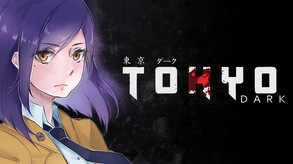
Legend tells of a door deep below Tokyo's sewers. All who enter are lost forever. Detective Ito's partner is missing. Explore Tokyo & uncover the darkness that lays beneath the streets in this Point & Click - meets Visual Novel - narrative adventure that questions the very core of Ito's sanity.
Modeled estimate, not a reported figure. How we estimate →
Media

About
Genres
Stats
All-time low is the lowest price we've recorded for this game since we started tracking it.
Languages: English, Japanese
Engagement
Hours played at review time, across 40 reviews with recorded playtime.
Reviews
Tokyo Dark is a haunting psychological adventure that combines detective fiction, supernatural horror, and emotional storytelling into a deeply atmospheric experience. Set within the shadowy streets and hidden corners of modern Tokyo, the game follows Detective Ayami Ito as she investigates the disappearance of her partner after a traumatic and mysterious incident. What initially appears to be a standard criminal investigation slowly transforms into a disturbing journey through paranoia, guilt, and psychological collapse. The game’s strongest quality is how effectively it balances grounded detective work with unsettling supernatural elements, constantly leaving players uncertain about what is real and what may exist only within Ayami’s fragile mental state. From the beginning, Tokyo Dark establishes a heavy and oppressive tone. The city itself feels cold, lonely, and filled with hidden dangers lurking beneath its bright neon lights. Players travel through train stations, back alleys, bars, shrines, abandoned buildings, and underground locations that gradually reveal increasingly disturbing secrets. The environments are carefully designed to create discomfort without relying on nonstop horror imagery. Even quiet locations carry a lingering sense of unease, making exploration feel tense throughout the entire experience. The story is easily the game’s greatest achievement. Tokyo Dark focuses heavily on character psychology and emotional consequences, allowing players to shape Ayami’s personality through their choices. Instead of simple moral decisions, the game uses its S.P.I.N. system to track four aspects of Ayami’s mental and emotional condition: sanity, professionalism, investigation skills, and neurosis. Every major action influences these traits, affecting dialogue options, character relationships, and the eventual outcome of the story. This system gives player choices real weight because even seemingly minor interactions can influence Ayami’s emotional stability and determine how the narrative unfolds. Ayami herself is a compelling protagonist because she feels vulnerable and human rather than invincible. As the investigation becomes darker, players witness her struggle to maintain control while confronting traumatic memories and increasingly horrifying situations. The game constantly blurs the line between supernatural terror and psychological breakdown, creating uncertainty that keeps the mystery engaging. There are moments where players genuinely question whether the horrors they encounter are paranormal events or manifestations of Ayami’s deteriorating state of mind. This ambiguity gives the story a psychological depth that many horror games fail to achieve. Visually, Tokyo Dark delivers an impressive blend of anime-inspired character art and atmospheric environmental design. The city feels alive despite the game’s relatively simple presentation, and the contrast between colorful urban scenery and disturbing horror imagery creates a memorable visual identity. Character portraits are expressive, helping emotional scenes feel more impactful, while the animated cutscenes add cinematic energy during major story moments. The use of lighting and shadow is particularly effective, often turning ordinary locations into unsettling spaces filled with hidden tension. The soundtrack also deserves praise for how well it supports the game’s emotional atmosphere. Quiet ambient music creates moments of reflection and sadness, while darker tracks intensify scenes involving supernatural encounters or emotional breakdowns. Sound design is subtle but effective, helping maintain a constant sense of discomfort throughout the investigation. The game rarely relies on loud scares alone. Instead, it builds fear through mood, pacing, and emotional pressure. Gameplay revolves around exploration, dialogue choices, clue gathering, and puzzle solving. Players examine environments, question characters, collect evidence, and make decisions that influence both the investigation and Ayami’s psychological state. The point-and-click mechanics are straightforward and easy to understand, allowing the narrative to remain the main focus. Puzzles are generally simple and designed more to support immersion than challenge players with difficult logic problems. This accessible structure works well because it keeps attention centered on the unfolding mystery rather than frustrating gameplay obstacles. One of the game’s most rewarding aspects is its branching narrative. Multiple endings encourage replayability, and each conclusion reflects the emotional and psychological path players shaped throughout the story. Some endings provide emotional closure, while others become tragic or deeply disturbing depending on Ayami’s choices and mental condition. This branching structure gives the experience meaningful replay value because different decisions can dramatically alter the tone and outcome of the narrative. Despite its many strengths, Tokyo Dark is not without flaws. The pacing can occasionally feel slow, especially during investigation-heavy sections where players spend long periods moving between locations and speaking with characters. Some players may also find the gameplay too simplistic, particularly if they expect more challenging puzzles or traditional survival horror mechanics. The horror itself leans heavily toward psychological tension and emotional unease rather than direct action or constant scares, which may not satisfy players looking for a more intense horror experience. There are also moments where the story becomes intentionally vague or symbolic, potentially frustrating players who prefer clear explanations and straightforward storytelling. Certain plot developments are left open to interpretation, and the narrative occasionally prioritizes atmosphere over clarity. However, for many players, this ambiguity is part of the game’s appeal because it reinforces the uncertainty surrounding Ayami’s mental condition and the supernatural events she encounters. What ultimately makes Tokyo Dark memorable is its ability to combine emotional storytelling with psychological horror in a way that feels personal and immersive. The game does not simply rely on ghosts or monsters to create fear. Instead, it focuses on trauma, obsession, isolation, and the gradual breakdown of its protagonist’s sense of reality. The choices players make shape not only the ending, but also the emotional identity of the main character throughout the journey. Tokyo Dark stands out as a thoughtful and atmospheric horror adventure that prioritizes narrative depth over action. Its combination of strong writing, meaningful choices, memorable visual design, and unsettling atmosphere creates an experience that lingers long after the story ends. While the slower pacing and simple gameplay may not appeal to everyone, players who enjoy psychological horror and narrative-driven mysteries will find a deeply engaging and emotionally intense experience hidden within the dark streets of Tokyo. Rating: 8/10
It's an enjoyable horror game. There is a bit too much text, in my opinion, but the story is satisfying.
waifus ❤️ but no sex 💔 7/10
Игра моего юношества, спасибо всем кто к ней был причастен, я рад что судьба свела меня с этой игрой.
Візуальна новела/квест на душнувату містичну тему. Різних фіналів багато, але після проходження перший раз, повертатися щоб їх відшукати, бажання не виникає. 7 з 10 на один разок почитать любителям містики і аніме
"There are no happy endings, Detective." An incredibly profound experience, suffused with sadness and an oppressive atmosphere, and complemented by a superlative soundtrack. The endings emotionally traumatised me. A masterpiece.
I've played better decisions matter games on newgrounds for free. I really wanted to like this game, but it just wasn't all that. I might have liked it better if I could skip all the dialogue once I read it at least once? But that wasn't always an option... The story is predictable, the characters are lacking, and the repetitiveness was mind-numbing. If you like cats, there are cats literally everywhere...so....there's my one positive portion of this review.
I fell in love with this game it's about detective woman named Ito, that goes really trough a lot of hardships Reina, her own husband and other lurking dangers of the mask that plays with your sanity. I would really recommend to buy this game it's definitely worth it full price developers really poured in this game their heart
This is a truncated review because of Steam's character count, to see the full review [url=https://www.dragon-quill.net/tokyo-dark/]click here[/url]. I liked this way more than I thought I was going to. For one, though, it's not a detective story -- it's really a psychological thriller that just happens to star a policewoman. That's not a bad thing, but it is a materially different type of story, so something to keep in mind in terms of whether or not you'd like it. It's also an urban fantasy story, about a woman who finds herself unsure whether she's experiencing supernatural events of just breaking under the stress of her life. One move it makes that I do like is that it doesn't try to sustain the "is the urban fantasy real?" thing for the whole game as some of these stories try to do; instead the question becomes, "What do the gods want from me, and I can I escape it?" which is a more interesting direction to go than just trying to pretend the reader hasn't figured out ghosts are real for the entire time. I'm getting ahead of myself, though. Tokyo Dark is about Detective Ito Ayami, who is reeling after a hostage situation she and her partner were involved in results in the death of the perp, a teenage girl. Ito is dealing with an enormous amount of guilt, and ends up hospitalized for having a breakdown. In the wake of it, her partner Tanaka disappears under mysterious circumstances. As she pursues the truth of who the girl was and why her partner disappeared, she's drawn into the history of a mysterious Okame mask that seems to torture its possessor. First of all, Ito's character design is great. She's cool and professional and not sexualized and I want to be her when I grow up. I realized that this game... may not pass the reverse-bechdel? The only instance I can think where it might is in the mid-to-late game where you can talk to the expat group outside the dojo. Even the end sequence where Collector and Teaman talk to each other, they're talking about Ito the whole time. Honestly it's pretty impressive how quietly the cast is mostly women; I hadn't thought about it until I started thinking about this post and how Tanaka's death is a very rare reverse-fridging. It's made me think again about that old Nasu bit about the absence of men vs. the presence of women. I also thought the game handled its mental health themes pretty well, all things considered. While much of what's happening to Ito is supernatural, the game never lets go of just how exhausted and traumatized she is; to me, it read as "Yes, some of what she's seen and done was ghosts, but that doesn't account for all of it." I think having themes of trauma throughout the B cast also helped drive this home. I really liked the detail of Mai calling her brother every night crying after the hostage situation. I like that it's not as simple as "she wasn't hurt, so she's fine," and that it addressed that seeing her attacker killed was not like, justice, but was in and of itself horrible. I also liked the thread a lot about how Grandma not telling her the truth about her past was keeping her tied to it and preventing her from being free. One of the game's major themes was definitely about if and how it's possible to escape traumatic experiences. I think Kawana's line about how the only way for him to heal was to leave his hometown and family behind was really interesting in general, but definitely extra so in a Japanese context. Daizo, too, needed to start over completely, dedicate himself to a dream that's his, to find a way to move forward. Indeed, it was Reina's inability to move forward -- that what was done to her was spiritually tying her to the past, preventing her from escaping, mirroring the way the producer literally prevents her from leaving, that drives her to give up on her life. The game is very much about a need to persevere, to try not to live in the past even when it's hard and the path forward is unclear, and I think that's a solid message and the game's engagement with trauma felt honest. [spoiler] The supernatural side of things was interesting. The developer is based in Japan and while the staff seems a mix of locals and expats, the leads look to be Westerners. One of the results of this seems to be that this is a very Shinto story -- it's in at least some ways a retelling of the Izanami and Izanagi myth -- mixed with a kind of Christlike protagonist. The fatalism of Buddhist influence is both there -- Ito cannot avoid her fate -- but also subverted -- her fate is to give up her will so the human race can be given a chance to make its own choices. I find it to be a really interesting and rich contrast. It's a story both about the power of the individual and the need to put the good of the many first. I wouldn't even call it a tension -- I think it's totally cohesive and that's what I find so interesting about it. [/spoiler] In terms of actual gameplay. It's worth noting that like many of the detective games, it lives somewhere between point-and-click and visual novel. I would say it's more toward the latter (no inventory system, no journal, etc), especially in terms of stylistics, but there are elements of p-a-c. This worked perfectly well for me, but there were definitely some UI things that could have been improved. For one, it desperately needed a 'speed through already seen text' option. This was so common even in 2017 that I'm baffled it's not here, but this may be because it seems to have been built in an adventure game engine and not a visual novel engine. Also part of the problem with the p-and-c sequences was that you couldn't really "skip to next decision point" like in a traditional VN, since it required going from one place to another in an order you chose and talking or not talking to different people. There's also a couple of fetch quests. I'm not sure if just skipping the gameplay sequences on replays is viable. It's an issue baked into combining these genres. The second issue I had was that sometimes interaction points would fail to load, and I'd have to go in and out of the pause menu to prompt them to show. Not sure what was going on there. I never had to force-quit or and never got softlocked, but it was still something that should be ironed out. In terms of horror, I think it's pretty accessible -- I'm a coward and I hate gore, but found the game to be pretty mild. There's blood and one instance of a rotted corpse, but no gore beyond that. And the horror elements are things like "lights flash, was that person really there" and beyond that mostly atmospheric. I really liked the sound design. I usually play games muted for a bunch of reasons but just happened to have sound on when I started this and purposefully played it with sound on across play sessions. It reminded me a lot of Higurashi and the way the sound creates this subtle but pervasive unease about everything. I liked the stat system (called "SPIN") but more hardcore players may be upset how easy it is to keep your stats up. For me it added a nice sense of stakes to otherwise meaningless decisions without making so I had to do certain things. I think making it more survival-y would have made it to hard to see everything, but YMMV. I understand why they did the no-manual-saves-on-first-playthrough thing. You have to be forced into a second playthrough for the story to really work right. But I think it would have been better if after clearing NG+ there was a scene or decision-point selection to make cleaning up achievements and seeing all the endings more accessible. Doing an entire extra playthrough just to, say, see the other endings for Bartender and Janitor, is pretty brutal. All of this being said, considering the playtime and how rough seeing all the endings is, I think $17.99 asking price is a bit much. For me I think 9.99 or even 12.99 would be fair, but according to ITAD it discounts down to $4.49 pretty regularly and I'd definitely rec it at that price.
Related
Related
Trends
Modeled estimate over time, reconstructed from Steam's monthly review histogram.
Momentum
Pace estimated from the game's recent review growth (our daily snapshots) at its own sales-per-review ratio — a momentum signal, not booked sales.
Audience
Estimated from the language of this game's reviews — a proxy for where players are, not official Steam demographics.
Related
| eSports Legend | $382.9K | 1.2K | 62% | $9.99 |
| First Cut: Samurai Duel | $383K | 2K | 89% | $8.99 |
| Fureraba ~Friend to Lover~ | $382.8K | 403 | 98% | $29.99 |
| Dustland Delivery | $383.1K | 1.3K | 88% | $7.99 |
| Cossacks: Back to War | $383.1K | 3K | 89% | $4.99 |
| Park Beyond | $383.1K | 1.3K | 63% | $9.89 |