Throne of Fate, developed and published by Enoops, is a 2D action RPG with strong roguelike influences that focuses on challenging combat, dungeon exploration, and the gradual mastery of its systems through repeated playthroughs. Instead of presenting a heavily story-driven adventure, the game embraces a more classic arcade-inspired philosophy where survival, experimentation, and persistence are the primary drivers of progress. The overall experience is built around fast-paced side-scrolling combat and a cycle of repeated attempts that gradually push players further into a dangerous fantasy world filled with monsters, traps, and powerful artifacts.
The game places players in the role of a wandering warrior navigating a land overrun by hostile creatures and mysterious threats. The world itself feels less like a traditional RPG narrative and more like a series of perilous trials that must be overcome through combat and exploration. Rather than unfolding through dialogue-heavy storytelling or character interactions, the narrative remains largely in the background. The emphasis is placed instead on the player's journey through increasingly dangerous areas as they attempt to defeat enemies, uncover powerful items, and push deeper into the world in pursuit of the titular throne.
Gameplay revolves around exploring side-scrolling environments that function like dungeon stages. Each area contains groups of enemies, environmental hazards, and occasional treasures that reward careful exploration. The combat system is direct and action-oriented, requiring players to move quickly, strike at the right moment, and avoid incoming attacks from enemies that often appear in large numbers. Timing and positioning become essential, especially as later stages introduce enemies with more aggressive attack patterns and faster movement.
Weapons play an important role in shaping how players approach combat. Throughout the adventure, players can acquire different types of equipment that vary in attack speed, damage output, and overall effectiveness against certain enemies. Some weapons focus on rapid strikes that allow players to maintain mobility during combat, while others deliver heavier blows that require careful timing but deal significantly more damage. Choosing the right weapon for each situation becomes an important strategic decision, particularly when facing larger enemies or boss encounters.
Artifacts serve as another key element of the game’s progression system. These items provide passive bonuses or special abilities that can significantly affect the player’s survivability and combat efficiency. Some artifacts increase attack power or improve defense, while others introduce unique effects that alter gameplay in subtle ways. Because artifacts are discovered in different combinations during each run, they create variation between playthroughs and encourage players to adapt their strategies based on the resources they find.
The roguelike structure of Throne of Fate means that death is an expected part of the experience. When a player is defeated, the run ends and progress resets, requiring another attempt to push deeper into the world. However, the knowledge gained during previous runs becomes a powerful advantage. Players gradually learn enemy behavior, discover more efficient combat strategies, and become more familiar with the layout and rhythm of the game’s stages. This learning process is central to the gameplay loop, rewarding persistence and patience as players refine their approach.
The environments themselves are varied enough to keep exploration interesting. Different areas introduce new visual themes and enemy types that require players to adjust their tactics. Some locations emphasize tight corridors and careful positioning, while others open up into larger arenas where waves of enemies attack simultaneously. Boss battles appear at key points within the game, presenting powerful enemies that test everything the player has learned about movement, timing, and weapon selection.
One of the defining characteristics of the game is its difficulty. Throne of Fate does not attempt to soften its challenges, and mistakes are often punished quickly. Enemies can deal significant damage, and poorly timed attacks or careless movement can quickly lead to defeat. This demanding design reflects the influence of classic action platformers and roguelike games, where success depends on careful observation, fast reactions, and gradual improvement over time.
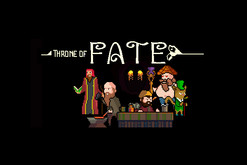
Visually, the game adopts a colorful pixel-art style that pays homage to retro action games. Characters and enemies are designed with simple but expressive animations that make combat readable even when the screen becomes crowded with enemies. The environments use bright colors and layered backgrounds that help give each stage a distinct identity. While the graphics are not highly detailed, the pixel art presentation fits well with the game’s fast-paced gameplay and nostalgic tone.
The soundtrack reinforces the adventurous atmosphere with energetic background music that accompanies the player’s journey through the various stages. The music helps maintain a sense of momentum during combat while quieter moments of exploration allow the player to prepare for the next confrontation. Sound effects for attacks, enemy movements, and environmental interactions provide useful feedback during battles, helping players stay aware of what is happening around them.
Despite its strengths, Throne of Fate does have some limitations. The minimal narrative may leave players wanting a deeper story or stronger world-building to connect the various stages together. Additionally, the roguelike structure means that players will experience similar environments repeatedly as they attempt new runs, which can eventually make the gameplay loop feel somewhat repetitive.
Another aspect that may divide players is the relatively straightforward progression system. While weapons and artifacts provide some variety, the game does not offer the extensive character customization or complex upgrade trees found in larger roguelike RPGs. For some players, this simplicity helps keep the focus on skill-based gameplay, but others may wish for more long-term progression systems to complement the challenging combat.
Even with these limitations, Throne of Fate remains an engaging action RPG that delivers a satisfying balance between accessibility and difficulty. Its combination of quick combat, randomized item discovery, and demanding encounters creates a gameplay loop that encourages players to keep trying, learning from each defeat, and gradually improving their skills.
Overall, Throne of Fate is a solid indie roguelike that captures the spirit of classic dungeon-crawling action games. Its emphasis on skill, experimentation, and persistence makes it a rewarding experience for players who enjoy overcoming difficult challenges through repeated attempts. While it may not offer the narrative depth or expansive systems of larger RPG titles, it succeeds in delivering a focused and challenging adventure that rewards patience and mastery.
Rating: 7/10