Thermonuclear is a fast-paced arcade shooter inspired by classic Cold War–era action games, featuring nuclear-themed combat and score-driven gameplay.
Modeled estimate, not a reported figure. How we estimate →
Media

About
Thermonuclear is a retro-inspired arcade shooter focused on fast reflexes, high scores, and relentless action. Drawing inspiration from classic Cold War–era arcade games, it delivers straightforward, no-nonsense shooting gameplay built around mastery and repetition.
The game emphasizes quick reactions, precise movement, and efficient enemy clearing rather than complex systems or long narrative arcs.
Each session is designed to be intense and replayable. Players fight through waves of enemies while managing escalating difficulty and chasing higher scores. Success comes from learning patterns, improving reaction time, and optimizing performance.
Thermonuclear is ideal for players who enjoy short, high-intensity play sessions or classic arcade-style challenges.
The game’s visual and thematic style leans into nuclear tension and retro aesthetics, reinforcing its arcade roots. Everything is built to support rapid gameplay loops and repeat play.
This is a single-player arcade experience designed for players who value challenge, speed, and replayability.
Retro-inspired arcade shooter gameplay
Fast-paced, reflex-based combat
Score-driven design focused on replayability
Nuclear-themed visuals and atmosphere
Short, intense play sessions
Single-player arcade experience
Genres
Stats
All-time low is the lowest price we've recorded for this game since we started tracking it.
Languages: English*, Russian**languages with full audio support
Reviews
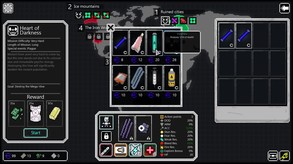
+ The gameplay is fun and somewhat deep. Each enemy is unique and requires specific tactics to beat. You also need to keep in mind your surroundings, enemy status, and choose your equipment and consumables for each mission. + The graphics look decent during battles. It reminds me of Into The Breach units-as-icons visual style. Characters during dialogues require some polish, though the story here is non-important; the game fills more like chess - it doesn't really need a deep and meaningful story arc, to begin with, if the gameplay is fun. Maybe something more will come up later (storywise), but I haven't seen a lot of meaningful dialogues or character development during my first several hours of the game. - The game has some bugs (to be fair, as all games do during their launch day). I had a glitch that restricted me to continue forward one time. The good news is that the game constantly saves your progress, so I didn't lose much of my playtime. - Thermonuclear needs some UI improvements. For example, currently, mostly in the game the right mouse is used as an "Escape" button (cancel current action or move to the previous menu). But during battle screen somewhy right mouse now scrolls towards your active abilities, which makes me sometimes choose a different ability than I was intending to. Another improvement would be to make the dungeon map pop-up as soon as you finish your current location's tasks (eliminate your enemies) since you don't need to do anything else here after that. The interface takes some time to get used to. Overall: playing the game feels fun, which is the main requirement in that genre. It's not perfect, but the game has its own quirks and does not have problems the dev can't fix in upcoming weeks/months.
A fun little game. A bit clunky UI, so you need to spend some time to learn it. Sometimes game give you hard challenges and you will not be able to finish some missions from a first try.
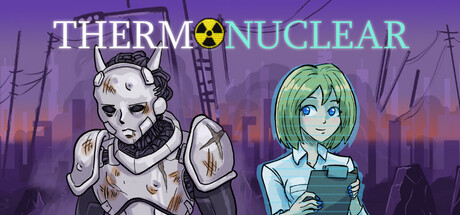
6/10 RPG/TBS that mixes Into the Breach, XCom, and Darkest Dungeon. TLDR: An interesting TBS game which reminds Into the Breach with its battles, XCom with its world map and missions, and Darkest Dungeon with the level maps and base screen. Yet the UI and the controls are clunky, the first hour with the game is like stumbling in the darkness, and there are many bugs. The "permadeath/high difficulty" and "buggy/unclear" is a bad combo because you can't even re-load after you repeatedly make mistakes which aren't your fault or simply run into bugs which make you fail or waste resources. Check it out only if you're very patient. Good: - an interesting combat system. It has a geometry component to it. E.g. some enemies and some of your abilities attack only diagonally - there are multiple effects that inter-play with each other. E.g. your or enemy attacks can set stuff on fire. But if you are on an ice tile, the fire is put out. You can push enemies, and they can bump into rocks or each other and take additional damage. You can push enemies into water to make them drown. The "physics" system is quite complex and open-ended here (with the unfortunate flip side that there are subtle bugs and inconsistencies once in a while) - there are 48 abilities in total, of which you can only equip 4. Abilities are varied and interesting to try out - music is pleasant, XCom-like - the pixelated graphics are nice So-so: - fonts don't fit the pixelated graphics thematically. I guess instead of Arial the game should have used some pixelated font - ability buttons need tooltips. Currently the game only shows info about the ability once you select it - shaky English, needs proofreading by a native speaker - all pistols seems to have the same attack range of 1, just like melee attacks Bad: - difficulty of levels increases gradually even if you just keep running the same 1st location. So at some point you just start failing every mission and there is no way forward anymore. You have to restart the whole game. Mobs start having crazily high HPs which none of your abilities can handle - abbreviated stats in character sheet... DOD, ARM, ACC? <- took me a while to guess it's "dodge chance", "incoming damage reduction" and "base attack accuracy". Instead of abbreviations there could be just icons and a tooltip with a full name and maybe even a description of the stat when you mouse over it - the game wasn't playtested. A lot of stuff is unclear. Just as an example: the "drone" item that costs $26: I was sure it would just show contents of neighbor rooms all the time. Yet it's a consumable! The description should mention it. My first 2 hours with the game were constant surprises, as many things don't work as I naturally expected - UI looks unpleasant and is the weakest aspect of the game. 1) When you start a mission, you press Start and see a screen where you can purchase items for the mission. After you purchase, it's unclear where to to click. Apparently, you need to click "Start" again. There was some bug or whatever, and my first mission started without any purchased items! Money was just lost. I had to quit and start the mission again, and purchase new items, and I had less money now. 2) On the base screen, I walked to one of the characters and it opened a list of abilities. I clicked on those with "new". I was sure the character would just get more abilities in the panel, but apparently it's only 4 that can be used, and you have to pick them before a mission. So I was surprised to see the new abilities "equipped" for the next mission. There was no way to reload or restart the mission without losing the money. - controls are wonky. You have to select "move" ability to move. Instead, move should have been the default action when you left click on a tile. Apparently the game was designed for controllers(?) since it's WASD-centered. Instead, mouse must be the primary control mode. When you mouse over an enemy, maybe the default attack ability (the one in the second slot) should be used. But if you first select another ability, the it should change the cursor and the action applied to the enemy. After that the selected ability should revert to "melee attack" when mouse over enemy or "move" when mouse over an empty tile. Healing and self-boosts shouldn't require targeting at all (currently you have to target yourself, and it's just a useless click). I've lost count of cases when I accidentally used an ability when I simply wanted to move - the mission map is cryptic. It took me over 2 hours of playing to finally notice that you can click on the icons under region names, and this shows a different mission! So, I was just playing Europe exploration for 4-5 times thinking it's different missions. Weirdly enough, the names of regions get highlighted when you mouse over them but this has no meaning or effect All of this game's flaws could easily be fixed if the dev would run playtests before release. Also the tutorial should have covered the controls on the base screen and the world map screen, walk you through starting a mission. My guess is that the dev was crushed by the complexity of his own game and at some point just released the game in hope that players will tell what's wrong with the game. Instead he should have got testers for his game. I dunno, get a friend play the game and sit next him. In 5 minutes he would see the obvious errors in the UI and the onboarding. Still, from the low number of reviews (just 6 in 2 years, and all positive) I see that the game failed not even because of the bugs, clunky controls or lackluster onboarding. It could simply be just the amateurish banner image. I doubt that the developer will ever fix this game. But I'll be happy to update the review if he does. For now, I'm just giving up on it. Too much pain dealing with bugs and the clunky controls. [table][tr][th][i]I'm a Steam curator, you can [url=https://store.steampowered.com/curator/43946907-Friendly-Nerd/]follow me[/url][/i][/th][/tr][/table]
Забавная игрушка. При своей простоте - достаточно много тактических ходов и комбинаций. Первым улучшением советую кинуть в хиты. Автор, сделай меню, хотя бы: "продолжить", "начать новое", "выход". Без него очень неудобно.))
Clunky but good.
По началу довольно тяжело разобраться с механиками, а потом становится очень даже весело играть. Так как я до этого играл в демку, то быстро освоился. Порадовало кол-во контента, проходя только обязательные задания, не открывая все артефакты и навыки, прошёл игру за 6 часов.
Thermonuclear is a turn-based sci-fi roguelite that combines tactical combat, procedural mission design, and cyberpunk-inspired worldbuilding into a tense and often unforgiving strategy experience. Developed by Apushev Vitaly and published by Meridian4, the game places players in control of a heavily armed combat cyborg navigating a devastated future ruled by war, rogue technology, and mutated enemies. Rather than focusing on cinematic storytelling or large-scale strategy mechanics, the game centers itself around survival, careful planning, and long-term progression through difficult missions. While it clearly shows signs of being a smaller indie production, Thermonuclear still delivers a surprisingly engaging tactical loop for players willing to embrace its rough edges. The game immediately establishes a grim atmosphere through its dystopian setting. The world feels completely destroyed by endless conflict, with ruined industrial facilities, frozen wastelands, abandoned cities, and dangerous laboratories serving as the primary battlegrounds. The pixel-art visuals may appear simple, but they effectively capture the feeling of a broken civilization dominated by machines and violence. Enemy designs ranging from corrupted robots to mutated creatures help reinforce the hostile tone of the setting. Combined with heavy mechanical sound effects and dark ambient music, the game creates an oppressive atmosphere that constantly reminds players they are fighting in a world beyond recovery. Combat is the central focus of the experience, and it relies heavily on strategic thinking rather than speed or reflexes. Every turn requires careful consideration because poor positioning or wasted resources can quickly lead to failure. Players must manage health, energy, ammunition, abilities, and environmental hazards while adapting to enemy movement and attack patterns. The slower pacing works well because it creates tension in every encounter. Even smaller battles can become dangerous if players underestimate enemies or fail to use terrain effectively. One of the more enjoyable aspects of Thermonuclear is the environmental interaction during combat. Maps are filled with hazards such as explosive barrels, toxic pools, fire, frozen surfaces, and destructible obstacles that can dramatically change how encounters unfold. Smart use of the environment often becomes just as important as direct attacks. Enemies can be manipulated into dangerous terrain, while defensive positioning can help conserve limited resources during longer missions. These mechanics add depth to the combat system and encourage experimentation instead of repetitive attack patterns. Progression systems provide much of the game’s long-term appeal. Completing missions rewards players with upgrades, new abilities, equipment improvements, and passive bonuses that gradually transform the cyborg into a far more versatile combat machine. Different builds allow for multiple playstyles, ranging from aggressive offensive setups to more defensive and support-focused strategies. Artifacts and temporary enhancements found during missions also introduce variety by offering unique effects that can significantly alter gameplay. The progression system gives players a satisfying sense of growth over repeated runs. The roguelite structure helps maintain replayability through procedural mission generation and random modifiers. Enemy placements, map layouts, and mission conditions constantly change, forcing players to adapt their tactics instead of relying on memorization alone. Some missions introduce environmental challenges or stronger enemy variants that dramatically increase difficulty. This unpredictability keeps the experience engaging because no run feels exactly the same, even if certain gameplay patterns eventually become familiar. However, Thermonuclear also struggles with balancing issues that occasionally undermine the tactical experience. Difficulty spikes can feel inconsistent, with some missions providing a fair challenge while others become frustratingly punishing. Healing resources are limited, and certain enemy combinations can overwhelm players very quickly if even a minor mistake is made. At times, survival feels more dependent on luck and favorable procedural generation than careful strategy, which can become frustrating during longer runs. The game’s interface and presentation are also noticeably rough in places. Menus are functional but lack polish, and some systems are poorly explained for new players. The learning curve can feel unnecessarily harsh because the game introduces multiple mechanics, status effects, and upgrade systems without much guidance. New players may initially struggle to understand how different abilities and environmental interactions work together, especially during early missions where failure happens frequently. Visual clarity during combat can also become an issue. While the pixel-art style suits the dystopian atmosphere, certain attacks and effects lack impact or clear feedback, making chaotic encounters harder to read than they should be. Enemy variety is decent early on, but repeated runs eventually reveal limitations in mission structure and combat diversity. Procedural generation helps delay repetition, but extended play sessions still begin to expose similarities between encounters and environments. Narratively, the game remains fairly minimal. The cyberpunk setting and war-torn world are interesting enough, but the story mostly exists in the background while gameplay takes priority. Players looking for deep lore, memorable characters, or cinematic storytelling may find the narrative lacking. Thermonuclear is much more interested in delivering tactical survival gameplay than building emotional investment through story. Despite its flaws, the game succeeds because its core systems remain rewarding once players fully understand them. There is genuine satisfaction in overcoming difficult encounters, optimizing builds, and gradually mastering the game’s mechanics. The tension created by limited resources and dangerous enemies helps make successful runs feel earned rather than automatic. Thermonuclear is ultimately a solid tactical roguelite that delivers tense strategy gameplay within a bleak and atmospheric sci-fi setting. Its environmental combat mechanics, procedural mission design, and rewarding progression systems create an experience that strategy fans can easily lose themselves in for hours. Although rough presentation, inconsistent balancing, and repetitive elements prevent it from reaching the highest level of the genre, the game still provides an enjoyable and challenging experience for players who appreciate difficult tactical combat and replayable roguelite structures. Rating: 7/10
Игра не шедевр, но мне понравилась
Sorry but it's slow, restrictive, repetitive(especially maps) clunky and unfortunately too widespead while not adding anything important.
Я первый раз играю пошаговую стратегию поэтому было немного сложно, но мне понравилось Прикольная игра. Совет от себя:| думай игрок думай|:
Related
Related
Trends
Modeled estimate over time, reconstructed from Steam's monthly review histogram.
Momentum
Pace estimated from the game's recent review growth (our daily snapshots) at its own sales-per-review ratio — a momentum signal, not booked sales.
Related
| Trapped In Stone - World War II Horror | $979.4 | 53 | 79% | $0.99 |
| BYTE FYTE (MULTIPLAYER) | $979.4 | 53 | 72% | $0.99 |
| Rush to Adventure | $978.1 | 52 | 77% | $0.99 |
| Momonga Pinball Adventures | $977 | 69 | 54% | $0.83 |
| Jump with Friends | $976.8 | 71 | 56% | $0.99 |
| Hidden Cats: Rome | $982.7 | 58 | 95% | $0.99 |